How to Track 404 Errors for Finance
Imagine a wealthy prospect clicks on a link in your retirement planning email, excited to read your guide on tax-advantaged accounts. Instead, they land on a 404 page. That broken link just cost you a potential high-value client. This happens more often than you’d think, and it’s completely preventable.
Why 404 Errors Matters for Finance
Trust is your currency. In financial services, clients hand you their money and their futures. When they encounter broken links on your site, they wonder: if they can’t fix a simple link, how can I trust them with my retirement?
Lost lead generation. Every broken link is a dead end for potential clients. Whether they’re coming from email campaigns, LinkedIn, or Google searches, a 404 error stops their journey cold. You’ve spent money on ads and content to get them there—don’t let a broken link waste it.
SEO penalties. Google notices when your site has many 404 errors. Your search rankings suffer, making it harder for new prospects to find you. In competitive finance niches, this can mean the difference between landing on page one and page five.
Damaged reputation. Clients talk. A broken link experience gets shared. In close-knit business communities, one bad story spreads fast.
How to Check in GA4
Open GA4 and navigate to Reports > Explore. Create a new blank exploration:
- Add Page location as a dimension
- Add Page views as a metric
- Set a filter: Page location contains “404” or “not-found”
- Look for pages with high exit rates—this shows where users are bouncing due to broken links
You can also check Reports > Engage > Events and filter for events with HTTP status codes indicating errors. Set up a custom alert to notify you when 404 views spike.
The Easier Way
Let me be direct: GA4’s 404 tracking is buried and confusing. Most finance professionals don’t have time to build custom explorations.
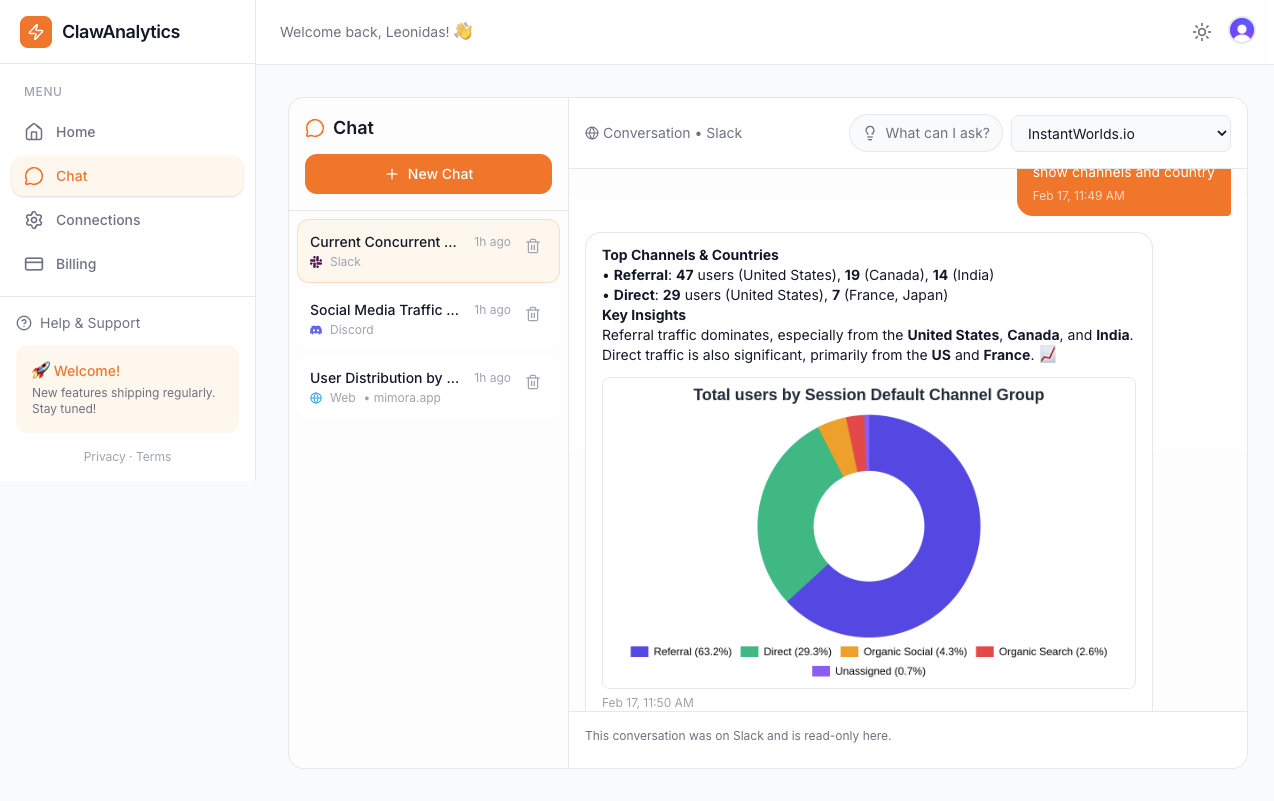
ClawAnalytics makes this simple. Our dashboard automatically surfaces every 404 error, grouped by how often they occur and which pages link to them. You’ll see questions like:
- Which of my old blog posts still have broken links pointing to deleted pages?
- Which landing pages need updating after our recent site redesign?
- Are any of my email campaigns sending traffic to dead pages?
We send weekly alerts when new 404 errors appear, so you can fix them before they cost you clients. No configuration needed—just clear data you can act on.
Quick Wins
Audit your site quarterly. Set a calendar reminder every three months to check for broken links. Better yet, automate it with a tool that scans weekly.
Fix links in old content. Update or redirect outdated URLs in your blog posts, guides, and email campaigns. One hour of cleanup can prevent months of lost leads.
Monitor your backlinks. Use tools to track who links to you. If an external site links to a page that no longer exists, reach out and ask them to update it—or set up a redirect.
Test your email links. Before sending any campaign, click every link. This simple habit catches 404s before your audience does.
Your finance website is often the first impression prospects have of your business. Don’t let broken links tell the wrong story.