How to Track 404 Errors for Travel
A traveler finds your website while researching Costa Rica tours. They click a link to read about a specific ecolodge, excited to see photos and prices. Instead, they hit a 404 page. Frustrated, they close the tab and book somewhere else. That broken link just cost you a booking worth hundreds or thousands of dollars.
Why 404 Errors Matters for Travel
Lost bookings equal lost revenue. Travel is a high-competition industry. When someone encounters a broken link, they don’t think “oh, this site has a technical glitch.” They think “this company isn’t organized.” And they book with a competitor.
Mobile users abandon fast. Travelers research on their phones, often while commuting or waiting in line. A broken link on mobile is even more frustrating—and the bounce happens in seconds.
Seasonal peaks get wasted. Your marketing budget drives traffic during peak booking season. But if old tour pages are dead, you’re paying for clicks that go nowhere. That’s money down the drain when it matters most.
Reviews and reputation take hits. Disappointed travelers leave reviews. “Great deals but half the links were broken” isn’t the kind of word-of-mouth you want.
How to Check in GA4
Open GA4 and go to Reports > Explore. Create a new exploration:
- Add Page location as a dimension
- Add Page views as a metric
- Create a filter: Page location contains “404” or “not-found”
- Sort by views to see which broken pages get the most traffic
Set up a custom alert in GA4 to email you when 404 views increase. This catches problems before they cost you bookings.
The Easier Way
GA4’s interface makes 404 tracking harder than it should be. You shouldn’t need to build custom reports just to find broken links.
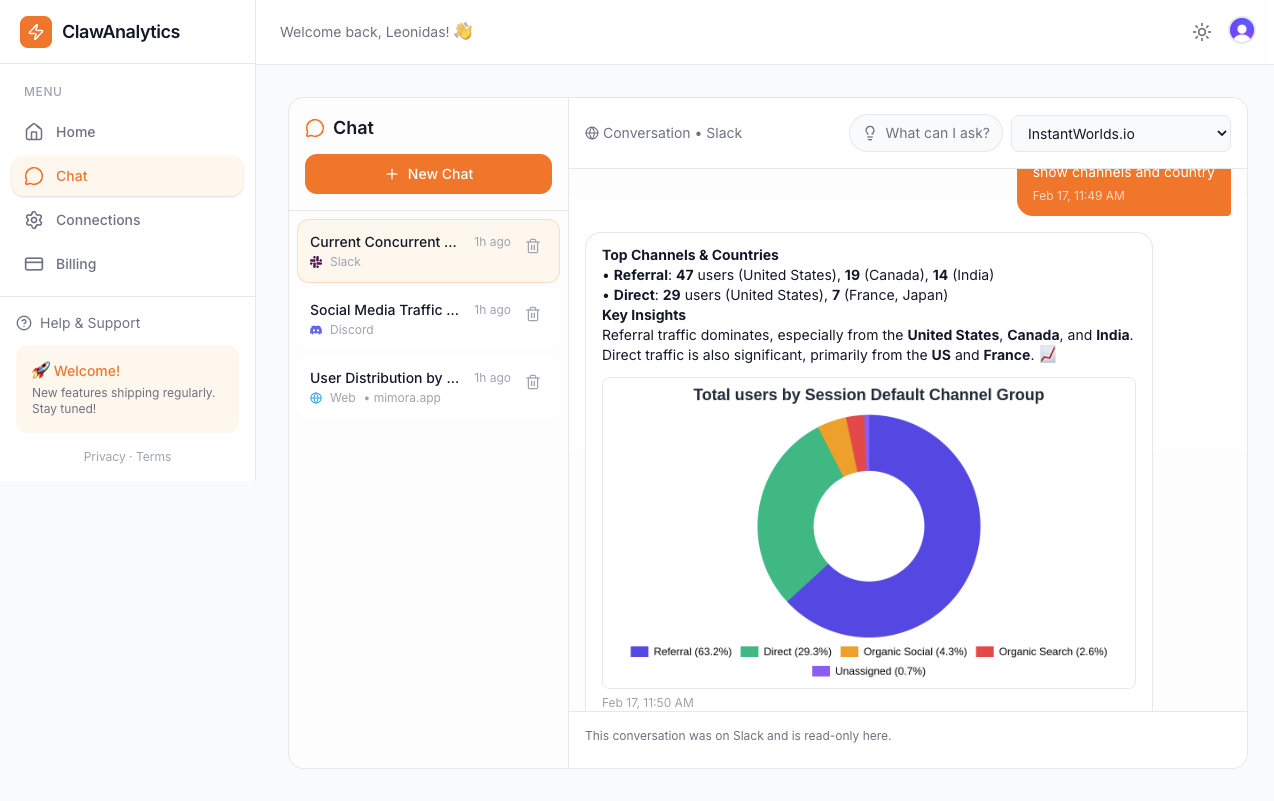
ClawAnalytics handles this automatically. Our dashboard shows every 404 error in plain English. You’ll see questions like:
- Which of my destination pages have broken internal links?
- Are any tour packages sending visitors to deleted pages?
- Which email campaign links need fixing before my next send?
We notify you the moment a new 404 appears, so you can redirect or fix it before it eats into your bookings. Simple, clear, actionable.
Quick Wins
Scan your site monthly. Use a link checker to find all broken links before they hurt your traffic. Do this more often during peak booking season.
Redirect old tour pages. When you retire a tour, don’t just delete it. Redirect it to a similar active tour or your main booking page.
Check your email links. Every newsletter and promotional email should be tested before sending. One broken link can tank your conversion rates.
Update sitemap regularly. Submit a fresh sitemap to Google after any site changes. This helps search engines find your active pages faster.
Your travelers are ready to book. Don’t let a broken link talk them out of it.