Picture this: you just spent $2,000 on a social media campaign. Your boss asks how it went. You open Google Analytics, stare at a wall of numbers, and have no idea what you are looking at. Meanwhile, the answer is right there. You just need to know where to look.
Analytics does not have to be intimidating. If you can read a restaurant menu, you can read a dashboard. The trick is knowing which numbers actually matter.
Why This Matters
You are already paying for the data. If you have a website, analytics tools are collecting information about your visitors right now. Ignoring it is like running a store and never checking the cash register.
Gut feelings are expensive. Every business decision based on “I think this is working” is a coin flip. Analytics turns guesses into evidence. Did that blog post bring in customers? Did the homepage redesign help or hurt? The data knows.
You do not need all the numbers. This is the biggest misconception. Analysts might care about 50 metrics. You probably need five. Traffic, top pages, where visitors come from, how long they stay, and whether they do the thing you want (buy, sign up, contact you).
It compounds over time. Once you start checking your numbers weekly, patterns emerge. You notice that Tuesday emails drive more traffic than Friday ones. That one blog post keeps bringing people in months later. These insights stack up.
How to Do It
Step 1: Pick your three questions. Before opening any dashboard, write down three things you want to know. “Where do my visitors come from?” “Which pages do people read most?” “How many people signed up this month?” This keeps you focused.
Step 2: Learn the big five metrics.
- Users tells you how many people visited
- Sessions tells you how many visits happened (one person can visit multiple times)
- Bounce rate shows the percentage of people who left after one page
- Pages per session reveals how deeply people explore your site
- Conversion rate measures whether visitors do the thing you want
Step 3: Set a weekly check-in. Block 15 minutes every Monday. Open your analytics. Look at last week compared to the week before. Are things going up, down, or sideways? That is genuinely all you need to start.
Step 4: Build one simple report. Most analytics tools let you save a custom view. Create one with just your key metrics. Name it “Weekly Check” and ignore everything else until you are comfortable.
The Easier Way
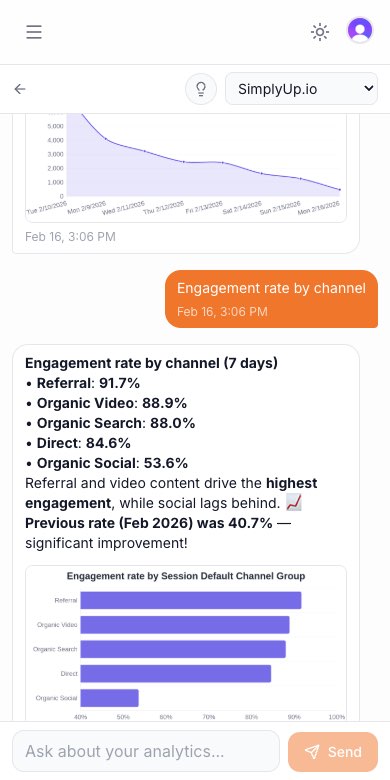
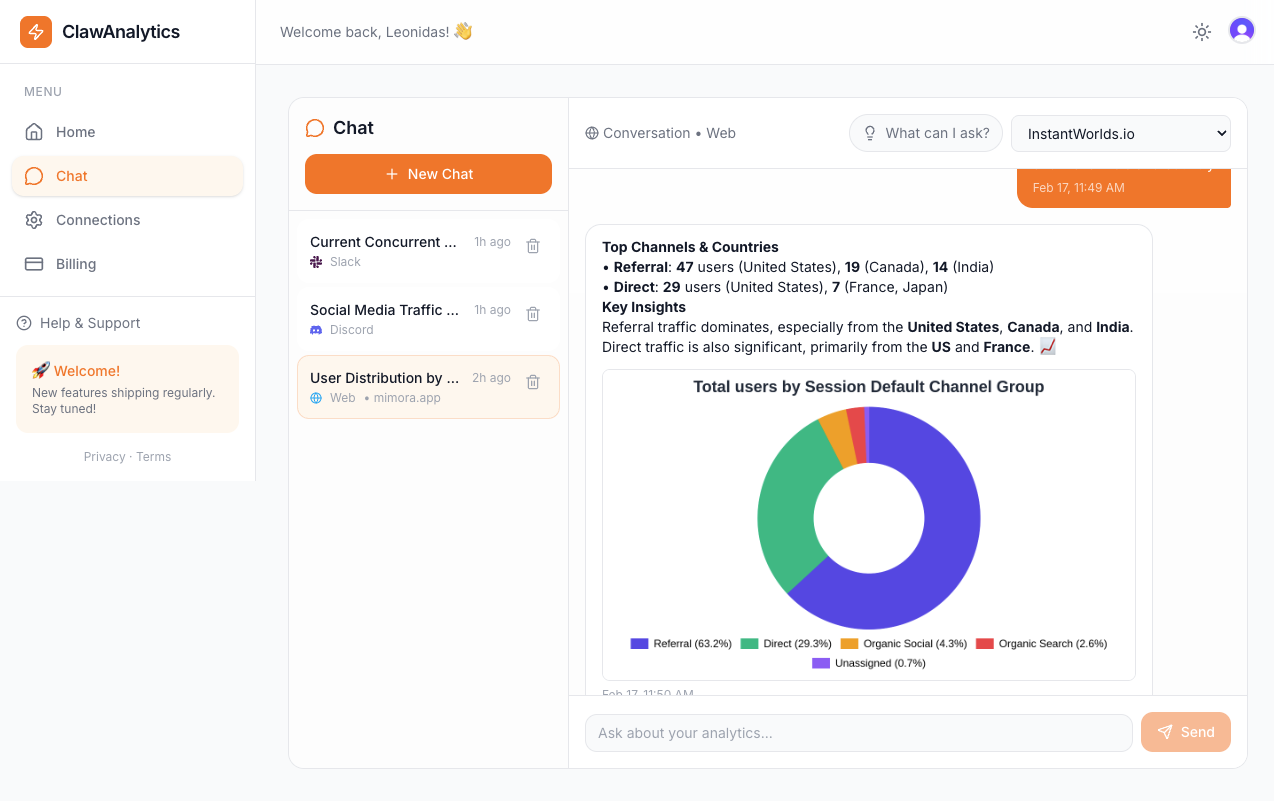
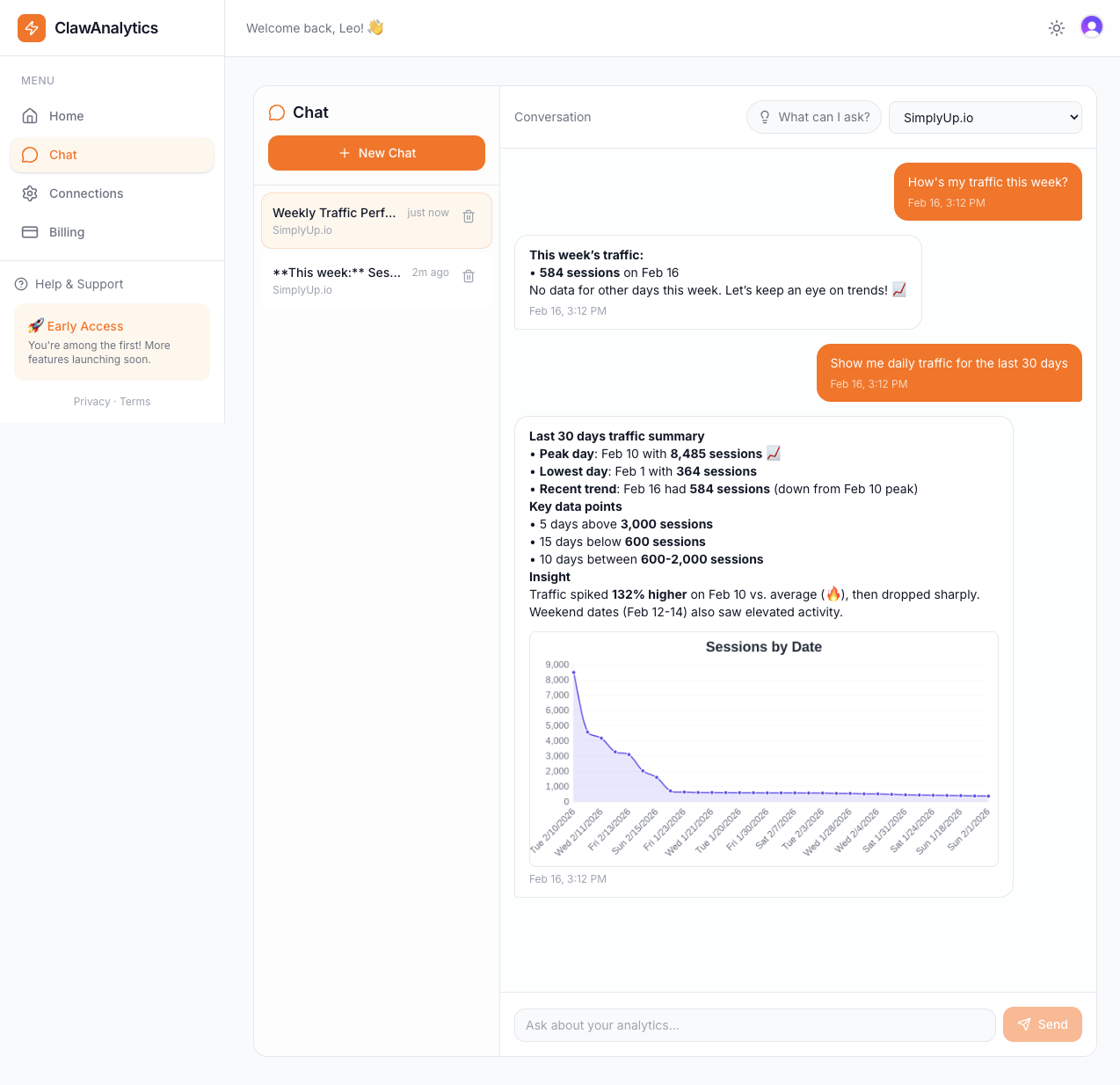
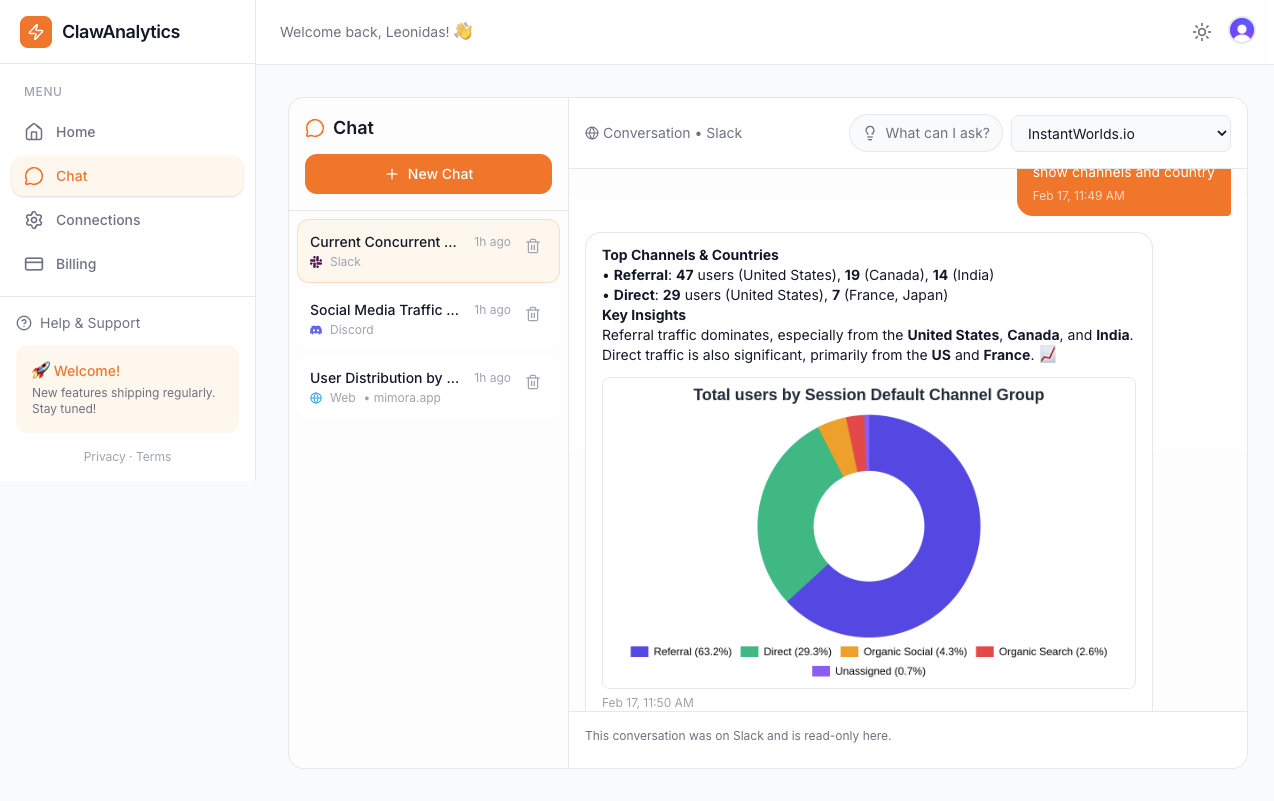
If dashboards still feel overwhelming, tools like ClawAnalytics let you skip the interface entirely. Instead of clicking through menus, you just ask questions the way you would ask a colleague:
- “How many visitors did we get this month compared to last month?”
- “What are my top 5 pages this week?”
- “Is our blog traffic growing or shrinking?”
You get a direct answer with context, not a chart you need to interpret. It is like having a data analyst on call who never gets annoyed by basic questions.
Quick Wins
- Bookmark one view. Find the overview page in your analytics tool and bookmark it. Make it your starting point every time.
- Compare periods. Always look at “this week vs last week” or “this month vs last month.” A number by itself means nothing without context.
- Focus on trends, not spikes. One good day does not mean much. A steady upward line over weeks does.
- Share what you learn. Tell your team “our email campaign drove 40% of this week’s traffic.” Analytics becomes valuable when it changes decisions.
- Ignore vanity metrics. Total pageviews sound impressive but rarely tell you anything useful. Focus on metrics tied to your actual goals.