How to Track Audience Demographics for Pet Stores
You’re running a pet store and wonder why premium dog food sits on shelves while cheap kibble flies off. The answer lives in your audience demographics. Understanding who’s actually walking through your door (digitally) transforms inventory and marketing.
Why Audience Demographics Matters for Pet Stores
Stop guessing who your customers are. Let data tell you.
Age plays a huge role. Younger pet owners (18-34) tend to shop online and prioritize convenience. Older demographics (45+) often prefer in-store shopping and are willing to spend more on premium products.
Location data shows your true service area. If you’re seeing traffic from 30 miles away but only serve 10 miles, your local SEO needs adjustment. Or perhaps there’s opportunity to expand.
Income alignment matters. Premium pet products only sell when your audience can afford them. Demographics reveal if your neighborhood supports premium pricing or if you need to lean into value tiers.
Pet type correlations emerge when you analyze demographics alongside behavior. Do cat owners convert differently than dog owners in the same age group? This shapes your marketing messages.
How to Check in GA4
Open GA4 and head to the Audience section. Age and gender reports show basic breakdowns. Add location for geographic insights.
Use the “Users and Sessions” toggle to see not just who visits, but how active they are. High sessions with low conversions might indicate pricing concerns.
Create segments for different customer types. Segment by “purchasers” versus “browsers” to compare their demographics. This reveals who actually becomes a customer.
Check the Technology section too. Device category shows mobile versus desktop, revealing whether your mobile experience needs work.
The Easier Way
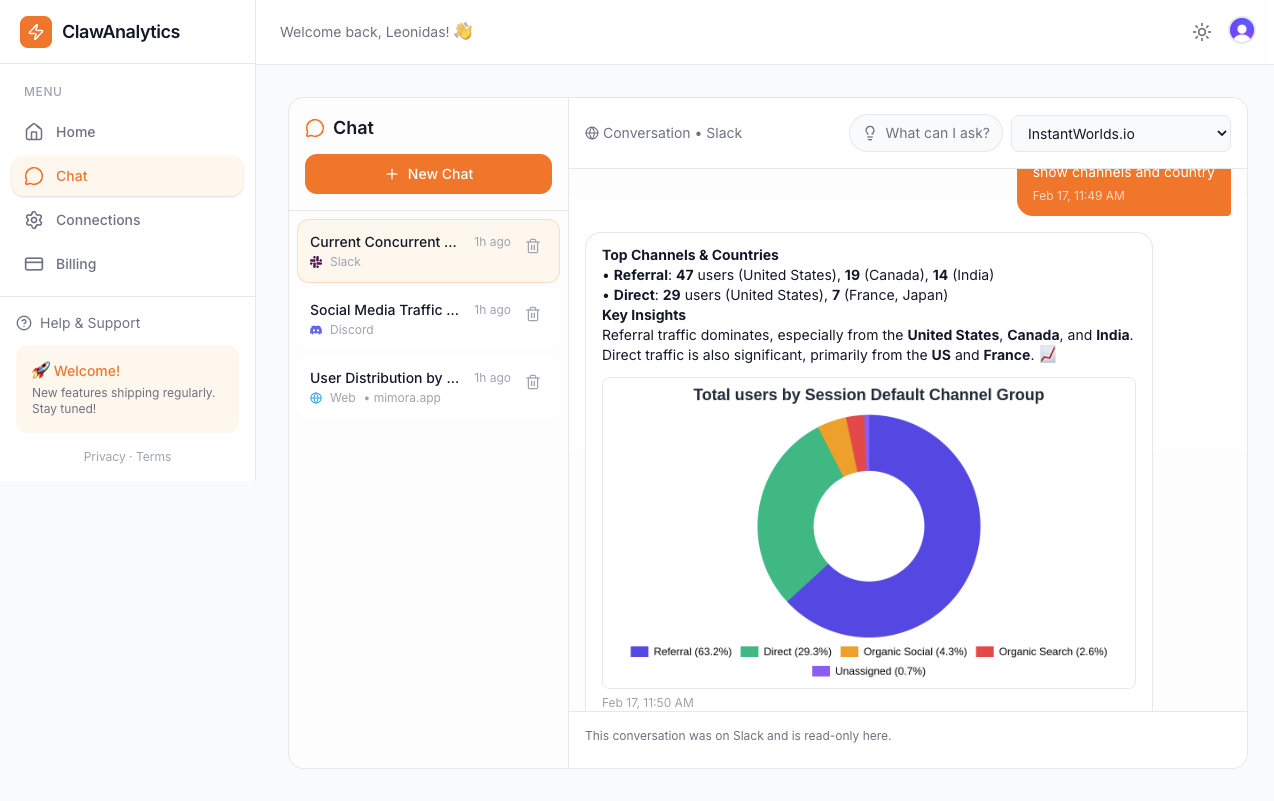
ClawAnalytics makes demographic insights accessible without the GA4 learning curve. You see clear dashboards showing customer composition.
Example questions ClawAnalytics answers:
- Are my cat product customers different ages than dog product customers?
- Which neighborhoods bring the most repeat buyers?
- Should I focus marketing on millennials with dogs or seniors with cats?
This data drives inventory and marketing decisions instantly.
Quick Wins
- Match ads to demographics. If your audience skews young, focus on Instagram and TikTok. Older audiences respond better to Facebook and email.
- Adjust product placement. Put premium items where high-income demographics shop. Place budget options near entrance for quick-grab shoppers.
- Segment email lists by demographics for targeted promotions.
- Monitor demographic trends monthly. A shift in age or income could signal neighborhood changes affecting your business.