How to Track Average Order Value for Auto Dealers
Two dealerships sell 100 cars this month. Dealership A averages $28,000 per car. Dealership B averages $36,000. The second makes $800,000 more with the same volume. That difference is Average Order Value (AOV). AOV measures total revenue per vehicle sold, including base price, F&I products, and accessories. It is the most important metric for dealership profitability.
Why Average Order Value Matters for Auto Dealers
Multiplies gross profit. Each car has a base margin. Higher AOV adds backend revenue that often carries higher margins than the vehicle itself.
Shows F&I effectiveness. Finance and insurance products dramatically impact AOV. Tracking it reveals how well your F&I team performs.
Identifies inventory opportunities. Some models sell with more accessories. Knowing this guides inventory decisions and allocation requests.
Measures salesperson performance. Top performers consistently achieve higher AOV. Tracking it identifies training needs and reward opportunities.
How to Check in GA4
GA4 can track dealership metrics with significant setup:
-
Implement ecommerce events on your website for online configurator and inventory browsing.
-
Connect to your DMS through API or integration. This is often the hardest part.
-
Create calculated metrics for total revenue per vehicle sold. This requires combining multiple data sources.
-
Segment by vehicle type to compare truck versus sedan AOV. Different categories often perform differently.
Most dealers find this too complex. DMS and F&I systems usually provide better data.
The Easier Way
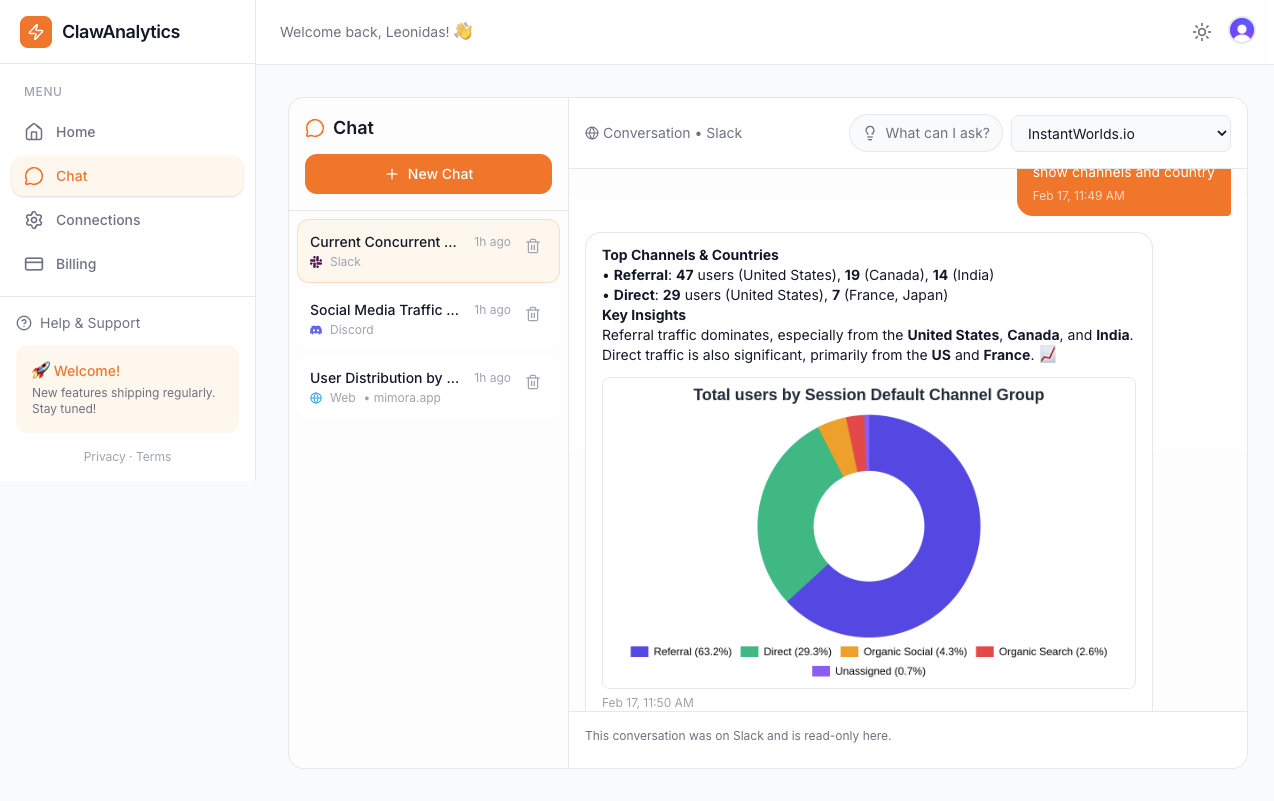
ClawAnalytics integrates with your Dealer Management System and F&I platforms to automatically calculate Average Order Value. You see complete picture instantly.
You might discover:
- Trucks average $42,000 with $3,500 F&I
- Sedans average $26,000 with $2,200 F&I
- SUVs average $38,000 with $2,800 F&I
This data drives everything. When trucks generate the most total revenue, your allocation strategy shifts.
ClawAnalytics also tracks F&I penetration rates. Are all customers offered protection packages? Which products sell most? This insight optimizes F&I training.
Quick Wins
F&I training. Even small improvements in F&I attachment rates significantly raise AOV. Invest in certification and product knowledge.
Accessory packs. Pre-installed packages for common needs (towing, pet protection, outdoor gear) add revenue without negotiation stress.
Trade-in optimization. Better trade valuations might seem to lower AOV but actually increase total profit through tax benefits and customer satisfaction.
Lease versus finance. Understanding which payment types generate higher total revenue helps structure deals for maximum profitability.
Track your AOV daily. It fluctuates with inventory, staffing, and market conditions. Regular monitoring catches problems early.