How to Track Average Order Value for Healthcare
Practice A sees 50 patients daily at $120 average revenue. Practice B sees 35 patients at $185. Practice B makes more money with fewer patients. That’s the power of AOV.
Why Average Order Value Matters for Healthcare
- Operational efficiency: Fewer patient encounters with higher AOV means less staff stress and better care.
- Service mix: Some services generate more revenue. AOV analysis reveals which procedures to promote.
- Payer mix: Insurance versus cash patients often have different AOV. Track this to understand true revenue.
- Provider productivity: Compare AOV across providers. Top performers may have techniques worth sharing.
How to Check in GA4
Healthcare practices can track AOV through:
- Use your practice management software reports
- Calculate: Total Revenue divided by Number of Patient Encounters
- Segment by service code, provider, and payer type
- Track trends monthly and seasonally
- Compare to benchmarks if available
Most EHR systems like Athenahealth, eClinicalWorks, and Kareo have built-in revenue analytics.
The Easier Way
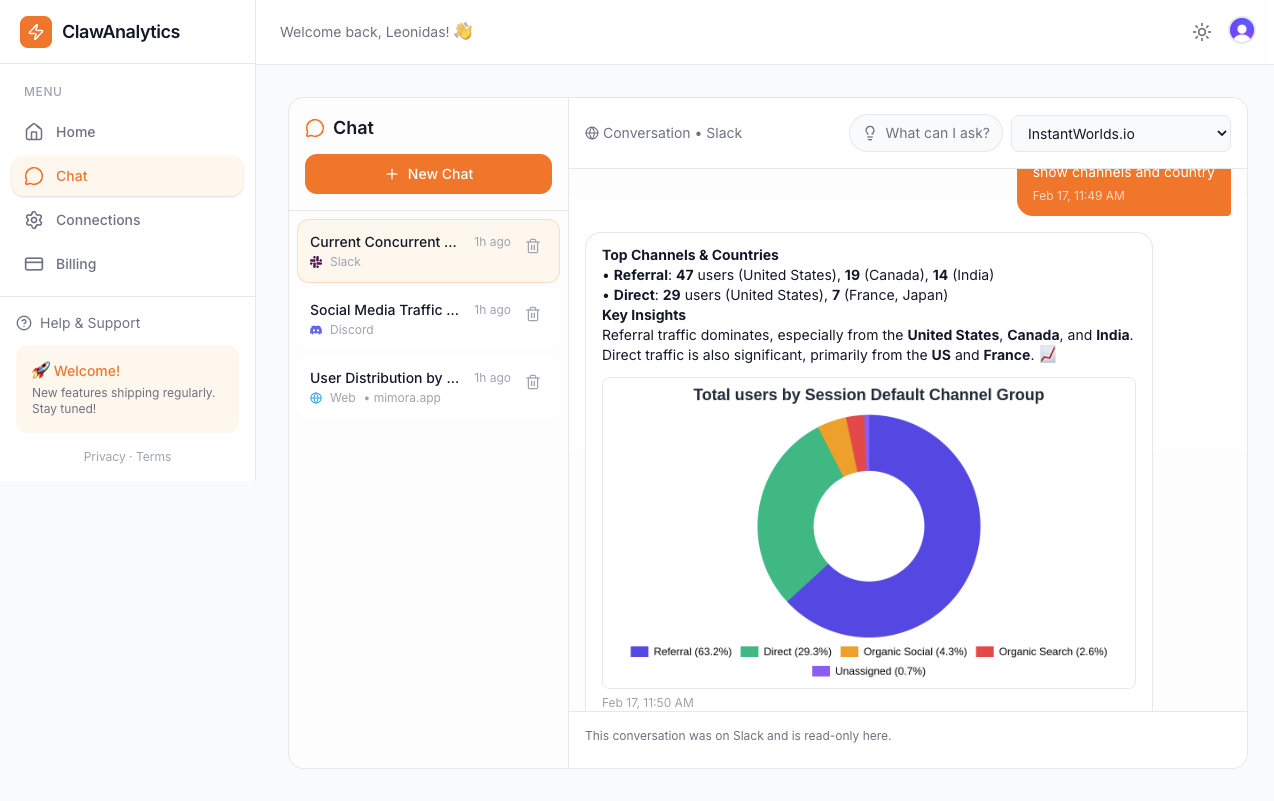
ClawAnalytics helps healthcare administrators answer critical questions:
Which treatments have the highest AOV? Focus marketing and scheduling on services that drive revenue.
How can we increase revenue without more patients? The platform reveals upsell opportunities and service combinations.
Are we undercharging for any services? Compare your AOV to industry standards for your specialty.
Quick Wins
- Package services: Offer wellness bundles at a premium. Patients often prefer comprehensive packages.
- Preventive care focus: Healthier patients need less acute care but value preventive services. Market these actively.
- Cash-pay services: Add aesthetic services, weight loss programs, or concierge care. These often have higher AOV.
- Recall systems: Bring patients back for follow-ups and maintenance. Each visit adds to patient value.
- Referral programs: Patients who refer others often have higher engagement and AOV. Reward them.