How to Track Average Order Value for Pet Stores
A pet store gets 200 customers on Saturday. Another gets 150 but pulls more items per cart. The second store might actually make more money. That is the power of Average Order Value (AOV). AOV measures how much revenue each transaction generates. It is the metric that turns foot traffic into serious revenue.
Why Average Order Value Matters for Pet Stores
Maximizes existing customers. Acquiring new customers costs five times more than selling to existing ones. Higher AOV means more from everyone who walks in.
Reveals shopping patterns. Tracking AOV shows whether customers buy single items or fill carts. This informs everything from inventory to store layout.
Boosts profitability. Higher AOV spreads fixed costs across more revenue. Rent, staff, and utilities feel smaller when every transaction is larger.
Informs promotional strategy. If your AOV is $35, a “spend $50, get $10 off” promotion makes sense. Understanding AOV designs smarter offers.
How to Check in GA4
GA4 tracks ecommerce metrics when properly configured:
-
Connect your POS or ecommerce platform to GA4 through ecommerce events. Many modern systems integrate easily.
-
Set up enhanced ecommerce to track product performance, cart behavior, and checkout funnels.
-
Create calculated metrics dividing revenue by transactions. This gives you AOV directly in reports.
-
Segment by traffic source to see which channels bring higher-spending customers. Social media versus search might show different behavior.
The setup varies significantly by platform. Some require developer help.
The Easier Way
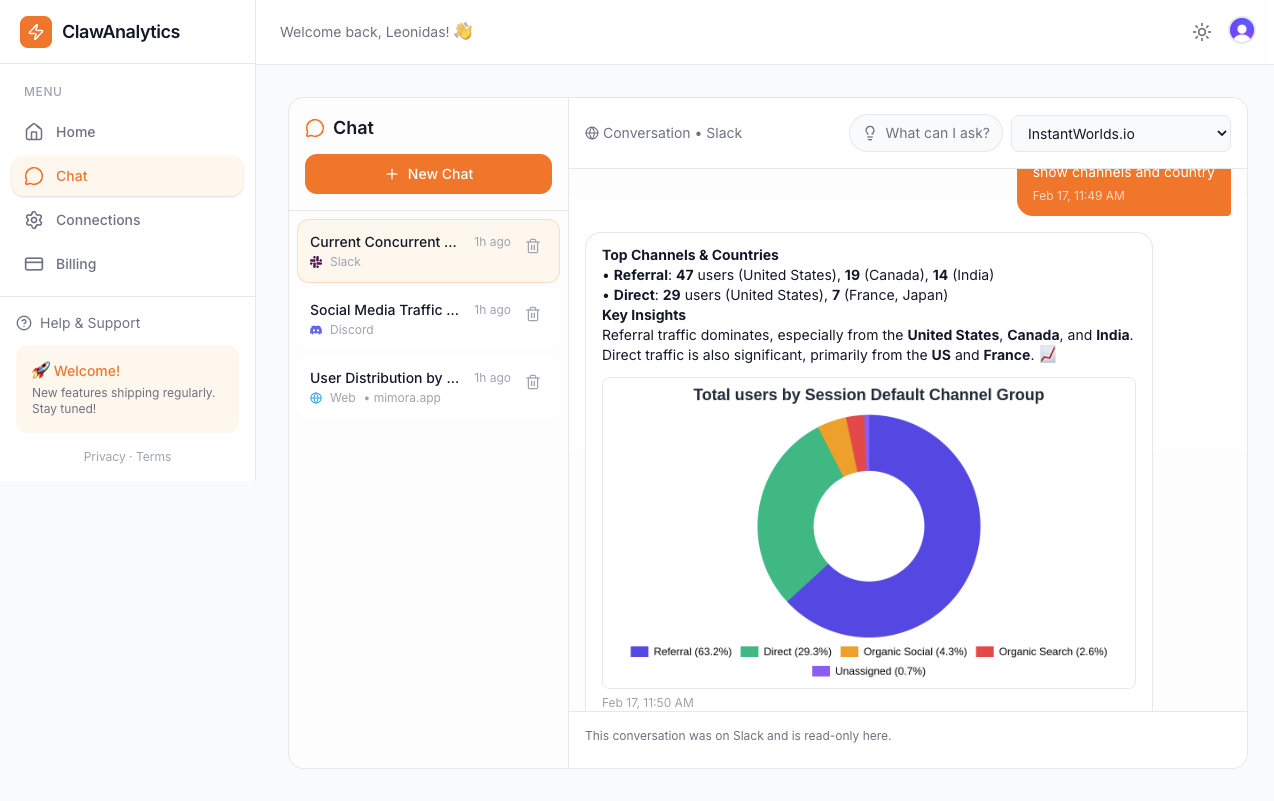
ClawAnalytics connects to Square, Shopify, Lightspeed, or other retail systems to automatically calculate Average Order Value. You see performance instantly.
You might learn that:
- In-store transactions average $42
- Online orders average $65
- Grooming add-on customers average $88
This data drives decisions. Online might be more profitable, so you invest in ecommerce. Grooming customers buy more, so you promote that service.
ClawAnalytics also shows AOV by category. Pet food might drive volume while toys drive margin. Knowing this optimizes your product mix.
Quick Wins
Endcap displays. Place high-margin items at checkout. Treats, toys, and impulse purchases perform well in this prime real estate.
Cross-sell suggestions. “Your dog would love these dental chews alongside that food.” Staff trained to suggest add-ons raise AOV naturally.
Bundle deals. “Get 15% off when you buy food and treats together.” Bundling increases cart size while offering perceived value.
Loyalty programs. Points toward free merchandise encourage larger purchases. Customers aiming for rewards spend more per visit.
Track your AOV weekly. Seasonal changes and promotions should move it predictably.