Affiliate Marketing Last updated February 22, 2026

How to Track Bounce Rate for Affiliate Marketing

Your affiliate marketing bounce rate reveals how many visitors leave without engaging. Learn what causes bounces, what good looks like, and how to fix it with real data.

You publish a detailed review of the best AI writing tools, include your affiliate links, and wait for the commissions to roll in. But instead, you watch in disbelief as 68% of your visitors leave within seconds, never even scrolling past the first paragraph. No clicks. No commissions. Nothing.

That number 68% is your bounce rate, and it is telling you something important about your affiliate content.

Why Bounce Rate Matters for Affiliate Marketing

Bounce rate in affiliate marketing is not just a vanity metric. It directly impacts your earnings.

  • Fewer clicks mean fewer commissions. If 1000 visitors land on your product review and 680 bounce immediately, you have lost roughly 680 potential affiliate clicks before they even saw your recommendation.
  • Google notices user behavior. High bounce rates can signal to search engines that your content did not satisfy the search intent, which may hurt your rankings over time.
  • It reveals content problems. A bounce rate spike after publishing a new review tells you something is wrong with that specific page, not your entire site.

Imagine you run a review site earning $500 per month from a product that pays $50 per sale. If your bounce rate drops from 65% to 45%, that 20-point drop could translate to roughly 200 additional engaged visitors per month. At a 3% conversion rate, that is 6 extra sales or an additional $300 in monthly revenue.

What Causes Affiliate Marketing Visitors to Bounce

Generic product descriptions copied directly from merchant sites. Visitors can tell when content is not original, and they will leave to find a more honest perspective.

No clear pricing or discount information. Users searching for products want to know if it is worth the investment. If they have to click away to find prices, many will not bother returning.

Slow page loading speeds. Affiliate pages often load slowly due to multiple affiliate links, scripts, and images. Research shows that pages taking more than 3 seconds to load see bounce rates increase by over 30%.

Confusing page layout. If readers cannot find the affiliate link or the call-to-action button is hidden, they will leave in frustration.

Content that does not match search intent. Ranking for best X but writing a beginner guide will send the wrong audience to your page, and they will bounce immediately.

How to Track It

In Google Analytics 4, open the Reports tab, then go to Acquisition and select Traffic Acquisition. You can filter by Landing Page to see bounce rates for specific affiliate reviews.

But GA4 can feel slow when you are trying to make quick decisions across dozens of product pages.

ClawAnalytics lets you ask questions like:

  • Which of my product review pages have the highest bounce rate this month
  • What is the average bounce rate for pages containing the word ai-writing
  • Show me bounce rate trends for pages with affiliate links

It is much faster to get actionable insights without building custom reports every time.

Quick Wins to Reduce Bounce Rate

  1. Add a comparison table at the top of every review. Users should be able to scan key features and prices immediately without scrolling.

  2. Use exit-intent popups wisely. Show a last-minute discount code or highlight your top pick before they leave. This can recover 2-5% of bouncing visitors.

  3. Link related products naturally within your content. Instead of just one affiliate link at the end, weave in 2-3 relevant internal links to other reviews. This keeps visitors on your site longer.

  4. Optimize for mobile first. Over 60% of affiliate traffic comes from mobile devices. If your page is hard to read on a phone, bounces will skyrocket.
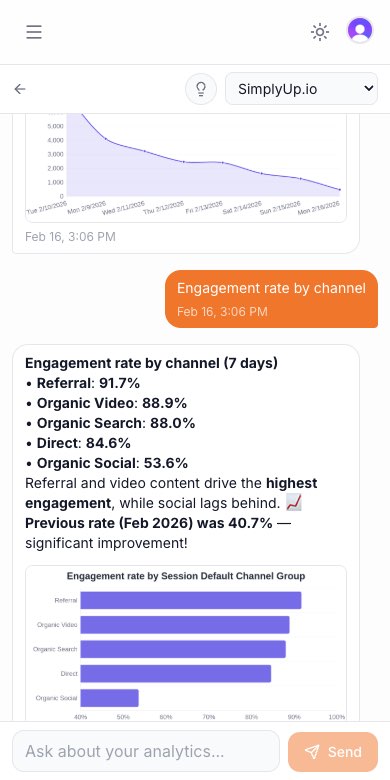
Check your analytics from anywhere

On your morning commute. At a coffee shop. In a meeting. Pull up your analytics on any device and get instant answers.

  • Web dashboard on desktop & mobile
  • Discord bot for team channels
  • Slack integration for your workspace
  • MCP server for AI agents (Claude, Cursor)
See your traffic in 60 seconds →
ClawAnalytics mobile chat showing engagement rate breakdown with charts

How ClawAnalytics helps

Skip the dashboards. Get answers in seconds.

🔗
1

Connect GA4

One-click OAuth. Read-only access. Takes 30 seconds to link your Google Analytics property.

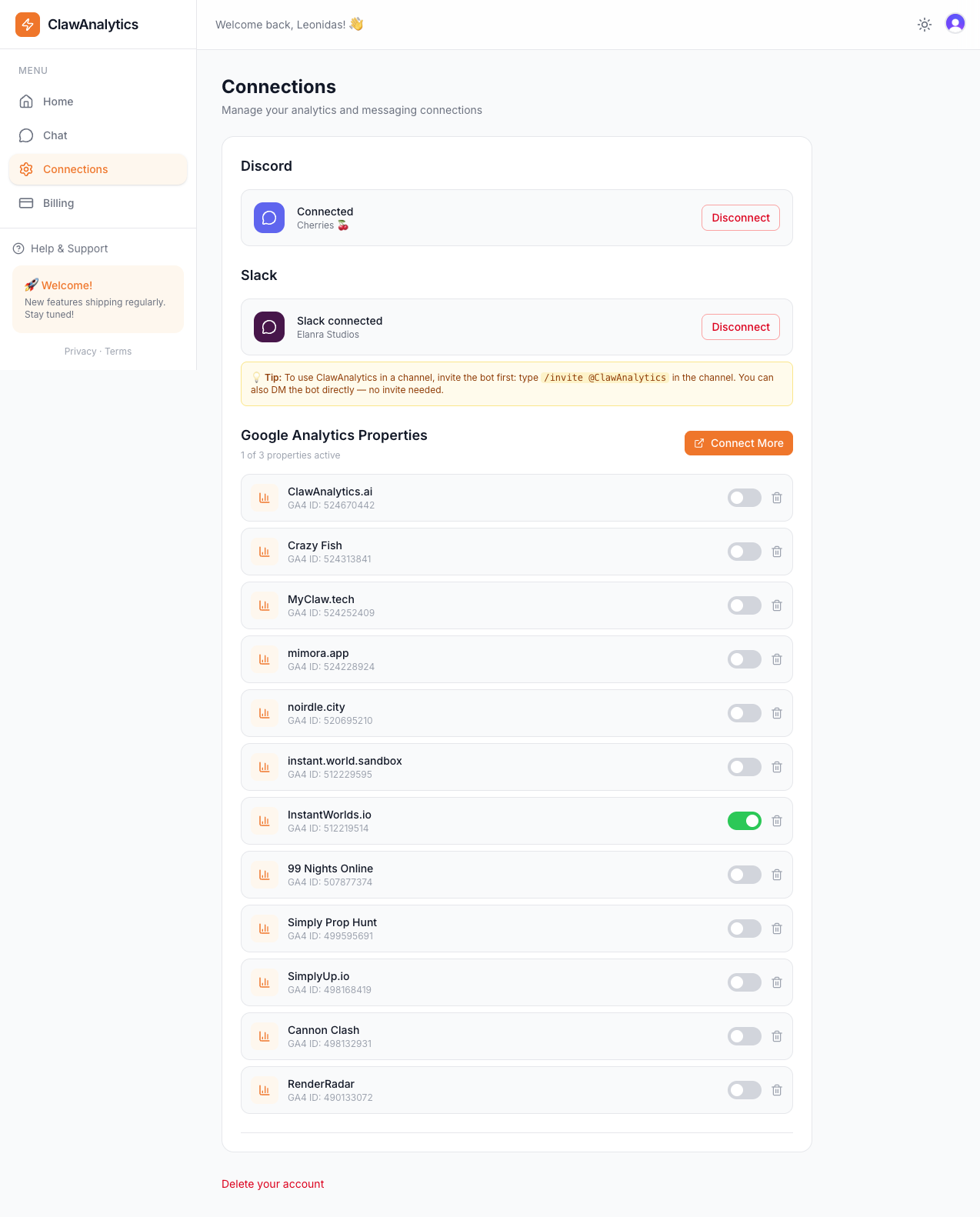
ClawAnalytics connections page showing Google Analytics properties linked
💬
2

Ask questions

Type in plain English. No query language, no filters, no date pickers. Just ask what you want to know.

ClawAnalytics chat interface with natural language query
📊
3

Get answers with charts

Instant responses with visualizations. Share charts with your team or export the data.

ClawAnalytics showing chart response to analytics query

See it in action

Ask a question. Get a chart. That simple.

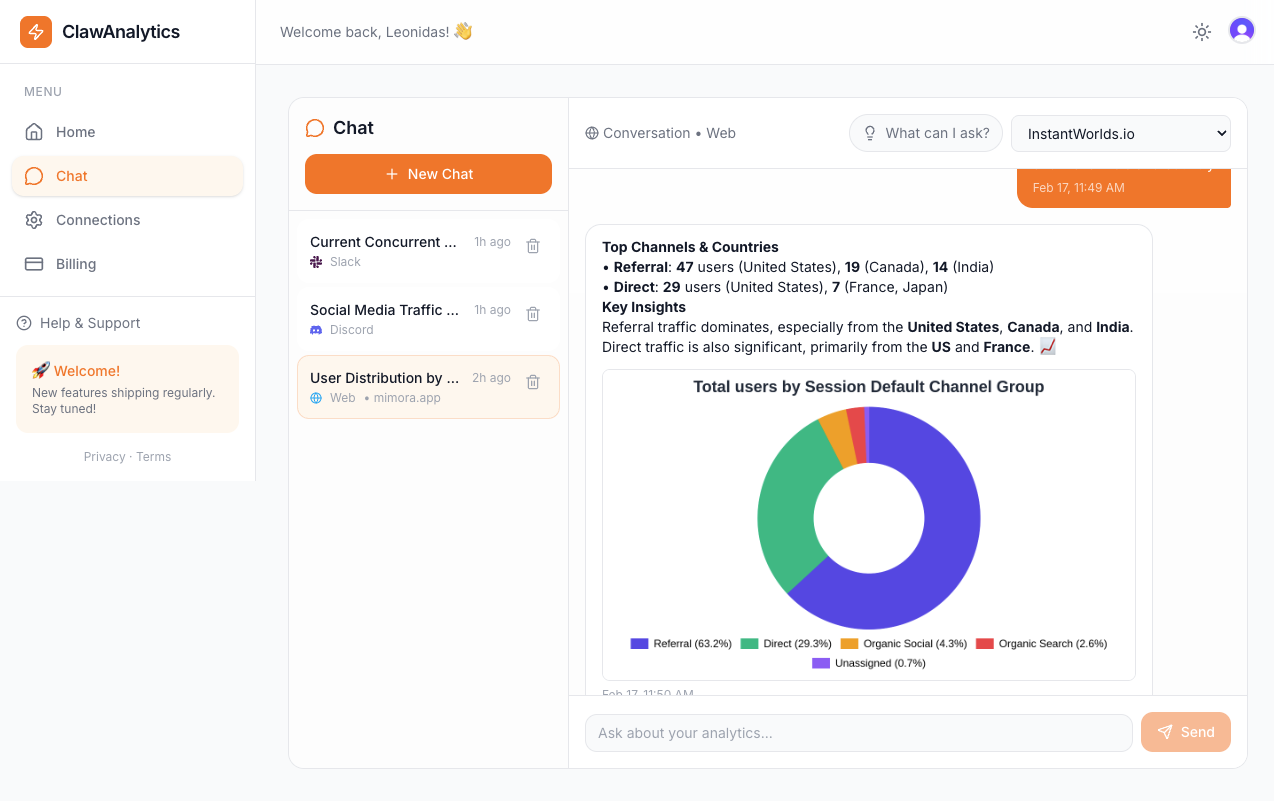
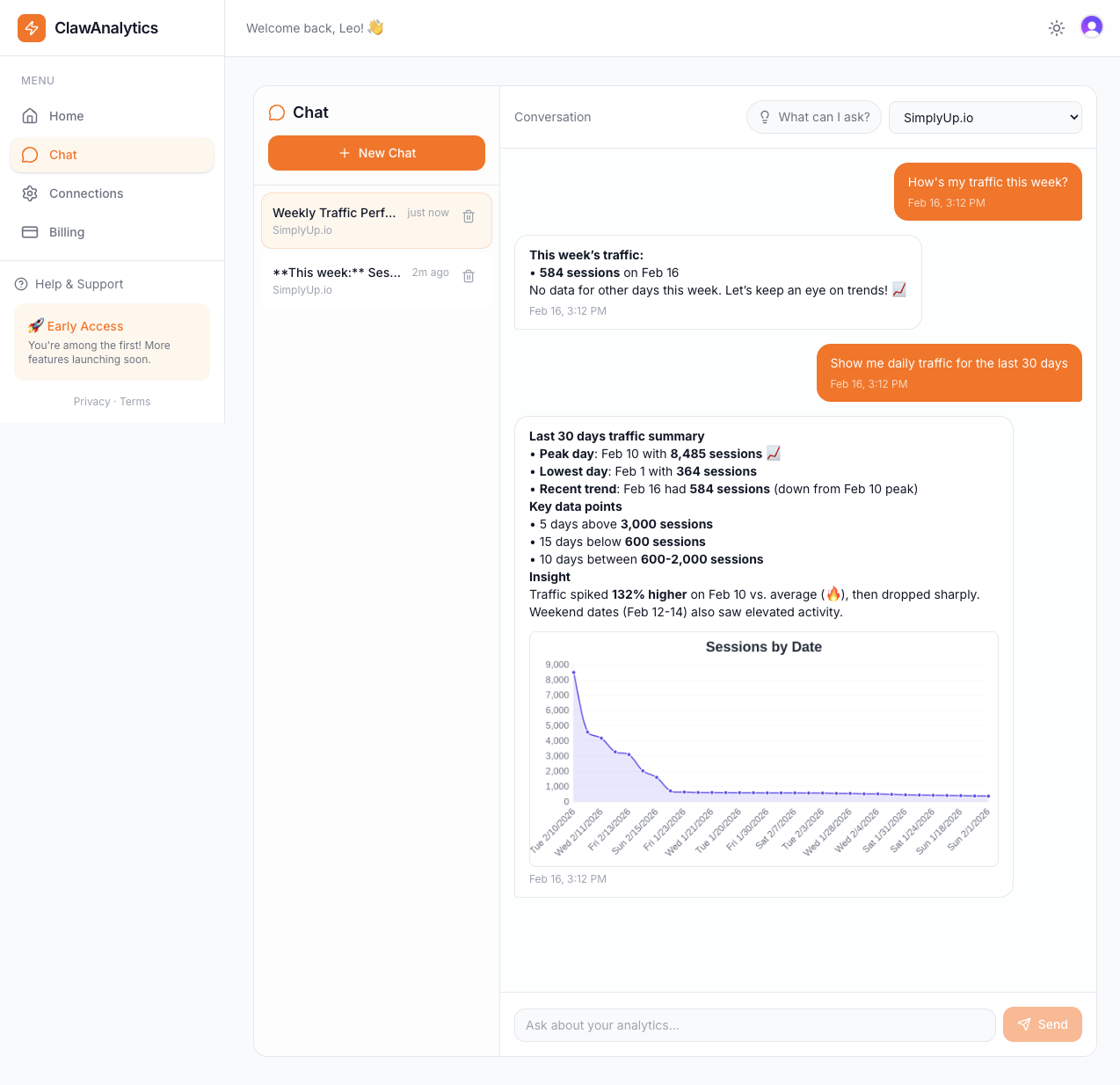
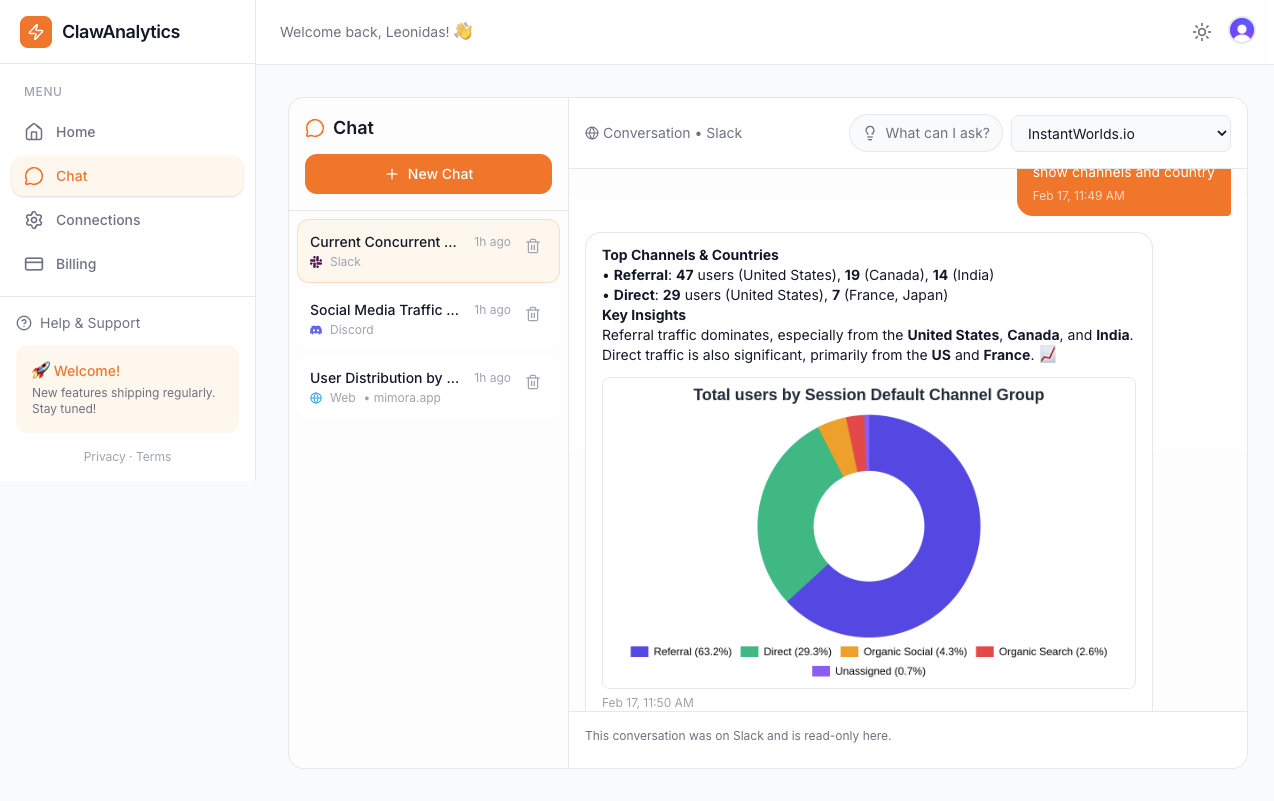
ClawAnalytics Chat
ClawAnalytics chat interface showing a natural language analytics query with chart response

Works on web, Discord, and Slack. Also available as an MCP server for AI agents.

Leonidas Maliokas
"I used to open Google Analytics 5 times a day and still miss things. Now I get a summary every morning and ask follow-ups when something looks off. Takes 10 seconds instead of 10 minutes."

Leonidas Maliokas

Founder, Elanra Studios

🎮 5 games monitored 💼 3 businesses

Simple, honest pricing

Start free. Upgrade when you're ready.

Free

Try it out

$0 /month
  • 5 websites
  • 30 questions/month
  • Web dashboard
  • No credit card
Start Free

Website

For small businesses

$9 /month
  • 5 websites connected
  • 100 questions/month
  • Daily morning summary
  • Web dashboard + Discord
Get Started

Business

For agencies and portfolios

$79 /month
  • Unlimited websites
  • 2,000 questions/month
  • Everything in Pro
  • ✅ API access
  • ✅ MCP integration
  • ⭐ Priority support
Get Started

Stop opening dashboards.
Start asking.

Connect Google Analytics in 30 seconds. Get answers from the dashboard or Discord. Start free — no credit card needed.

Try it free — ask your first question
30-second setup Free plan available Cancel anytime

Got questions?

What is a good bounce rate for affiliate marketing?
A good bounce rate for affiliate sites typically ranges from 40% to 70%, with product review pages on the lower end (40-55%) and informational blog posts on the higher end (55-70%). It varies significantly based on page type and whether users are ready to click through to a merchant.
Why do visitors bounce from affiliate product pages?
Visitors often bounce when product descriptions feel generic, prices are not visible upfront, or the page loads slowly. If your affiliate links open in the same tab, users may leave entirely rather than navigate away from your helpful content.
How can affiliate marketers reduce bounce rate on review pages?
Include a quick comparison table at the top, show current pricing and discounts, and add a clear call-to-action button. Use internal links to related product reviews so visitors can keep browsing your site instead of immediately clicking out to merchants.
Does bounce rate differ between traffic sources for affiliate sites?
Yes, significantly. Search traffic typically has higher bounce rates (55-70%) because users are comparing options, while email subscribers and social media traffic often bounce less (30-45%) because they already trust your recommendations.

Related guides

More resources to help you get the most from your analytics.