Why Bounce Rate Matters for Online Stores
Bounce rate is one of the most revealing metrics for e-commerce. When a shopper lands on your store and leaves without clicking anything, that’s a bounced session — and a missed sale.
For e-commerce stores, every bounce represents potential revenue walking out the door. A 50% bounce rate on a product page getting 10,000 monthly visitors means 5,000 people are leaving before they even consider adding to cart.
What Causes High Bounce Rates in E-Commerce
Most bounces come down to a few common problems:
- Slow page load times — If your product pages take more than 3 seconds to load, over half your visitors will leave. Mobile shoppers are even less patient.
- Misleading ad or search copy — When visitors expect one thing from your ad and find something different on the landing page, they bounce immediately.
- Poor mobile experience — Over 60% of e-commerce traffic is mobile. If your store isn’t optimized for small screens, expect high bounce rates.
- Confusing navigation — Shoppers need to find what they want quickly. Cluttered category pages and buried search bars push people away.
- No trust signals — Missing reviews, unclear return policies, and no security badges make first-time visitors uncomfortable.
How to Track Bounce Rate Effectively
The standard approach is diving into Google Analytics 4, navigating to Reports, selecting Pages and Screens, customizing columns to add bounce rate, and then filtering by page path. It works, but it’s slow and easy to get lost.
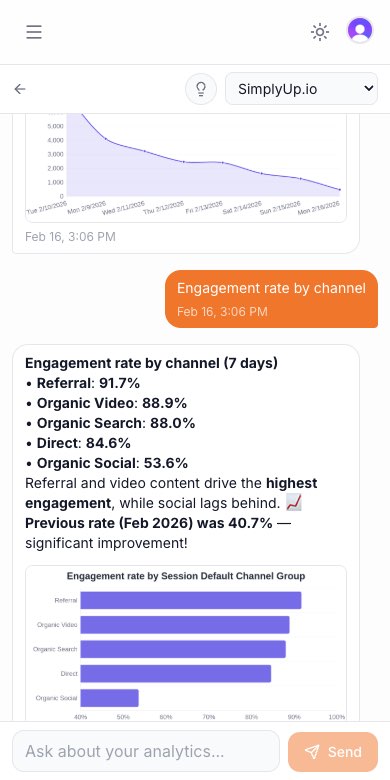
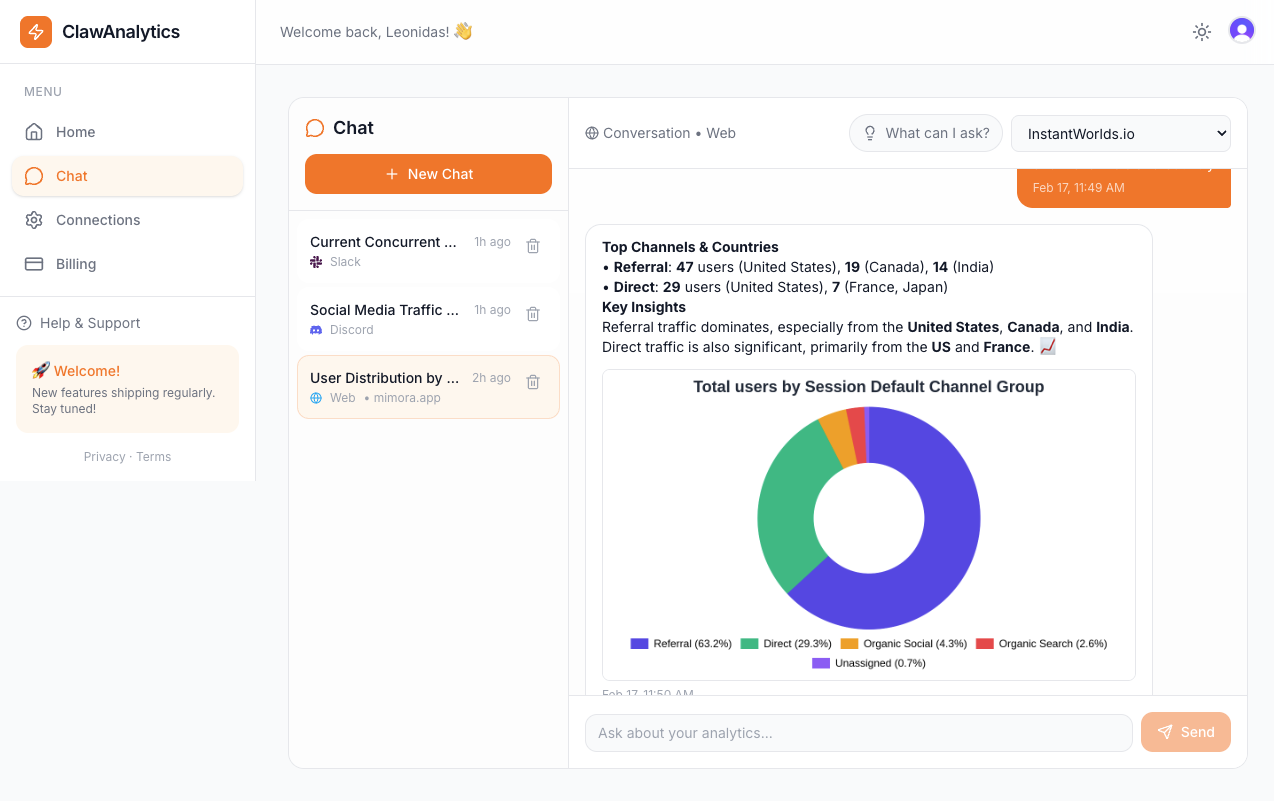
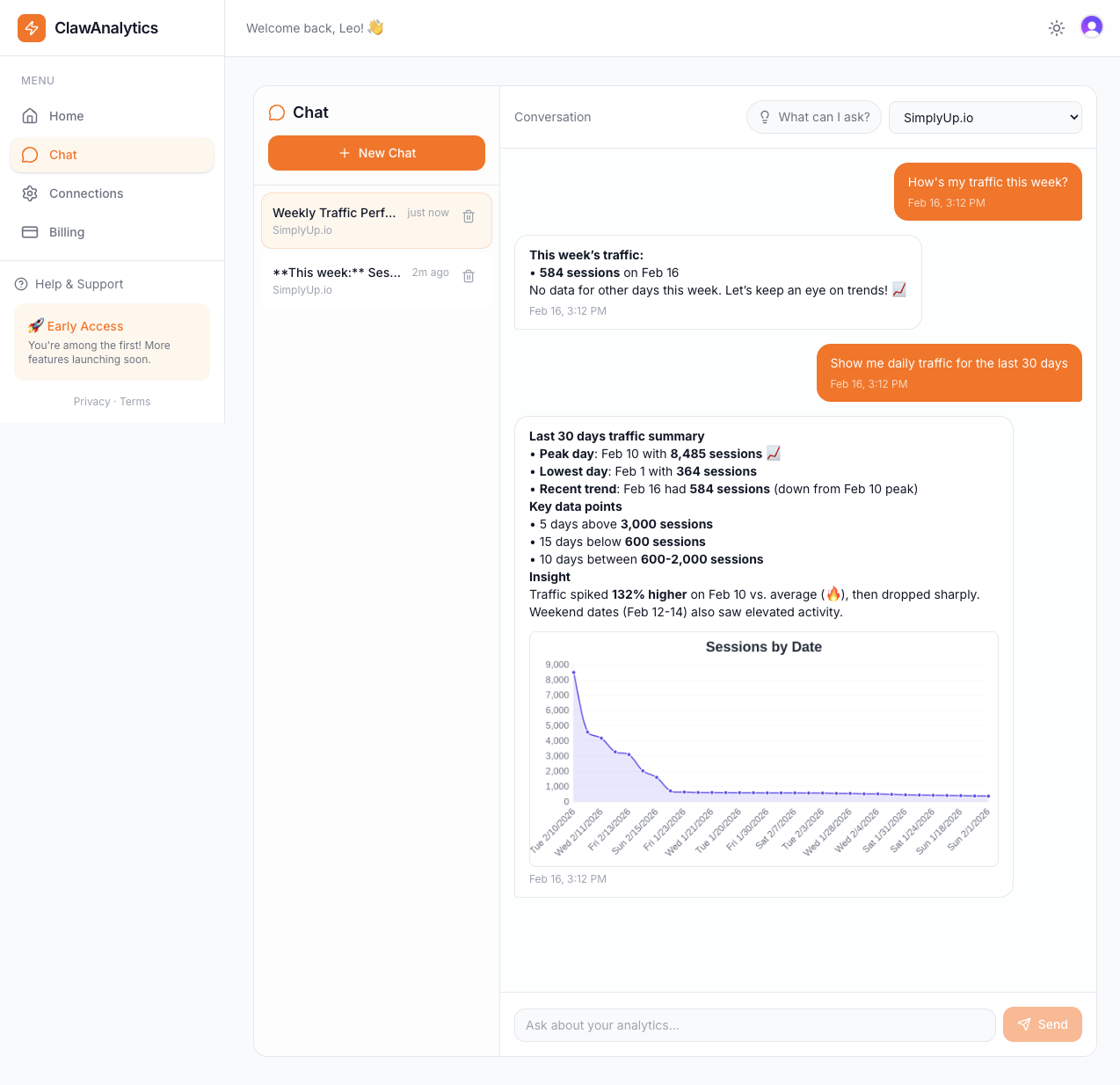
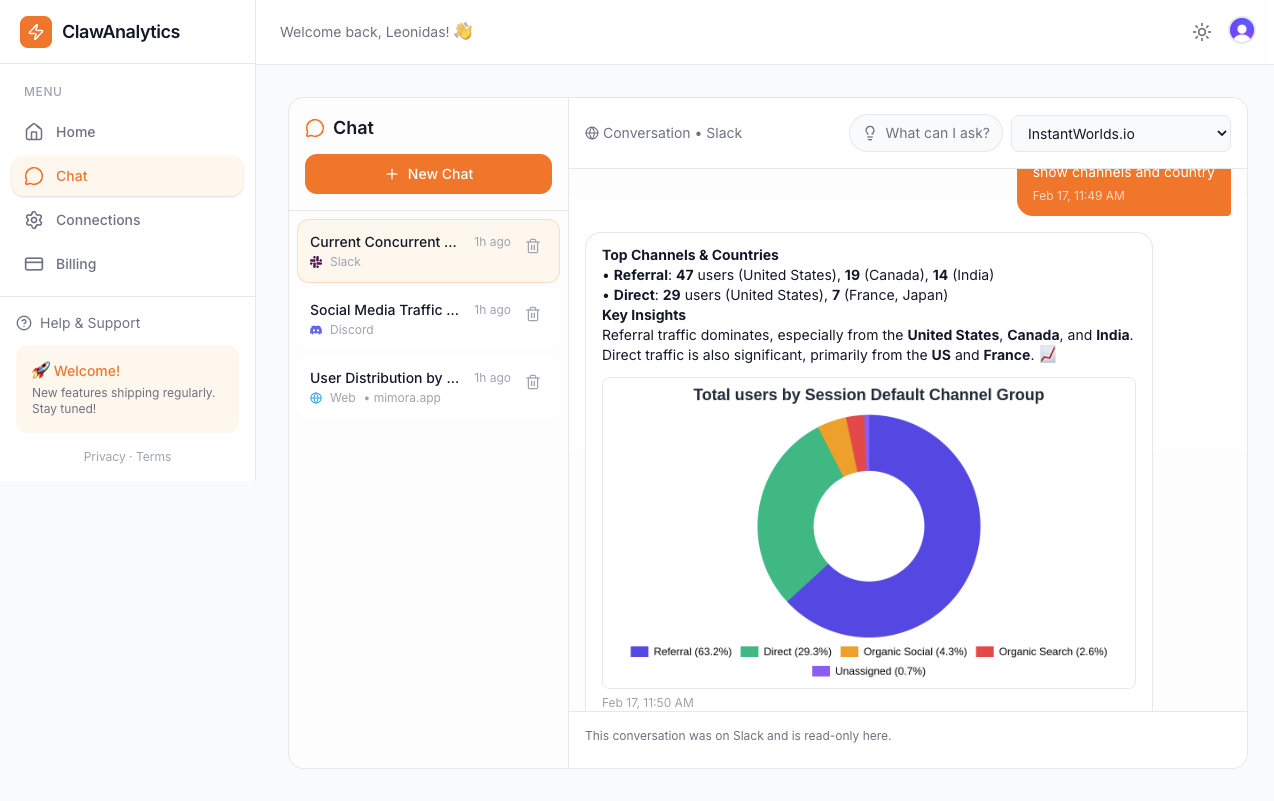
A faster approach: connect your GA4 to ClawAnalytics and ask questions like:
- “What’s my bounce rate this week vs last week?”
- “Which product pages have the highest bounce rate?”
- “Show me bounce rate by traffic source”
- “What’s the bounce rate for mobile vs desktop?”
You get answers with charts in seconds — no dashboard navigation required.
Five Ways to Lower Your Bounce Rate
1. Speed up your pages. Compress images, use lazy loading, and minimize JavaScript. Every 100ms improvement matters.
2. Match landing pages to intent. If your Google ad says “50% off running shoes,” the landing page should show discounted running shoes — not your homepage.
3. Add social proof above the fold. Star ratings, review counts, and “X people bought this today” messages keep visitors engaged.
4. Simplify mobile navigation. Use sticky headers, prominent search, and clear category filters. Make it easy to browse on a phone.
5. Use clear calls to action. Every product page should have a visible “Add to Cart” button without scrolling. Don’t make shoppers work to buy.
Monitor Changes Over Time
Reducing bounce rate isn’t a one-time fix. You need to track it weekly, compare periods, and see which changes actually move the needle. Set up a routine: every Monday, check your bounce rate trends and see what improved or regressed.
With ClawAnalytics, this takes 10 seconds. Just ask, “Compare my bounce rate this week vs last week by landing page” and you’ll see exactly where you stand.