How to Track Bounce Rate for Fitness
Imagine someone lands on your gym website at 9 PM after a long day, searches for “HIIT classes near me,” and within 5 seconds hits the back button. That bounce just cost you a potential member worth $1,200+ annually. This is exactly what bounce rate tells you, and in the fitness industry, where membership value is high, every bounce represents real money walking out the door.
Why Bounce Rate Matters for Fitness
In fitness, your website is often the first impression before someone ever visits in person. A high bounce rate means your digital front door is pushing people away before they can experience what makes your gym special.
What the numbers tell you:
- The average fitness center loses $2,400 per month in potential revenue for every 10% of visitors who bounce without taking action
- Gyms with bounce rates below 45% convert visitors to members at nearly double the rate of those with bounce rates above 65%
- Mobile bounce rates for fitness sites average 15% higher than desktop, largely due to poor mobile experience
Your bounce rate acts as a health check for your website. When it spikes, your marketing spend is being wasted. When it improves, every visitor becomes more valuable.
What Causes Fitness Visitors to Bounce
1. Missing class schedules or pricing upfront. Most visitors want to know “what can I attend and how much does it cost” before investing time exploring your site.
2. Slow-loading workout videos. Fitness sites often feature heavy video content that takes too long to load, especially on mobile data connections.
3. No clear local signals. Without an address, neighborhood name, or service area prominently displayed, visitors cannot confirm your gym is even nearby.
4. Overwhelming homepage design. Excessive promotions, too many options, or cluttered layouts confuse visitors who just want simple answers.
5. Lack of social proof. Prospective members want to see that other people like them work out at your gym. Without testimonials or class photos, trust remains low.
How to Track It
Setting up bounce rate tracking in GA4 takes less than 10 minutes. In your GA4 property, navigate to Reports, then Explore, and create a new report. Add “Bounce rate” as a metric and filter by users who visited from fitness-related search terms.
For example, you might want to answer questions like:
- What is the bounce rate for visitors searching “crossfit [city name]” versus “yoga classes near me”?
- How does bounce rate differ between my homepage and pricing page?
- Are mobile visitors bouncing at higher rates than desktop users?
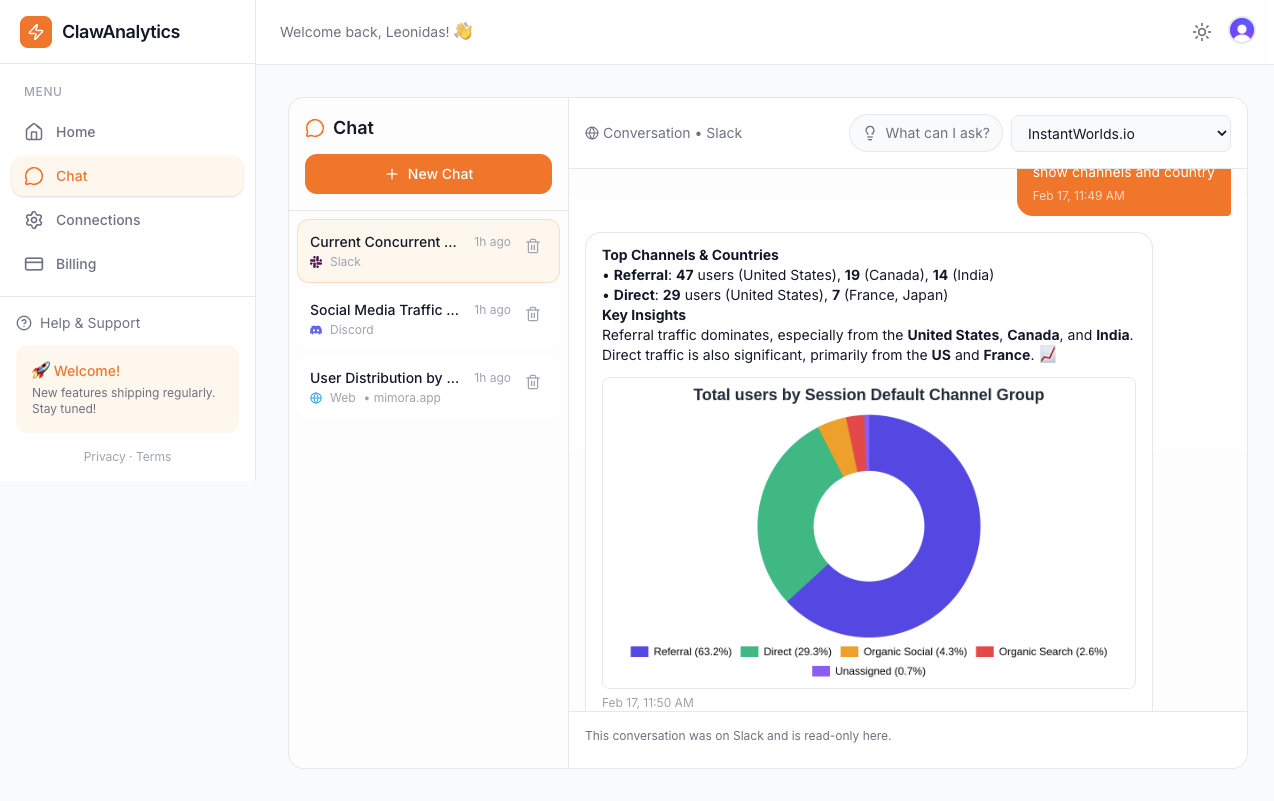
This is where tools like ClawAnalytics become valuable. You can set up custom dashboards that automatically flag when bounce rate spikes on specific landing pages, or compare bounce rates across different traffic sources to understand which channels bring the most engaged visitors. Many gym owners use ClawAnalytics to create alerts that notify them when their contact page suddenly sees elevated bounce rates, which often indicates technical issues or confusing content.
Quick Wins to Reduce Bounce Rate
-
Put schedule and pricing above the fold. Place your class times and membership options where visitors see them immediately without scrolling.
-
Optimize for mobile-first. Over 60% of fitness searches happen on mobile. Test your site on a phone and ensure everything loads within 3 seconds.
-
Add a sticky header with key info. Include your location, phone number, and a “Book a Tour” button that remains visible as visitors scroll.
-
Use exit-intent popups sparingly. Offer a free trial class or guest pass in exchange for email when visitors show signs of leaving. This can recover 5-15% of bounced visitors.