Your potential customer lands on your moving company website at 8 PM on a Tuesday. They typed “best movers near me” into Google, clicked your result, and left 8 seconds later without filling out a quote form or calling. That quick exit is your bounce rate in action.
For moving companies, bounce rate is especially critical because every visitor is a potential high-value customer. A single residential move might generate $800 to $3,000 in revenue. Losing these visitors to bounces means lost revenue.
Why Bounce Rate Matters for Moving Companies
Bounce rate tells you whether your website is capturing the intent that brought visitors through your door. Here is why it matters specifically for movers:
- High-value traffic: Moving customers research extensively. If they bounce immediately, your site failed to hold their attention during the critical decision phase.
- Mobile dominance: Over 60% of moving searches happen on mobile. Slow or cluttered mobile experiences drive bounces.
- Competitive comparison: Customers often open 3-5 moving company sites in one session. Low bounce rates indicate your site is compelling enough to keep them from clicking away.
A moving company in Chicago reduced their homepage bounce rate from 68% to 42% by adding an instant quote calculator. Their leads increased by 35% in two months. That change was worth approximately $12,000 in additional monthly revenue.
What Causes Moving Company Issues with Bounce Rate
Several factors specifically hurt moving company bounce rates:
- Missing instant quote tool: Visitors want immediate pricing. Forms requiring 15+ fields cause immediate exits.
- No phone number visibility: Many customers prefer calling. If they cannot find your number in 5 seconds, they leave.
- Slow page loads: Moving searches are often time-sensitive. Sites taking over 3 seconds lose visitors.
- No local presence signals: Customers want to know you service their area. Missing city names or service area maps increase bounces.
- Generic stock photos: Using generic moving truck photos instead of actual team photos or completed moves feels impersonal.
How to Track It
Setting up bounce rate tracking in Google Analytics 4 takes about 15 minutes:
- Create a Google Analytics 4 property if you have not already.
- Install the GA4 tracking code on every page of your website.
- Navigate to Reports > Engagement > Landing Pages to see bounce rate data.
- Set up custom comparisons to compare bounce rates across different page types.
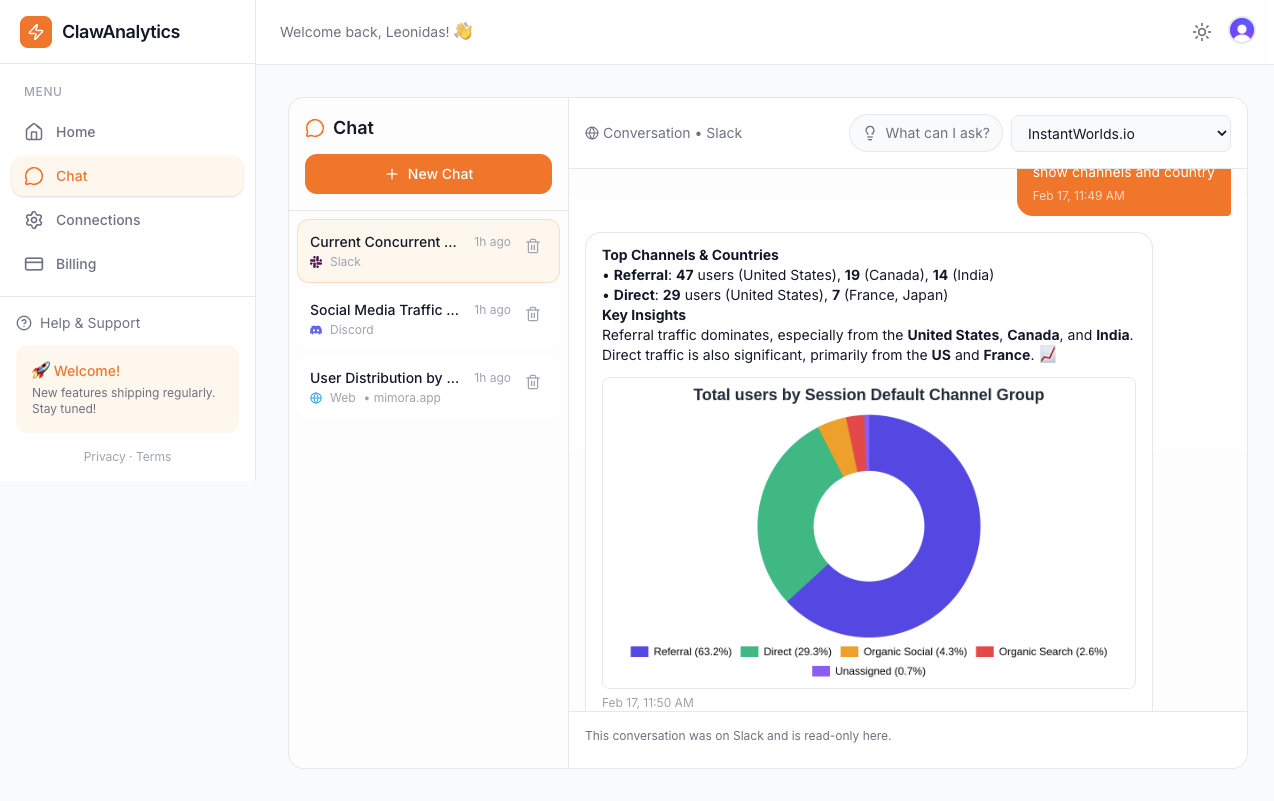
ClawAnalytics makes this easier by providing pre-built dashboards specifically for moving companies. You can track questions like “Which city pages have the highest bounce rate?” or “Do pages with quote tools have lower bounce rates than informational pages?”
You can also set up alerts when bounce rates exceed your threshold. For moving companies, an alert at 60% bounce rate gives you time to investigate before losing too many leads.
Quick Wins to Reduce Your Bounce Rate
- Add a visible quote calculator to your homepage above the fold. This single change typically reduces bounce rates by 15-25%.
- Place your phone number in the top navigation and sticky header. Make it clickable on mobile.
- Show your service area with a simple map or list of cities. Visitors need to know you cover their location.
- Add trust signals including photos of your actual team, recent customer photos, and years in business.