Tutoring Last updated February 22, 2026

How to Track Bounce Rate for Tutoring

Your tutoring service bounce rate reveals how many visitors leave without engaging. Learn what causes bounces, what good looks like, and how to fix it with real data.

Why Bounce Rate Matters for Tutoring

Imagine a parent searching for “calculus tutoring,” clicking your result, and leaving immediately because your homepage only mentions SAT prep and elementary math. That bounce loses a student who needs exactly what you offer.

Bounce rate tells you how often this happens. For tutoring services, a high bounce rate usually means visitors arrived looking for something specific and did not find it quickly. They need to know: “Do you help with my subject?” “Who will tutor me?” and “How much does it cost?” When any answer is missing, they leave.

The financial impact is substantial. If your website gets 2,000 visits monthly with a 55% bounce rate, you are losing 1,100 potential student inquiries per month. At an average tutoring package value of $2,000 per student, that is over $26 million in lost annual revenue.

What Causes Tutoring Visitors to Bounce

Subject is not immediately clear. A student needing chemistry bounces if your site prominently features only math and English. List every subject you cover.

Grade levels are unclear. High school students need different help than elementary students. Without clear grade-level targeting, parents bounce.

Tutor qualifications are missing. Parents entrust their children’s education to strangers. Without tutor bios and credentials, visitors do not trust you.

No pricing information. Tutoring is a significant expense. Without clear rates, visitors assume you are outside their budget and look elsewhere.

No easy booking. If the only way to inquire is a long contact form, busy parents move on to services offering quick scheduling.

How to Track It

Open Google Analytics 4 and navigate to Reports, then Engagement. You will find Bounce Rate in the metrics. If it is not visible, click the column header to enable it.

For more detailed insights, create a custom report. Go to Explore, then Blank. Add Bounce Rate as your metric, and add Session Source/Medium and Landing Page as dimensions. This reveals which pages and traffic sources are performing best.

ClawAnalytics makes this data actionable for tutoring services. You can ask questions like “Which subject pages have the highest bounce rate?” or “Are parents bouncing more from elementary tutoring pages?” and get instant answers without building custom reports. This helps you prioritize fixes where they matter most.

Quick Wins to Reduce Bounce Rate

  1. List every subject you cover. Create a grid or dropdown showing all subjects and grade levels available. Match the language parents search.

  2. Display tutor qualifications. Add profiles for each tutor with education background, teaching experience, and subjects they specialize in.

  3. Show transparent pricing. Display hourly rates, package discounts, and any initial consultation fees. Even a starting range helps.

  4. Offer a free first session. Add a prominent “Book Free Consultation” or “First Session Free” button. This removes the biggest barrier to signing up.
Check your analytics from anywhere

On your morning commute. At a coffee shop. In a meeting. Pull up your analytics on any device and get instant answers.

  • Web dashboard on desktop & mobile
  • Discord bot for team channels
  • Slack integration for your workspace
  • MCP server for AI agents (Claude, Cursor)
See your traffic in 60 seconds →
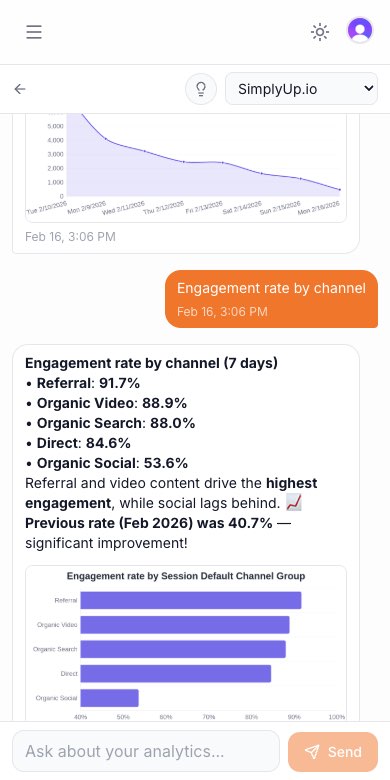
ClawAnalytics mobile chat showing engagement rate breakdown with charts

How ClawAnalytics helps

Skip the dashboards. Get answers in seconds.

🔗
1

Connect GA4

One-click OAuth. Read-only access. Takes 30 seconds to link your Google Analytics property.

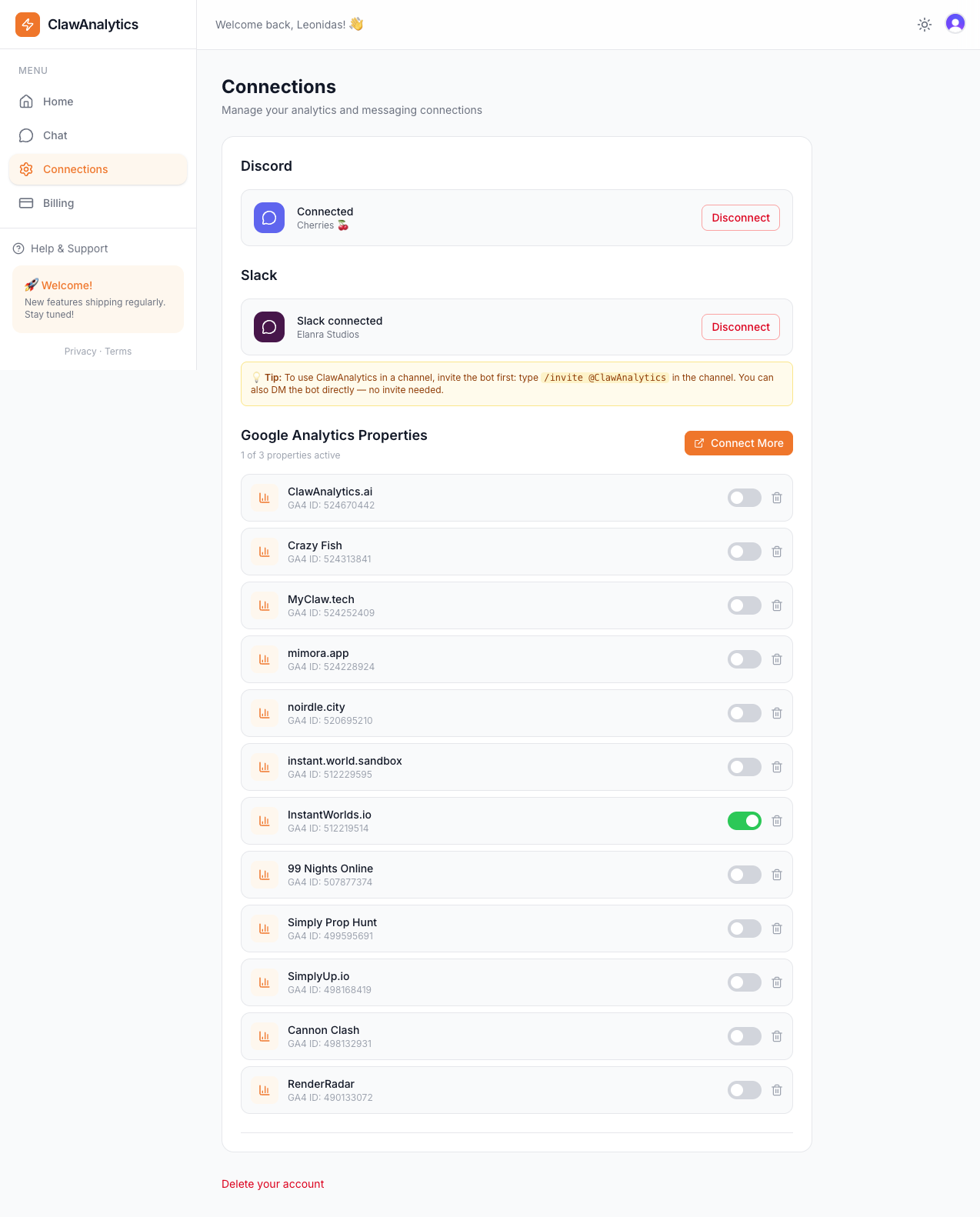
ClawAnalytics connections page showing Google Analytics properties linked
💬
2

Ask questions

Type in plain English. No query language, no filters, no date pickers. Just ask what you want to know.

ClawAnalytics chat interface with natural language query
📊
3

Get answers with charts

Instant responses with visualizations. Share charts with your team or export the data.

ClawAnalytics showing chart response to analytics query

See it in action

Ask a question. Get a chart. That simple.

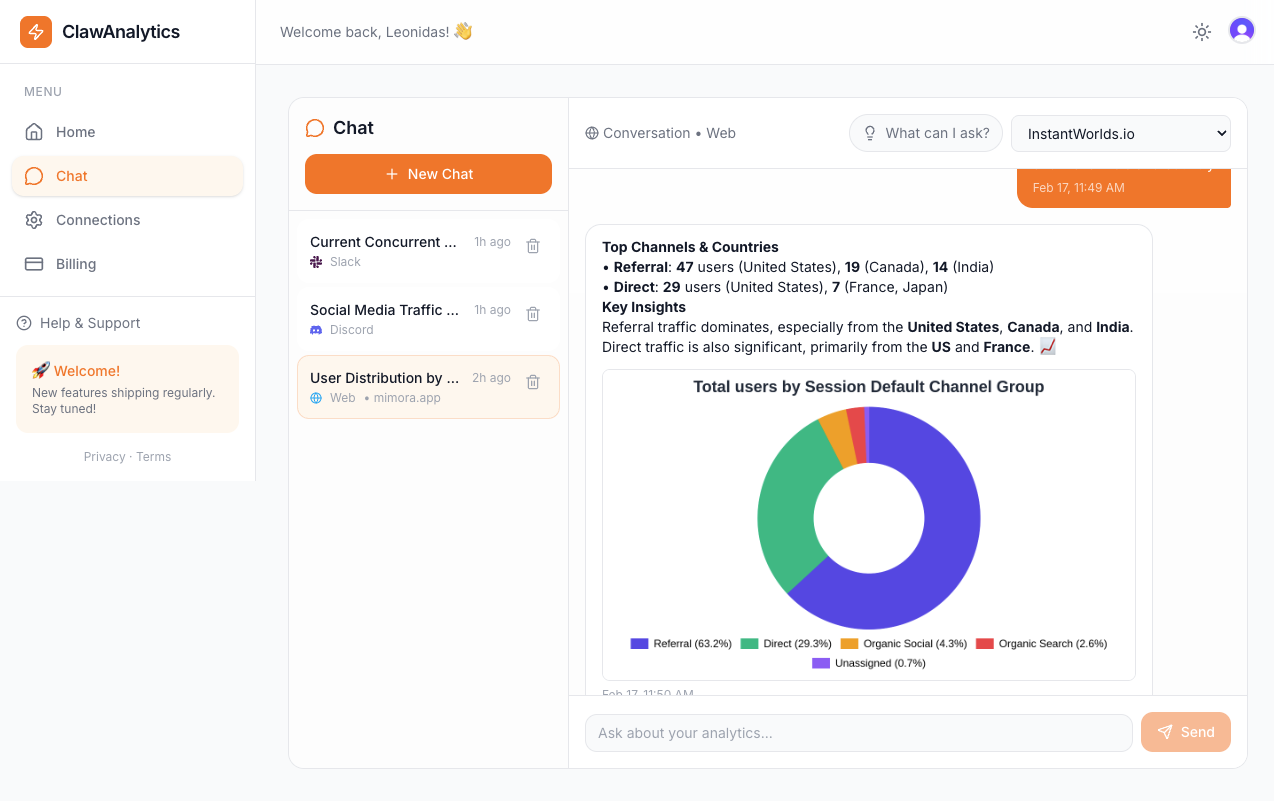
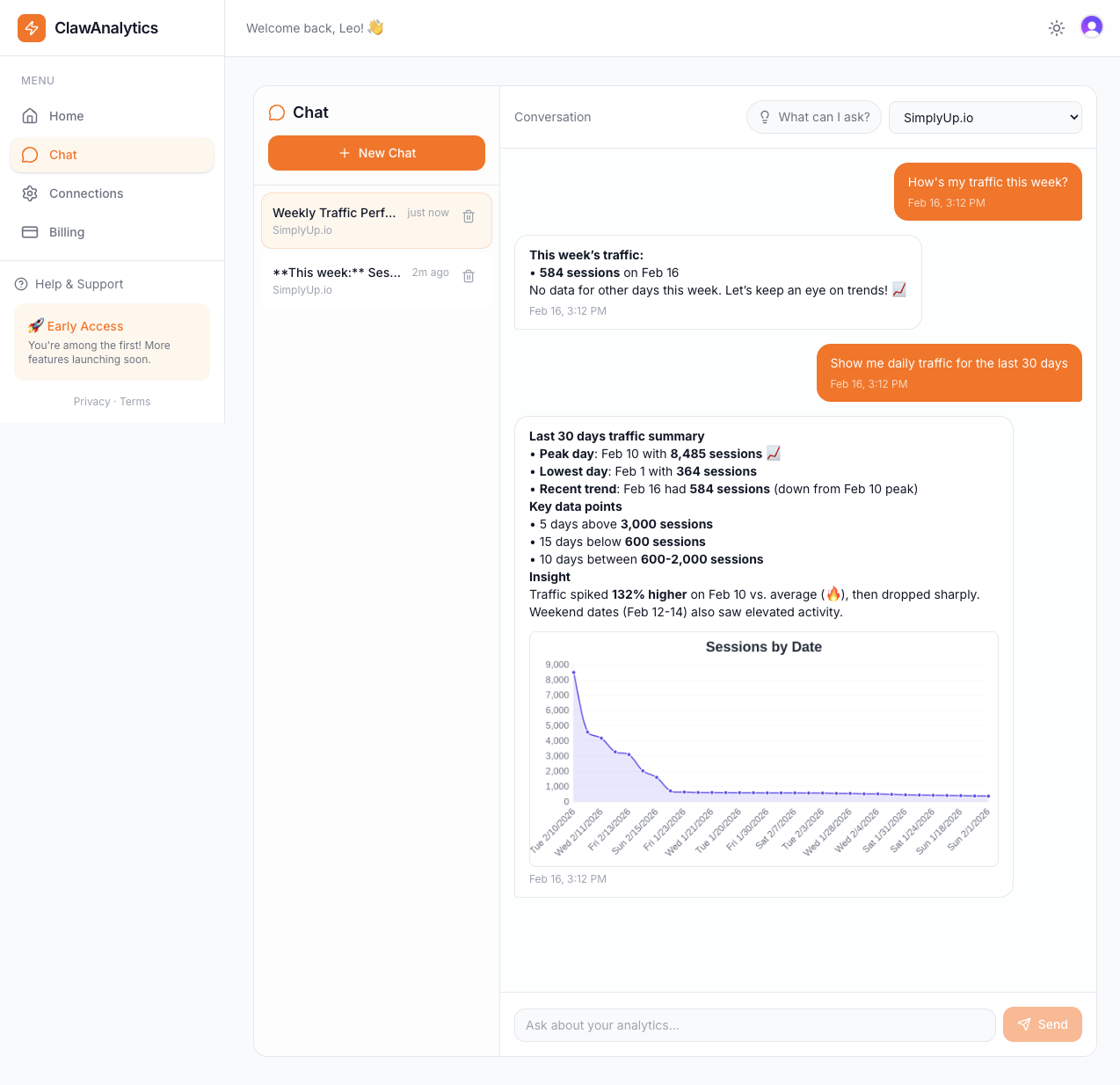
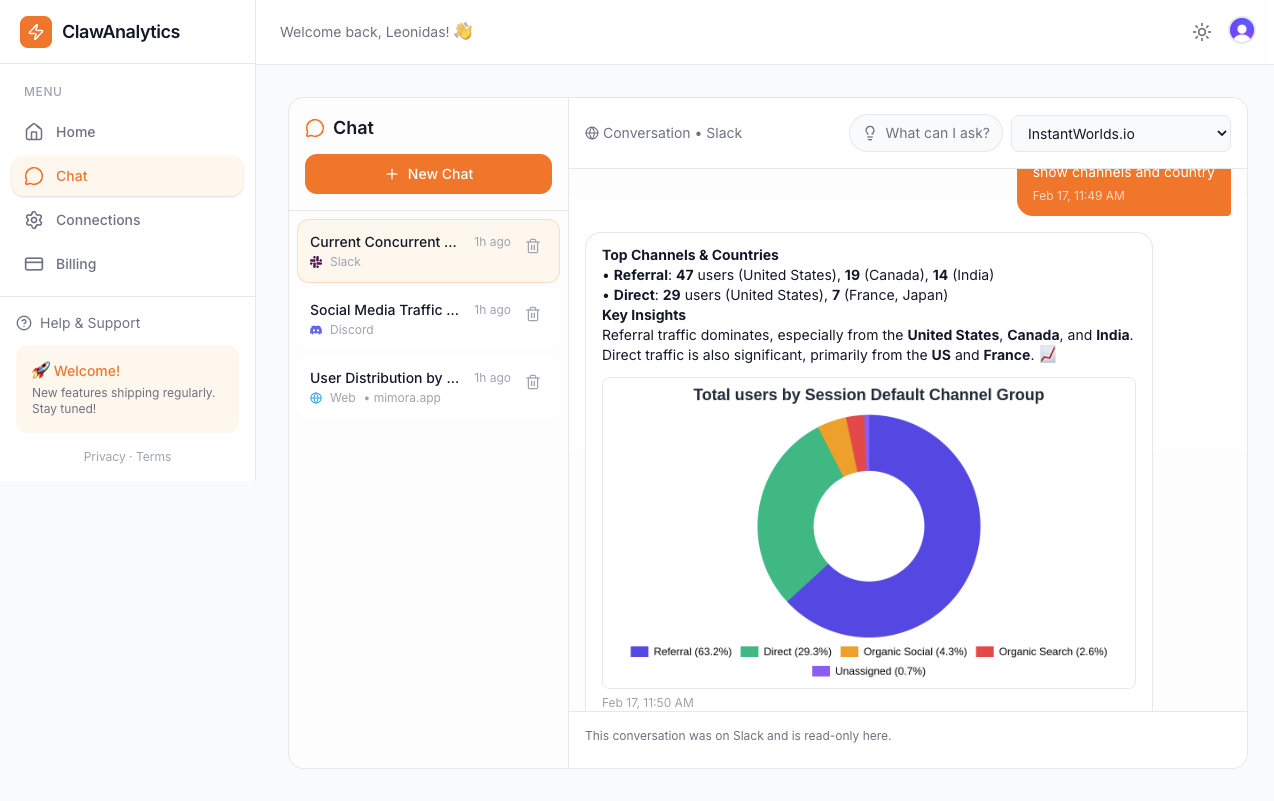
ClawAnalytics Chat
ClawAnalytics chat interface showing a natural language analytics query with chart response

Works on web, Discord, and Slack. Also available as an MCP server for AI agents.

Leonidas Maliokas
"I used to open Google Analytics 5 times a day and still miss things. Now I get a summary every morning and ask follow-ups when something looks off. Takes 10 seconds instead of 10 minutes."

Leonidas Maliokas

Founder, Elanra Studios

🎮 5 games monitored 💼 3 businesses

Simple, honest pricing

Start free. Upgrade when you're ready.

Free

Try it out

$0 /month
  • 5 websites
  • 30 questions/month
  • Web dashboard
  • No credit card
Start Free

Website

For small businesses

$9 /month
  • 5 websites connected
  • 100 questions/month
  • Daily morning summary
  • Web dashboard + Discord
Get Started

Business

For agencies and portfolios

$79 /month
  • Unlimited websites
  • 2,000 questions/month
  • Everything in Pro
  • ✅ API access
  • ✅ MCP integration
  • ⭐ Priority support
Get Started

Stop opening dashboards.
Start asking.

Connect Google Analytics in 30 seconds. Get answers from the dashboard or Discord. Start free — no credit card needed.

Try it free — ask your first question
30-second setup Free plan available Cancel anytime

Got questions?

What is a good bounce rate for tutoring services?
A healthy bounce rate for tutoring websites is between 30% and 50%. Services with clear subject listings, tutor credentials, and pricing typically see rates in the 30-40% range.
Why do visitors bounce from tutoring websites?
Visitors often bounce when they cannot find help for their specific subject or grade level, when tutor qualifications are not visible, or when there is no easy way to book a session.
How can I reduce bounce rate on my tutoring landing page?
List all subjects and grade levels you cover, display tutor qualifications prominently, show transparent pricing, and offer a free first session or consultation.
Does bounce rate differ between traffic sources for tutoring?
Yes. Tutoring services typically see higher bounce rates from generic search terms (50-65%) as visitors may be comparison shopping, while specific searches like 'SAT tutoring Denver' bounce less (30-40%) as visitors have clear intent.

Related guides

More resources to help you get the most from your analytics.