How to Track Cart Abandonment Rate for Consultants
Picture this: a potential client visits your website, spends 15 minutes browsing your consulting packages, adds your “Premium Strategy Session” to the cart, then vanishes. Without cart abandonment tracking, you’d never know this lead existed. With the right setup, you can recover these clients and convert more prospects into paying engagements.
Why Cart Abandonment Rate Matters for Consultants
Consultants often underestimate how many high-intent prospects slip through the cracks. Here’s why tracking this metric transforms your business:
Revenue recovery potential is massive. If even 3 out of 10 interested prospects abandon the booking process, that’s lost income you didn’t know you were missing. Reaching out to just half of them could mean several thousand dollars in recovered revenue each month.
It reveals pricing and packaging friction. When prospects consistently abandon at the checkout step, your pricing or package structure might be unclear. Tracking abandonment patterns helps you identify whether clients are confused about deliverables, timeline, or value.
It measures actual buying intent. Website visits and email signups are vanity metrics. Cart abandonment rate shows you exactly how many people were ready to hire you but stopped short. This is the closest metric to “qualified leads” that consultants can track.
It improves your follow-up strategy. Knowing which services get abandoned most often lets you create targeted follow-up sequences. A prospect who abandoned a branding consultation might need different messaging than one who abandoned a technical audit.
How to Check in GA4
Setting up cart abandonment tracking for consultant services requires a few steps in Google Analytics 4:
First, enable ecommerce reporting in your GA4 property. Go to Admin, click Data Streams, select your website stream, and toggle on Enhanced Measurement. This automatically tracks ecommerce events.
Next, verify you’re capturing the right events. Look for “begin_checkout” firing when someone adds a consulting package to cart. Check “purchase” fires when someone completes booking. If your booking system doesn’t trigger these automatically, work with your developer to add the appropriate event tracking.
Finally, create a custom report. In GA4, go to Explore, create a new Blank exploration, and add “Cart Abandonment Rate” as a metric. Segment by your consulting service categories to see which packages have the highest abandonment. The formula is: ((Checkout Starts - Purchases) / Checkout Starts) × 100.
The Easier Way
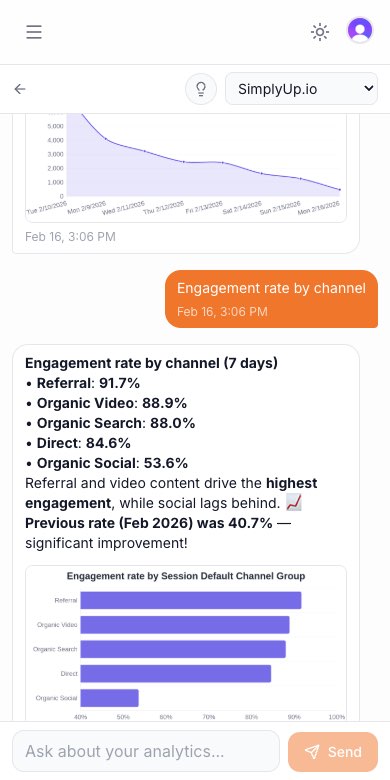
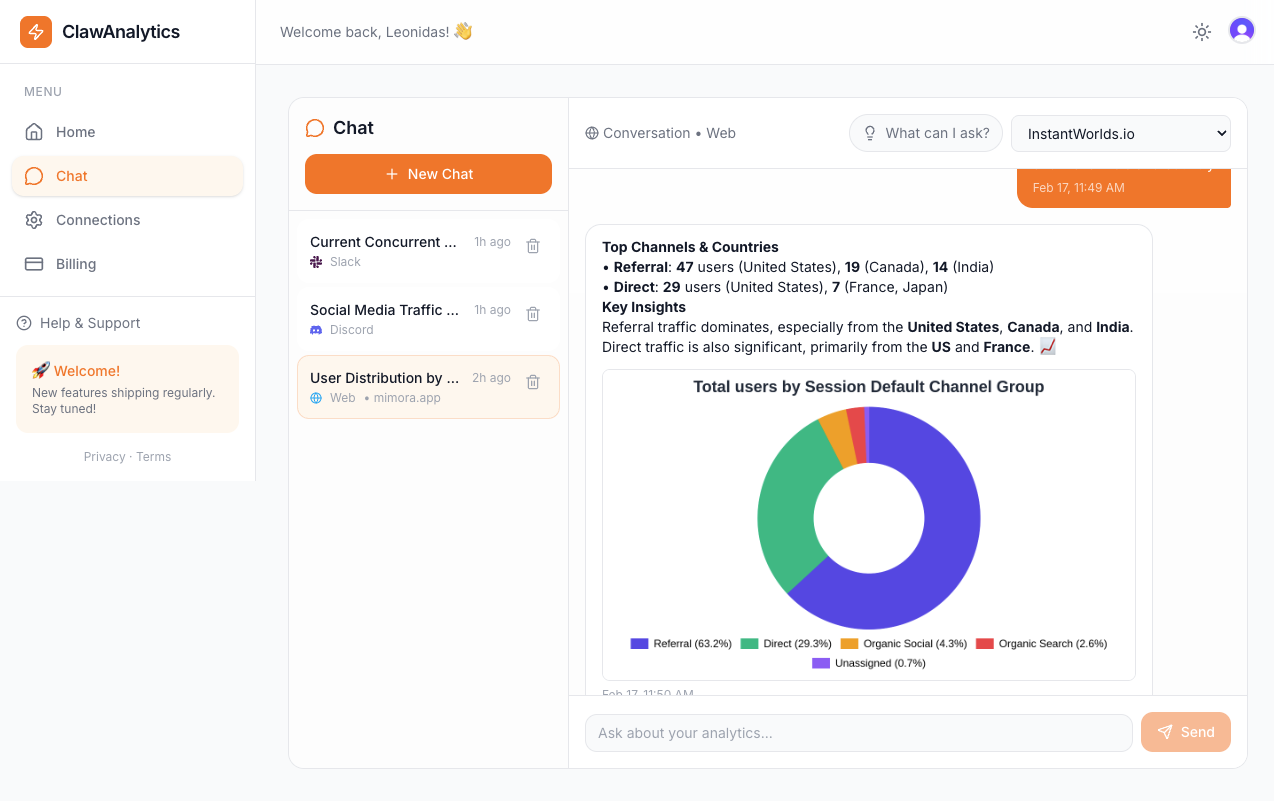
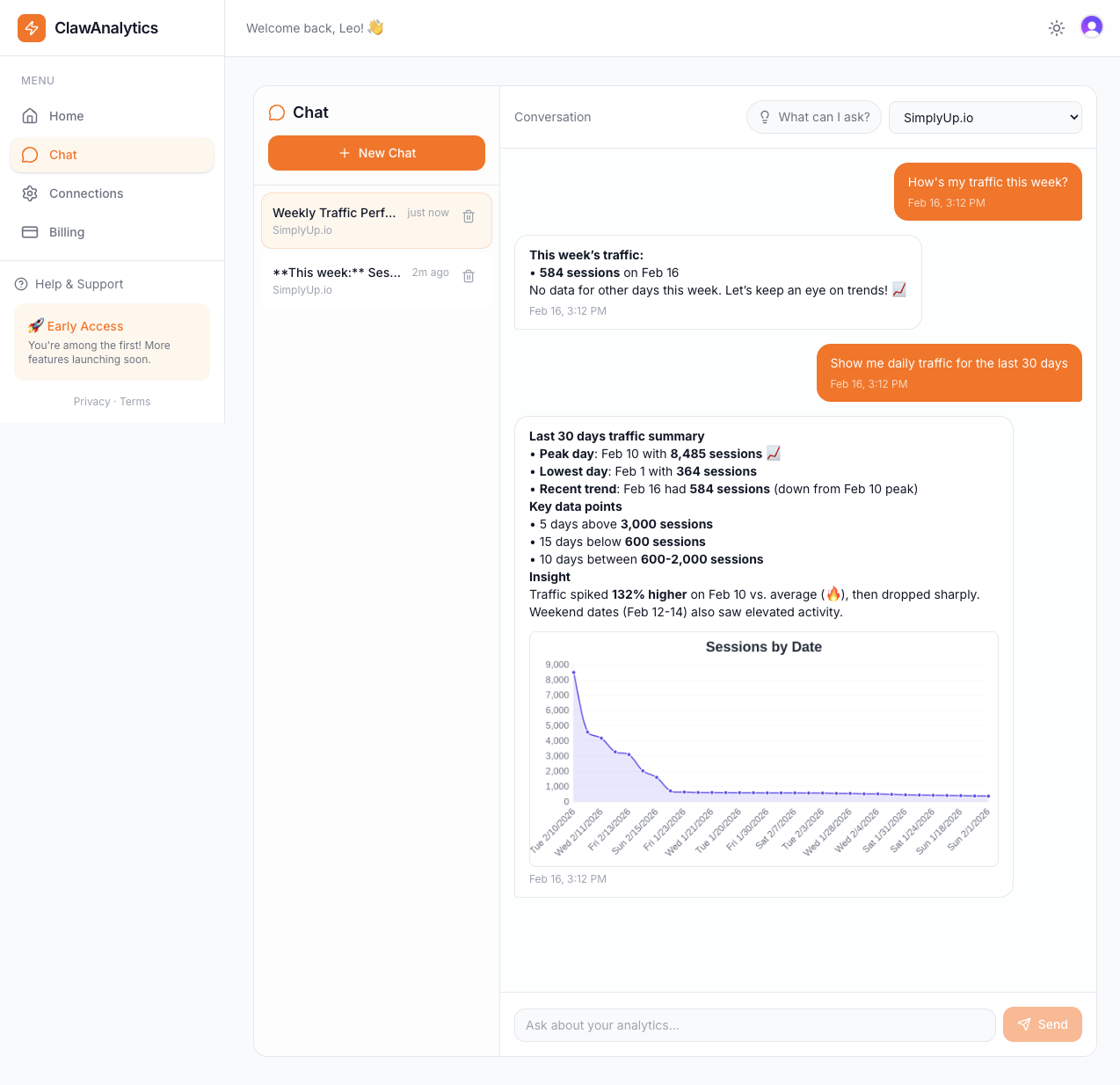
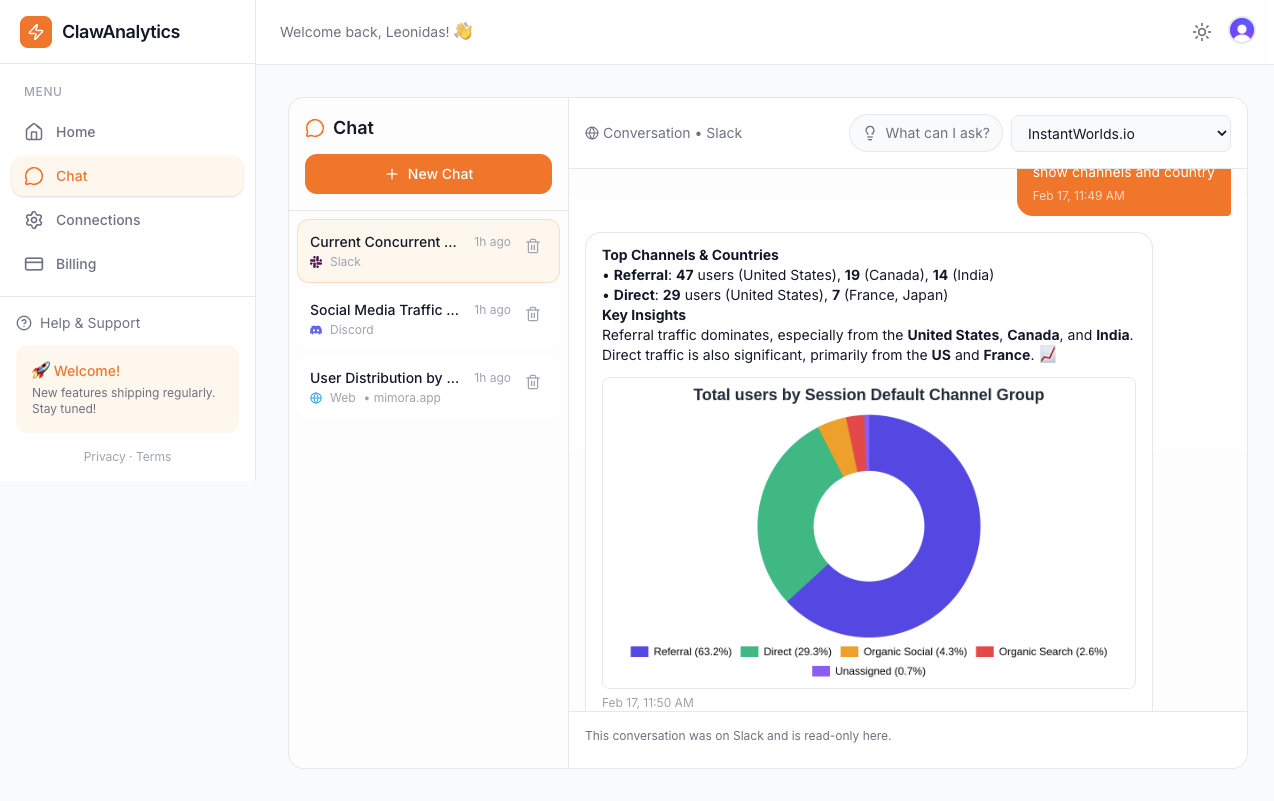
GA4 gives you numbers, but ClawAnalytics gives you action. Here’s how it works in practice:
You could manually check GA4 every week to see that your “Retainer Package” has a 68% cart abandonment rate. Or you could set up ClawAnalytics to automatically notify you when a prospect abandons a booking, complete with their contact information if they provided an email.
Example questions ClawAnalytics answers instantly:
- Which consulting packages have the highest abandonment rate this month?
- What time of day do prospects typically abandon the cart?
- Which landing pages lead to the most abandoned carts?
- Are mobile visitors abandoning at higher rates than desktop?
Instead of digging through GA4 reports, you get a dashboard that tells you exactly what to fix and when to follow up. The platform integrates with your booking system to surface the prospects most worth reconnecting with.
Quick Wins
Start recovering lost consultant clients today with these immediate actions:
Add exit-intent popups. When someone about to leave your booking page, offer a free discovery call or a relevant lead magnet. This captures contact info for follow-up regardless of abandonment.
Simplify your checkout process. Remove unnecessary form fields. Ask only for what’s required to book. Every extra field increases abandonment by 4-8% on average.
Send targeted follow-up emails within 24 hours. The faster you reach out after abandonment, the higher the recovery rate. Script your follow-up to address common objections for your specific services.
A/B test your package presentations. Try different pricing displays, package names, and benefit summaries. Track which versions reduce abandonment and scale what works.