How to Track Channel Grouping for Coaches
As a coach, every client interaction starts somewhere. Maybe they found you through a Google search, saw your Instagram post, or got a recommendation from a fellow professional. Without tracking channel grouping, you’re guessing which marketing efforts actually pay off.
Why Channel Grouping Matters for Coaches
Understanding your traffic sources helps you make smarter marketing decisions. Here’s why it matters:
Budget optimization becomes simple. When you know which channels bring the most clients, you stop wasting money on strategies that flop. Instead, you invest more in what works.
You understand client behavior. Different channels attract different types of clients. Organic search might bring people ready to hire, while social media might bring those still exploring. Channel grouping reveals these patterns.
You prove your marketing ROI. If you spend money on ads or email marketing, channel data shows whether those investments actually generated leads. This helps you justify expenses to yourself and stakeholders.
You spot trends early. If a particular channel suddenly drops, you’ll notice immediately. Maybe a platform changed its algorithm or your content strategy needs adjustment.
How to Check in GA4
GA4 organizes your traffic into logical groups. Here’s how to find the data:
Open GA4 and go to Reports, then Traffic Acquisition. The default view shows you how different channels perform across sessions, users, and conversions.
Look for these key channel groups:
- Organic Search: People who found you through Google or other search engines
- Paid Search: Visitors from search ads you purchased
- Social: Traffic from platforms like Instagram, LinkedIn, Facebook
- Email: People who clicked links in your newsletters or campaigns
- Direct: Visitors who typed your URL directly or used bookmarks
- Referral: People who clicked links from other websites
Check which channels bring the most valuable actions. In GA4, set up conversions for actions that matter to your coaching business, like form submissions, consultation bookings, or purchases.
The Easier Way
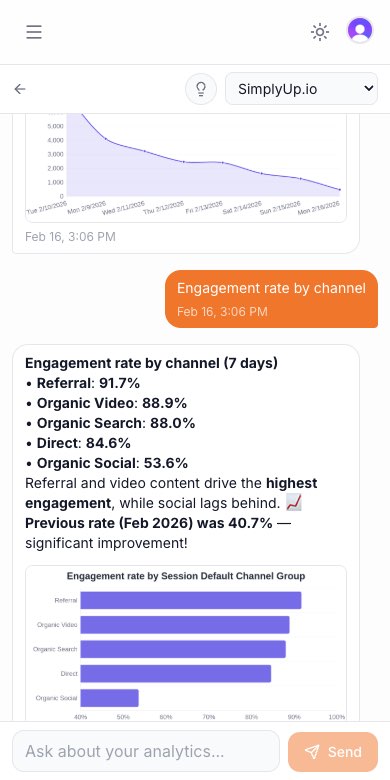
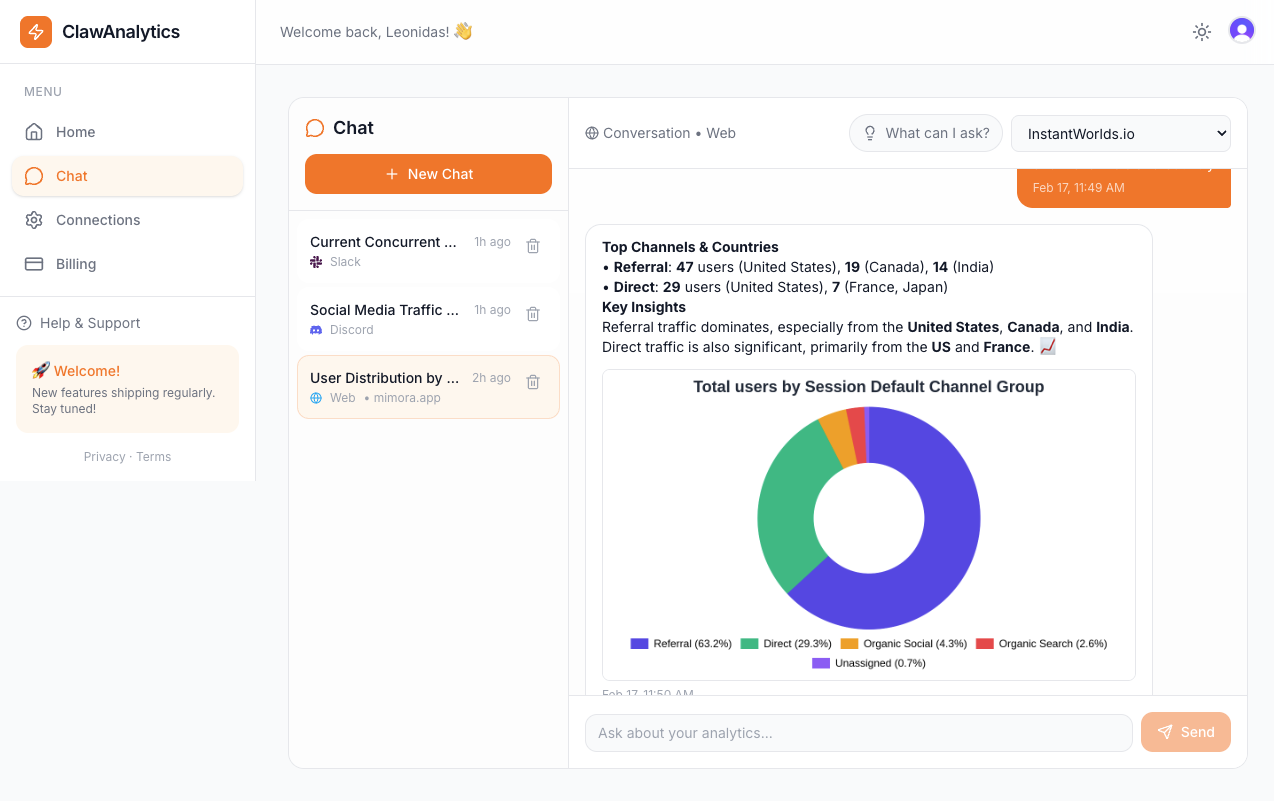
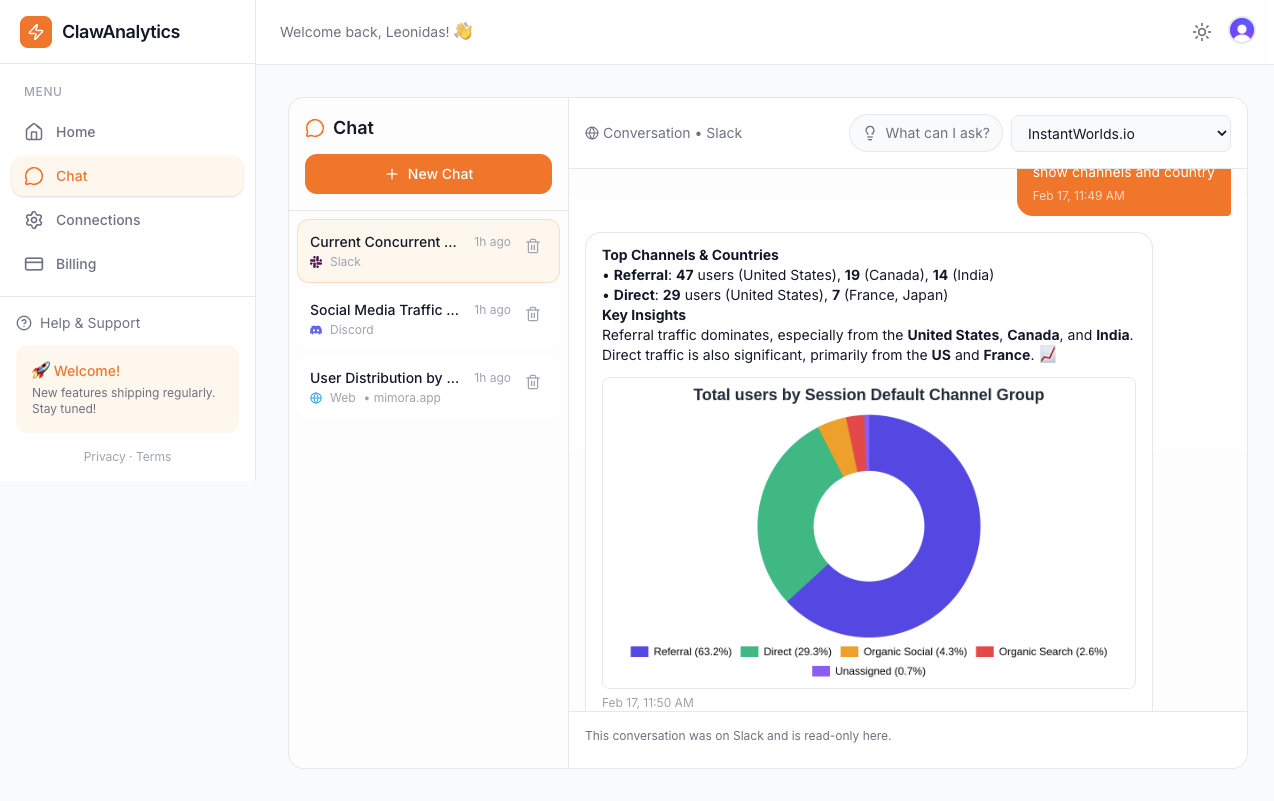
GA4 gives you raw data, but pulling meaningful insights takes time. ClawAnalytics simplifies this by showing you exactly which channels drive results.
For example, ClawAnalytics can instantly answer questions like:
- Which social platform brings the most coaching inquiries?
- Is my email newsletter actually generating leads?
- Are my Google Ads paying off, or should I shift budget elsewhere?
- What’s my cost per acquisition from each channel?
Instead of manually building reports, you get a clear picture of your marketing performance. This helps you make decisions based on data, not gut feelings.
Quick Wins
Start tracking consultation bookings as conversions. Set this up in GA4 so you can see which channels actually generate leads, not just website visits.
Create a UTM parameter strategy. When you share links on social media or in emails, use consistent UTM tags. This gives you granular data about what’s working.
Review your channel data weekly. A quick weekly check helps you spot changes before they become problems. Marketing channels shift constantly.
Focus on two or three primary channels. Trying to optimize everywhere at once spreads you thin. Pick your top performers and double down.
Test one new channel at a time. If you want to try LinkedIn ads or a podcast sponsorship, track it separately so you can measure its impact clearly.