How to Track Channel Grouping for Consultants
Every consulting engagement starts with a connection. Someone hears about you through a search, a LinkedIn message, a podcast mention, or a colleague’s recommendation. Without channel grouping, you’re left guessing which of these sources actually drives your business.
Why Channel Grouping Matters for Consultants
Your time is valuable, and marketing efforts should be focused on what works. Channel grouping helps you do exactly that.
You identify high-value traffic sources. Not all leads are equal. Some visitors want a quick question answered, while others are ready to sign a contract. Channel data shows which sources bring the latter.
You optimize marketing spend intelligently. If you’re running ads or sponsoring events, channel tracking shows whether these investments generate billable work. No more throwing money at strategies that look good but produce nothing.
You understand your client journey. Different channels attract clients at different stages. Someone searching for solutions might be ready to hire, while someone following you on social media might need more nurturing.
You report results to stakeholders. Whether you’re reporting to a partner or tracking your own business growth, channel data gives you concrete numbers to share.
How to Check in GA4
GA4 groups your website traffic into meaningful categories. Here’s how to find them:
Navigate to Reports then Traffic Acquisition in your GA4 property. You’ll see your traffic organized by default channel groups.
Key channels to monitor:
- Organic Search: People who found you through search engines
- Paid Search: Visitors from search ads
- Social: Traffic from LinkedIn, Twitter, Facebook, or other platforms
- Email: Clicks from newsletters or email campaigns
- Direct: Visitors who typed your URL directly
- Referral: Clicks from other websites mentioning you
Set up conversions in GA4 for actions that matter to your consulting practice. Track things like contact form submissions, consultation requests, or contract signings. Then compare conversion rates across channels.
The Easier Way
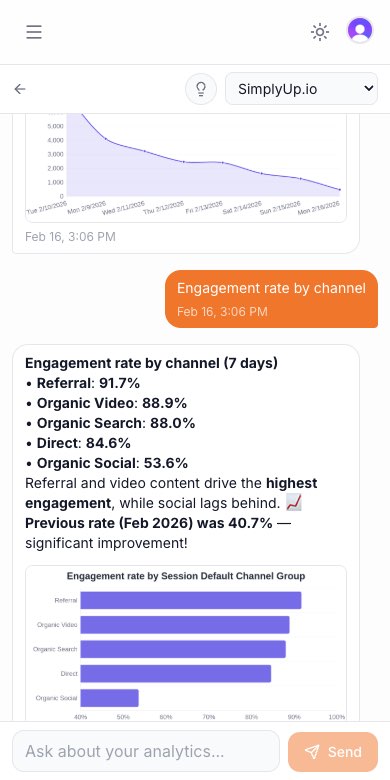
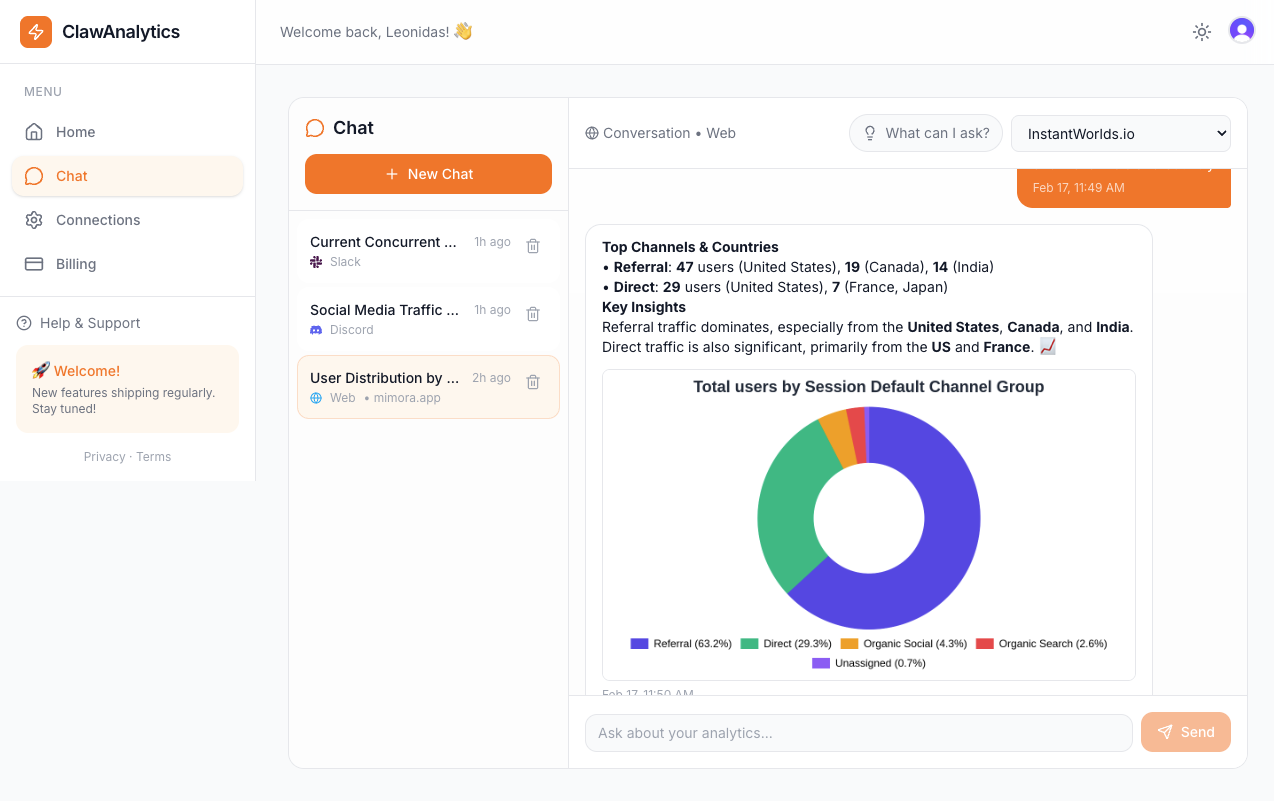
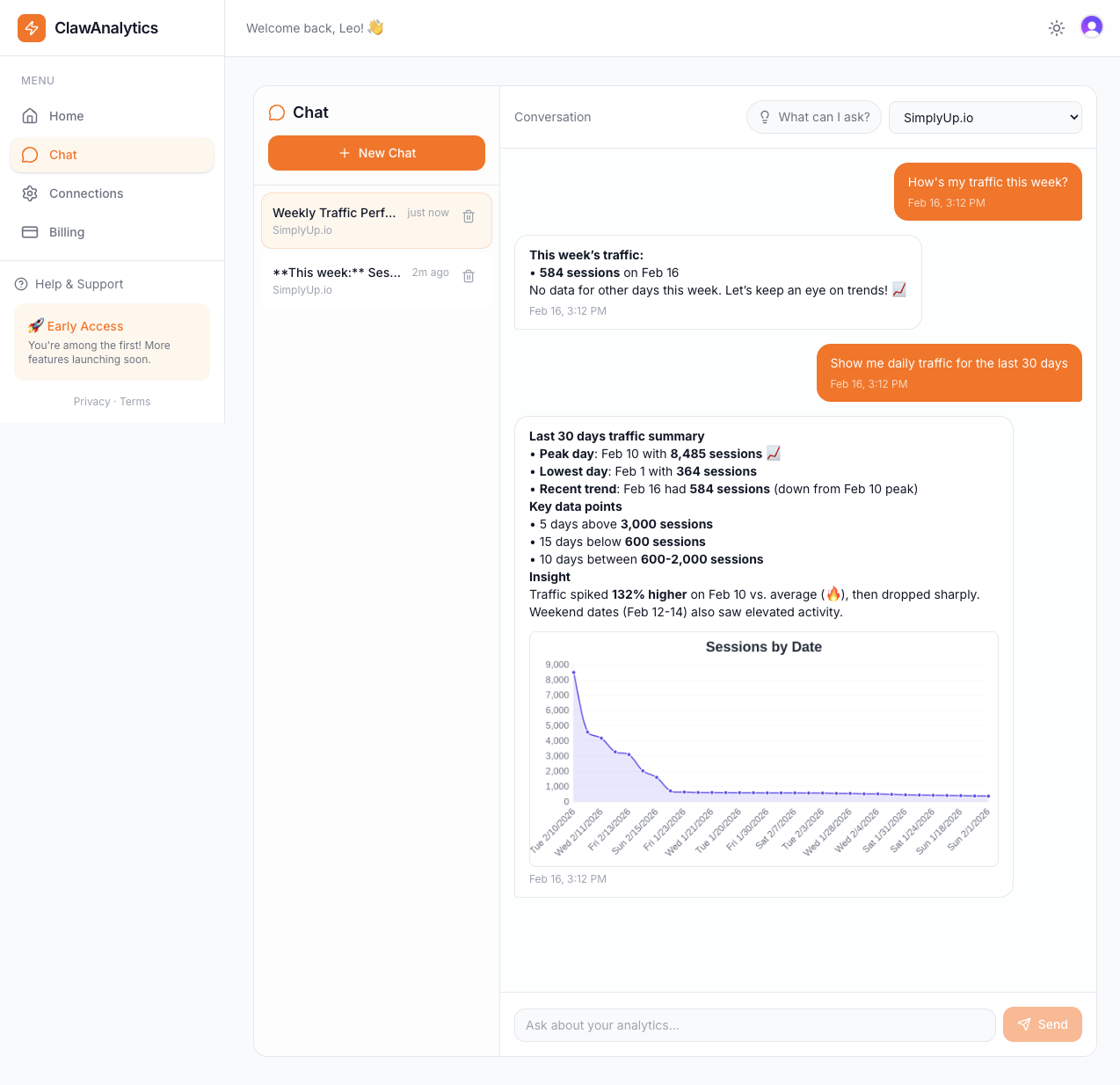
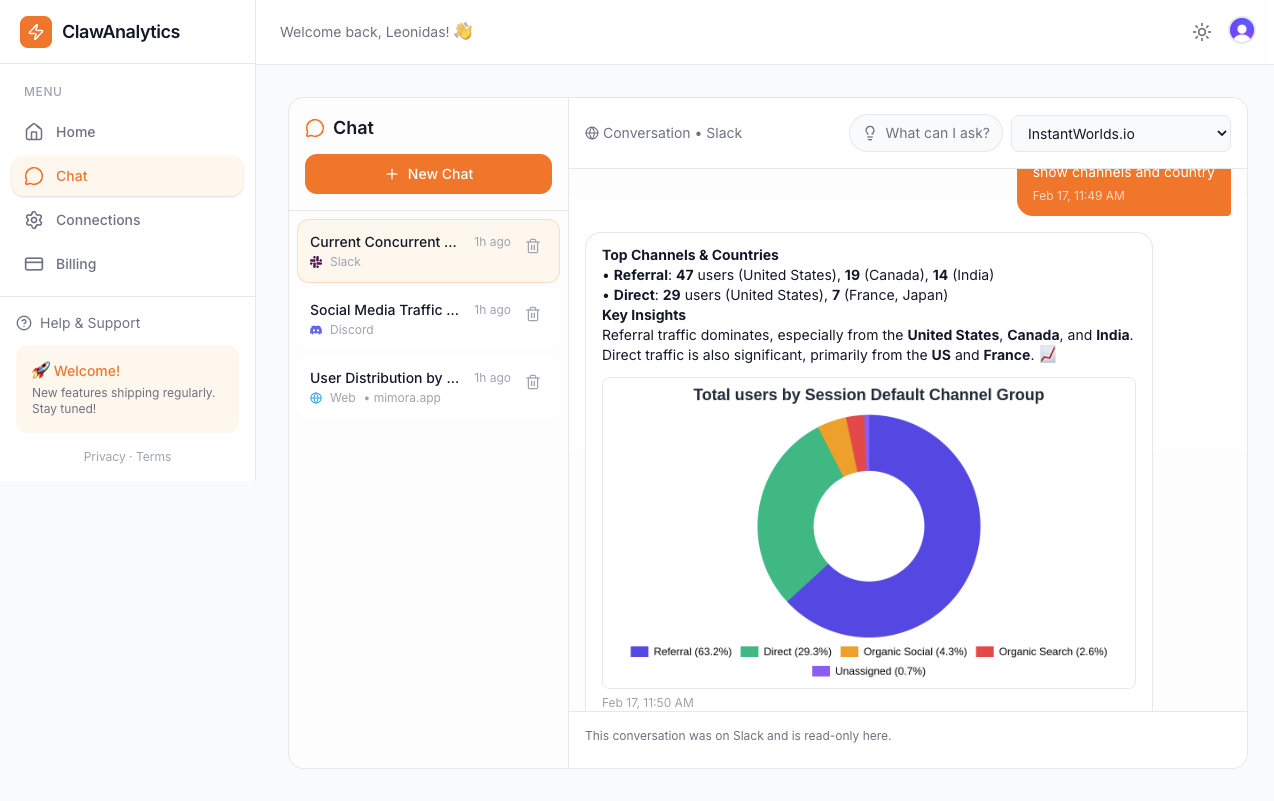
Building reports in GA4 takes expertise and time. ClawAnalytics makes this effortless by presenting your channel performance in a clear, actionable format.
ClawAnalytics helps you answer questions like:
- Which channel brings the most consultation requests?
- Is my LinkedIn activity generating leads?
- Are my email campaigns worth the effort?
- What’s my best source for enterprise clients versus SMB work?
With these insights, you know exactly where to focus your business development energy.
Quick Wins
Define what a qualified lead means for your practice. Set up conversion tracking in GA4 for that specific action. This could be a consultation booking form or a discovery call request.
Use consistent UTM parameters for all your links. When you share content on LinkedIn, in emails, or in proposals, use standard UTM tags. This creates clean, comparable data.
Check your channel performance every two weeks. Regular reviews help you spot trends before they become problems. Channels can shift quickly.
Focus on two channels that deliver results. Rather than trying to be everywhere, pick your top-performing sources and maximize those.
Test new channels one at a time. If you want to try a new podcast guest appearance or ad campaign, track it separately to measure its impact accurately.