How to Track Channel Grouping for Florists
Your flower shop gets visitors from everywhere: someone finds you on Google, another couple discovers you through a wedding planner, and a regular customer shares your Instagram post. Channel grouping shows you exactly where each type of customer comes from and which sources turn into orders.
Why Channel Grouping Matters for Florists
It identifies your best lead source. Whether it is wedding planner partnerships, local Google search, or Instagram, you need to know which brings paying customers.
It guides seasonal marketing. Valentine’s Day and Mother’s Day are huge for florists. Channel grouping shows which channels drive the most orders during these peaks.
It justifies partnership investments. If a wedding planner sends three bookings a month, you can put a dollar value on that relationship and invest accordingly.
It reveals online versus offline impact. Many florists still rely on word-of-mouth. Channel grouping shows how your online presence supports or exceeds offline referrals.
How to Check in GA4
Open GA4 and go to Traffic Acquisition. You will see default channels: Organic Search, Paid Search, Social, Email, Referral, and Direct.
To make this work for your flower shop:
- Click Organic Search to see if customers find you when searching for local florists
- Check Referral to see which wedding vendors link to your site
- Look at Social to track Instagram, Facebook, and Pinterest performance
Create custom channel groups for your specific sources by going to Configure > Channel definitions.
The Easier Way
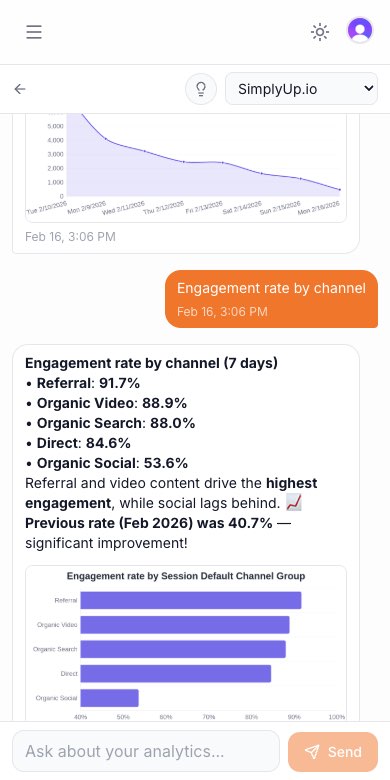
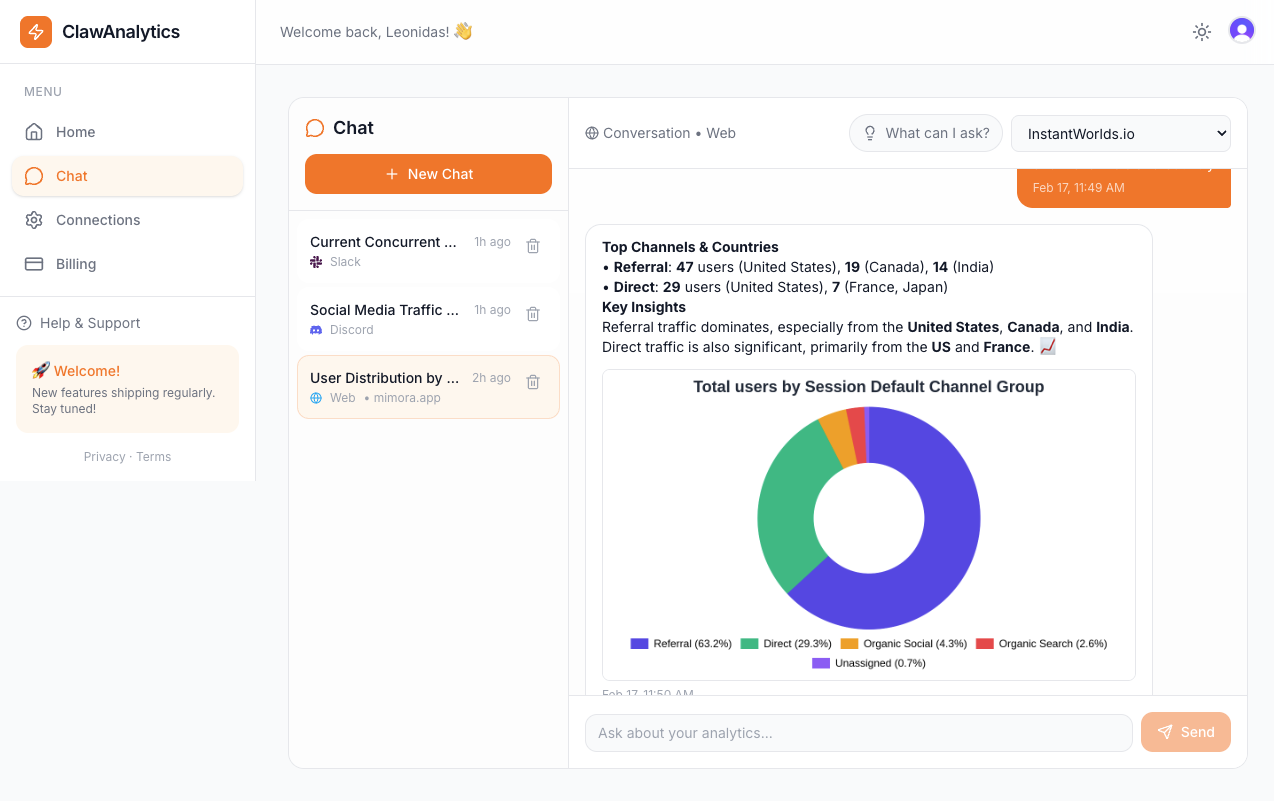
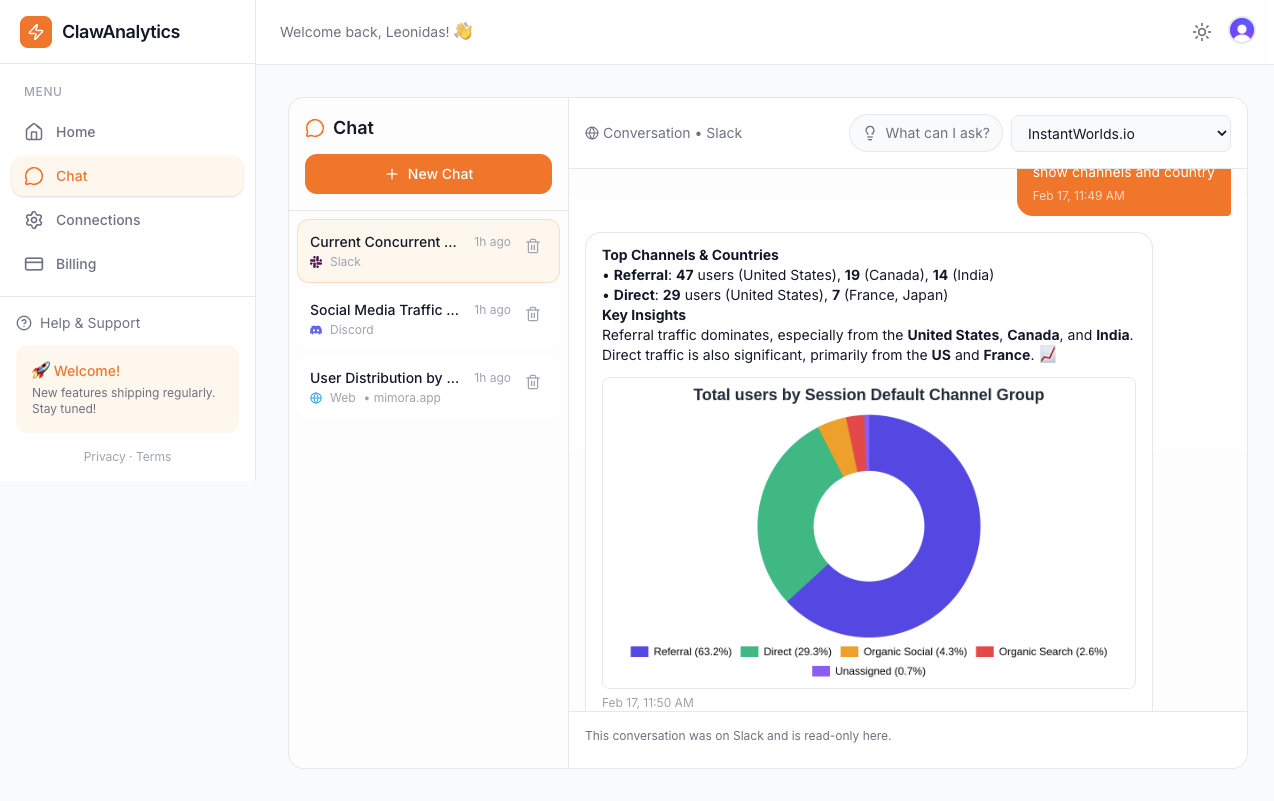
ClawAnalytics speaks your language. You can ask:
- “Which wedding venues refer the most clients to us?”
- “Are Valentine’s Day orders coming from Instagram ads or local search?”
- “What percentage of our regular customers found us through Google?”
This helps you focus on the channels that actually grow your business instead of guessing which marketing effort is working.
Quick Wins
Claim your Google Business Profile. Most floral traffic comes from local search. Make sure it is optimized and track how many visits it drives through your channel data.
Track wedding inquiries separately. Set up a conversion event for wedding consultation requests so you can see which channels bring your highest-value clients.
Monitor repeat customer channels. If most of your regulars came from a specific source, double down on that marketing.
Review before each holiday rush. Check which channels performed best in previous holiday seasons to guide your advertising budget.