How to Track Channel Grouping for Local Business
You own a restaurant, a salon, or a plumbing company. You’ve set up a Google Business Profile, listed on Yelp, tried Facebook ads, and maybe even sent some emails. But which one actually brings customers? Channel grouping helps you answer this question.
Why Channel Grouping Matters for Local Business
Local businesses compete for nearby customers. Understanding local traffic sources is vital. Channel grouping shows whether customers found you through search, social, or a directory. This improves marketing ROI. Instead of guessing, you can invest in what works.
It also helps with staffing and inventory. Knowing when certain channels spike helps you prepare for busy periods. Plus, customer reviews tie into channels. When someone leaves a review, channel data helps you understand what brought them in.
How to Check in GA4
For local businesses, focus on specific channel groups. Go to Acquisition > Traffic acquisition in GA4. Look at Organic Search (often dominated by local search), Direct, Referral (from local directories), and Social. You can also track calls and direction requests if you enable these as events.
Create a custom channel group for “Local Directories” that includes Yelp, TripAdvisor, Angie’s List, or industry-specific directories. This helps you see the combined impact of your directory listings.
The Easier Way
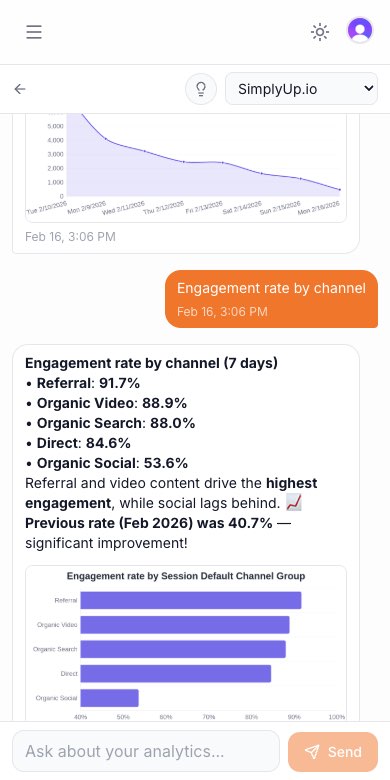
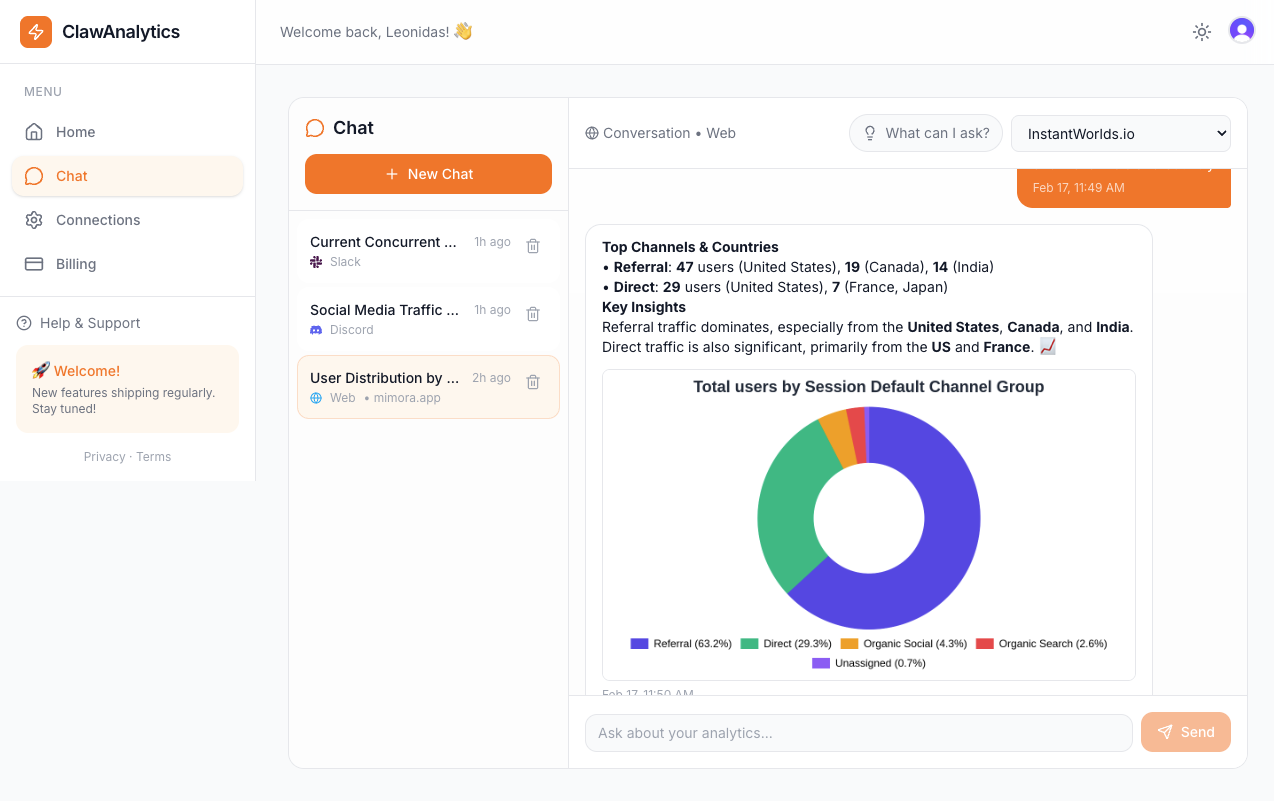
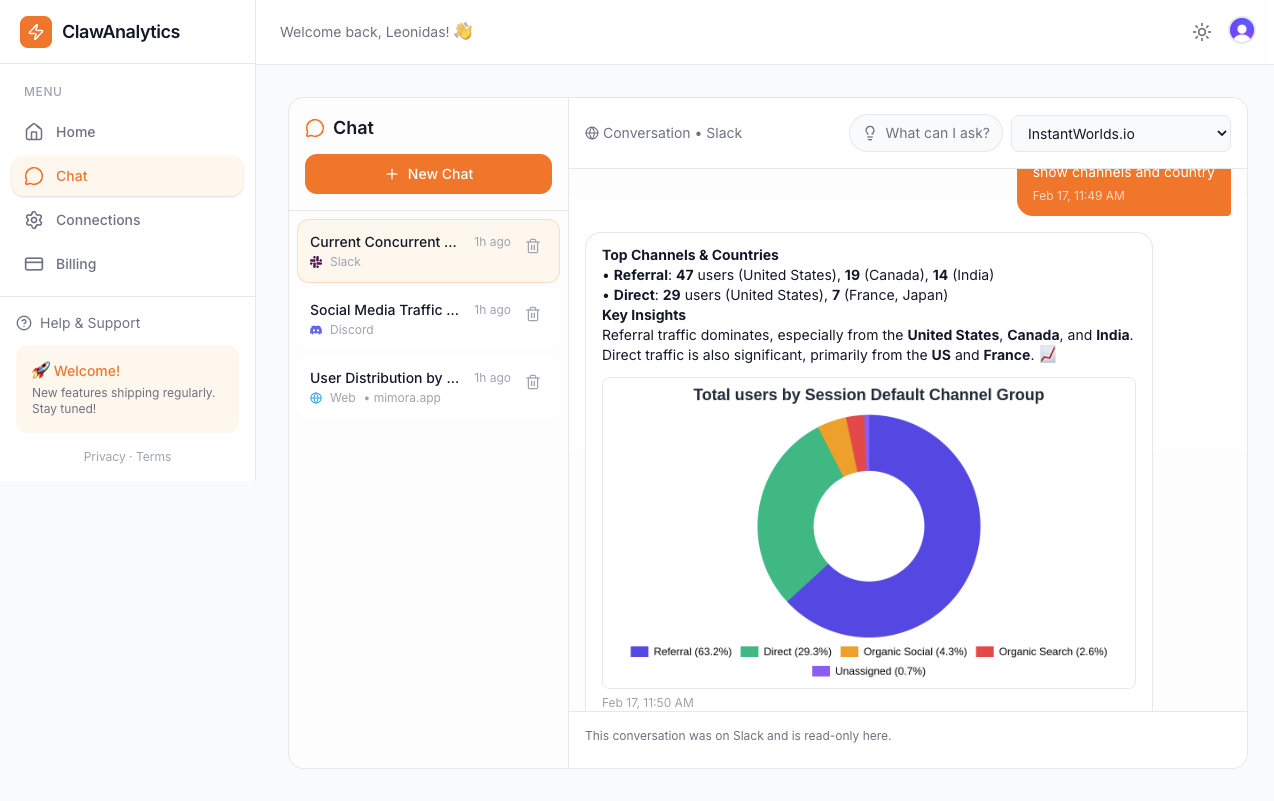
ClawAnalytics makes local business channel tracking simple. Ask questions like: “Which directory sends the most calls?” or “Do people find me more through search or social?” The platform connects your marketing efforts to actual customer actions.
Many local businesses use ClawAnalytics to prove the value of their Google Business Profile or to decide whether to renew expensive directory subscriptions. It’s much easier than trying to read raw GA4 data.
Quick Wins
Here are tips for local businesses to improve channel tracking. First, claim your Google Business Profile and link it to GA4. Second, use consistent UTM parameters for any local ads or promotions. Third, track phone calls as a conversion if possible. Fourth, ask new customers how they found you to validate your channel data.