How to Track Channel Grouping for Travel
The travel industry is competitive. You might advertise across Google, social media, email, and travel platforms. But do you know which actually brings bookings? Channel grouping answers this.
Why Channel Grouping Matters for Travel
1. Booking source clarity. Travel customers research extensively. They might see an ad on Instagram, search on Google, check reviews on TripAdvisor, and finally book directly. Channel grouping shows which touchpoints matter most.
2. Seasonality patterns. Travel is seasonal. Channel effectiveness changes throughout the year. Channel grouping reveals when each source performs best. You stop overspending during low seasons.
3. Platform comparison. Travel businesses often list on OTAs like Expedia and Booking.com. But direct bookings are more valuable. Channel grouping shows how many direct bookings your marketing actually drives.
4. Campaign performance. Run a promotion for winter destinations? Channel grouping tells you whether it reached new customers or just excited existing ones. You measure real ROI.
How to Check in GA4
Open GA4 and go to Traffic Acquisition. The default Channel grouping shows Organic Search, Paid Search, Social, Email, Referral, and Direct. This is your baseline.
For travel, create custom channel groups. Go to Configure > Channel definitions > Channel groups. Separate your OTA traffic from direct traffic. Group destination-specific campaigns together. Track partner referrals separately.
UTM tagging is essential for travel. Tag every email blast, every social campaign, every partnership link. When a traveler sees your destination post on Facebook and clicks through, you want to know.
Track the full booking journey. Visitors might browse many pages before booking. Set up conversion tracking for reservation completions. ClawAnalytics makes this easier than raw GA4.
The Easier Way
GA4 gives you data. ClawAnalytics gives you answers.
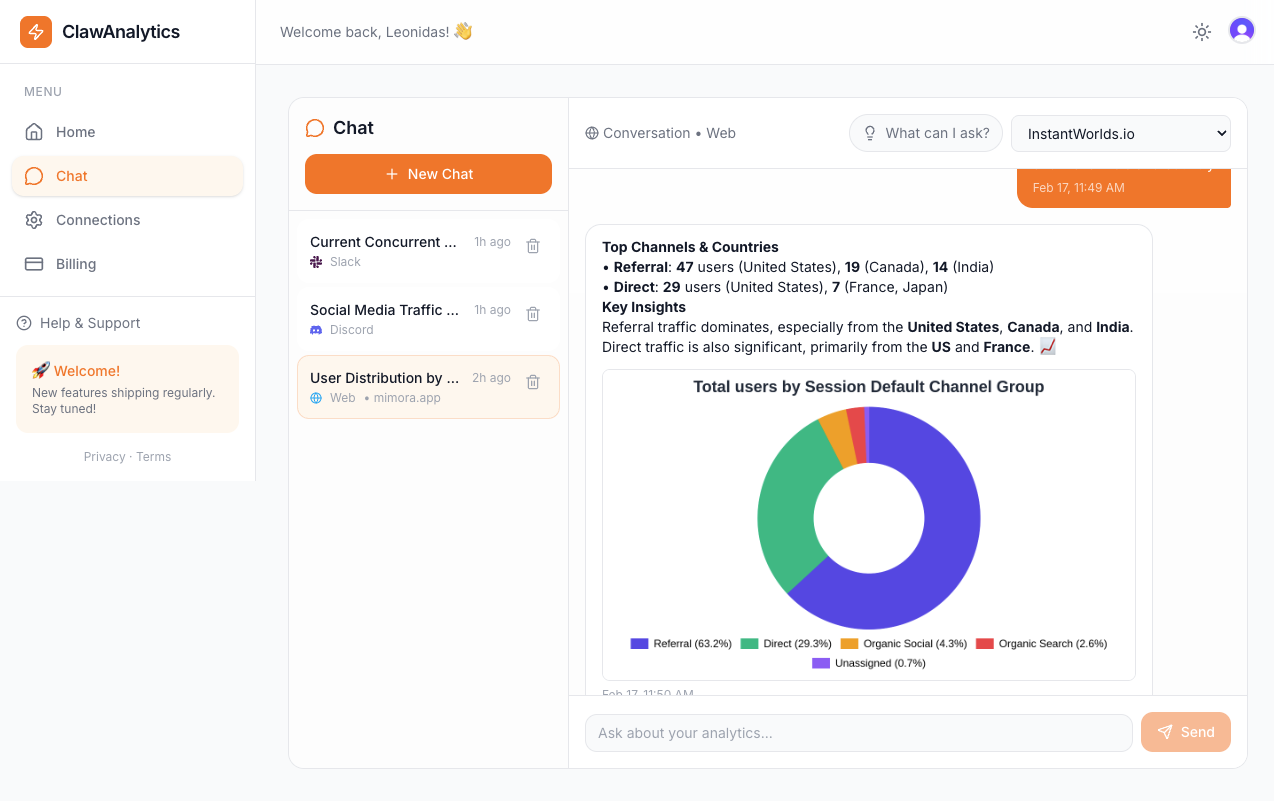
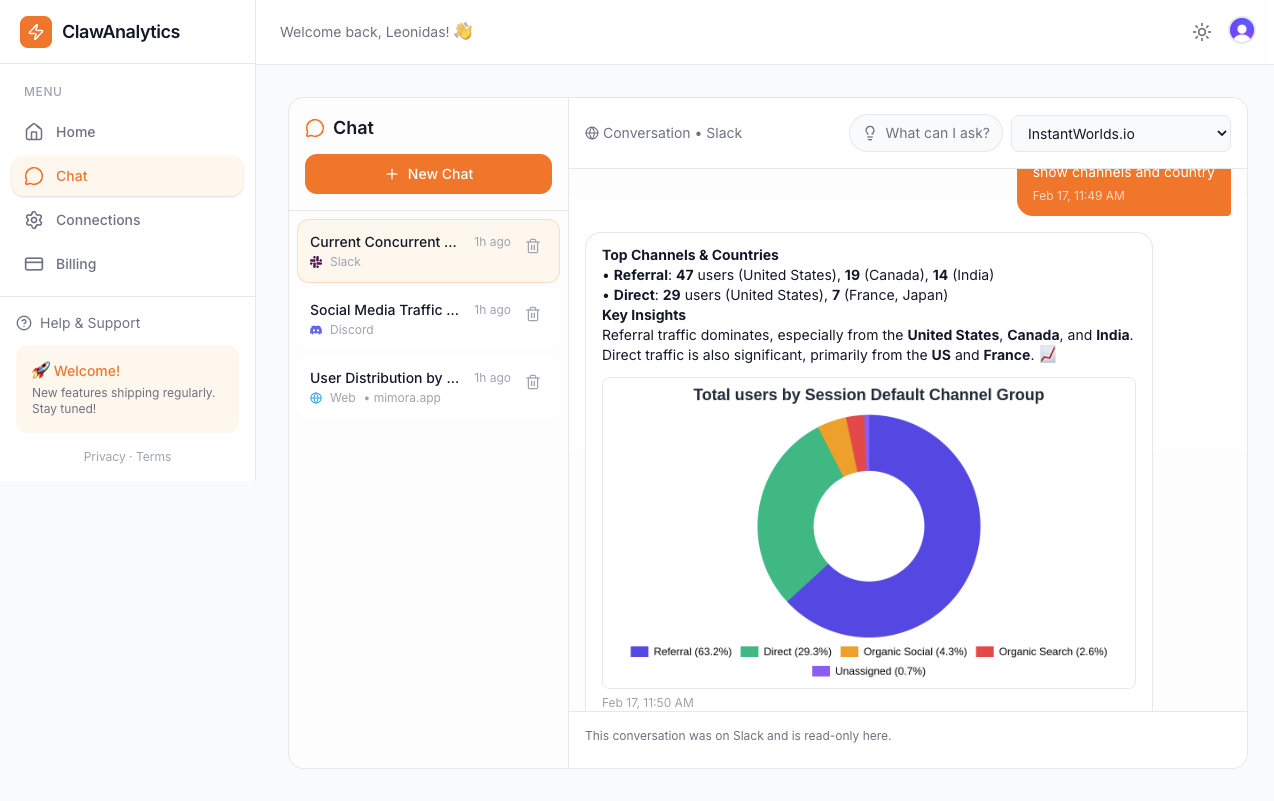
ClawAnalytics connects to your travel business data and shows you which channels actually convert into bookings. You skip the complexity and see straight to insights. The platform answers questions like “Which marketing channel brings guests who spend more on extras?”
You might discover that your email newsletter brings guests who book longer stays. Or that your Instagram ads attract younger travelers. These insights shape everything from pricing to promotions.
ClawAnalytics also helps you understand the research-to-booking timeline. Travel planning takes time. You see which channels start the journey and which close the deal.
Quick Wins
Start with default channels. See how much traffic comes from Organic, Paid, Social, Email, Referral, and Direct. Does this match your expectations?
Tag every touchpoint. Instagram, Facebook, email, OTA partners, travel blogs. Every source needs UTM tags. Without tags, you cannot track effectively.
Track bookings, not just visitors. A channel that brings many lookers but few bookers is not helping. Set up proper conversion tracking. ClawAnalytics handles this well.
Compare seasonal performance. Travel changes by season. See which channels work during peak versus off-peak times.
Test new channels. Travel audiences are everywhere. Try new platforms and track results with proper channel grouping.