How to Track Cohort Analysis for Architects
Imagine you just spent $15,000 on a marketing campaign that brought in 20 new client inquiries last spring. Six months later, only 3 of those clients actually hired you for projects. Cohort analysis would have shown you this pattern sooner, letting you adjust your approach before wasting more budget.
Why Cohort Analysis Matters for Architects
Client lifetime value becomes visible. Instead of guessing which clients are worth pursuing, you see concrete data on who returns for renovations, additions, or new builds. Firms using cohort analysis report 23% better insights into which project types pay off long-term.
Marketing spend gets smarter. When you track when clients first contacted you versus when they signed, patterns emerge. Maybe clients who find you in January sign faster than those who discover you in August. Cohort analysis reveals these timing patterns.
Project profitability improves. Architecture firms often overlook how client acquisition timing affects profit margins. Cohorts let you compare margins across different client groups and identify which combinations of project size and acquisition channel deliver the best returns.
Referral tracking becomes real. You know referrals matter, but cohort analysis proves it. When a group of clients from a single source consistently brings higher-value projects, you’ve got data to support increasing that investment.
How to Check in GA4
Open Google Analytics 4 and navigate to Analytics > Explore. Choose the Cohort Exploration template. Set your cohort dimension to “First user acquisition date” or create a custom dimension for “Initial inquiry month.”
Select “Clients” or “Projects” as your breakdown. Add metrics like “Revenue,” “Engaged sessions,” or a custom event for “Proposal sent.” The table will show how each month’s cohort behaves over subsequent weeks and months.
For architecture firms, pay attention to the columns showing 3-month, 6-month, and 12-month retention. A cohort that starts strong but drops off quickly might indicate issues with your follow-up process rather than the clients themselves.
The Easier Way
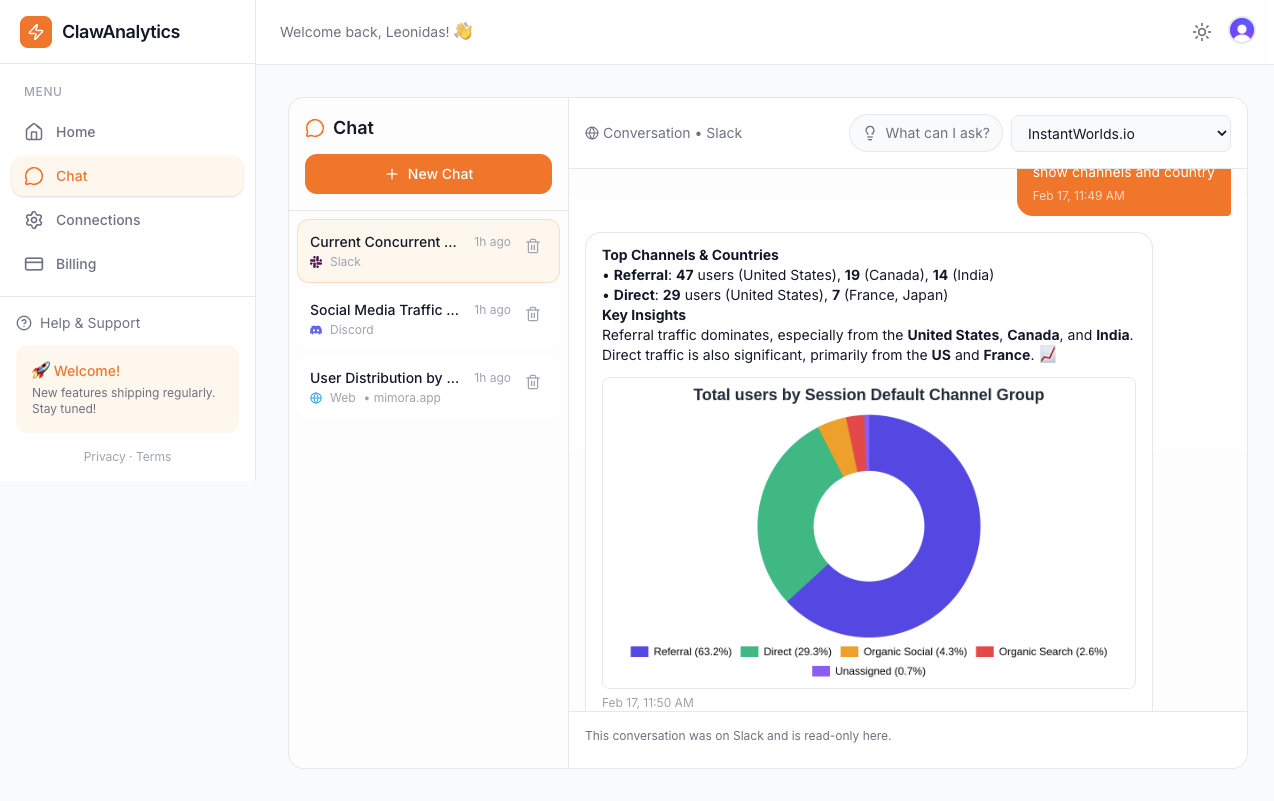
Setting up custom cohorts in GA4 takes time and requires ongoing maintenance. ClawAnalytics connects directly to your existing data and automatically builds cohort views tailored for service businesses.
With ClawAnalytics, you can ask questions like “Which marketing source brings clients who sign within 30 days?” or “What percentage of our renovation clients come back for additions within two years?” The platform surfaces these insights without requiring you to build custom reports.
Many architecture firms use this to prove ROI to partners. When you can show that clients from Houzz convert at 40% while Instagram leads convert at 15%, decisions about where to focus marketing become much easier.
Quick Wins
Start tracking your leads by acquisition month today. Even a simple spreadsheet noting when each lead came in and whether they became a client helps. The key is consistency.
Compare your conversion rates across quarterly cohorts. If Q1 clients convert at 25% but Q2 clients convert at 18%, investigate what changed in your process.
Focus your follow-up on the highest-value cohort segments. Not all leads deserve the same attention. Use cohort data to prioritize clients most likely to become long-term relationships.
Ask your existing clients how they found you and when they first reached out. This qualitative data complements your quantitative cohort analysis and helps explain patterns you see in the numbers.