Bloggers

How to Track Cohort Analysis for Bloggers

Learn how cohort analysis helps bloggers understand reader retention and content performance to grow your blog income.

How Cohort Analysis Transforms Your Blog Growth

You just published your 50th blog post. Traffic is up. But are your readers coming back? Without cohort analysis, you have no idea if new visitors stick around or vanish after one page view. This blind spot costs you ad revenue, affiliate sales, and email list growth.

Why Cohort Analysis Matters for Bloggers

Reader loyalty drives income. Every blogger monetizes through repeat visitors. Ad networks pay more for returning readers. Affiliate products convert better when audiences trust you. Cohort analysis reveals exactly who comes back.

Content performance becomes clear. Not all posts create equal. Some attract one-time readers. Others build loyal audiences. Cohort data shows which topics, formats, and publishing schedules keep people returning.

Email list growth gets measurable. Your newsletter is your biggest asset. Cohort analysis tracks how many blog visitors become email subscribers over time. You stop guessing and start optimizing.

Seasonal patterns emerge. Blogs spike during holidays or events. Cohort analysis separates real growth from temporary traffic. You understand your true baseline.

How to Check Cohort Analysis in GA4

  1. Open GA4 and click Explore in the left sidebar
  2. Select Cohort Exploration as your template
  3. Choose User acquisition as your cohort date
  4. Select Retention metric (or engagement for blogs)
  5. Set your time range (7-day, 14-day, or 30-day cohorts)
  6. Break down by Session source/medium to see which channels bring loyal readers

The table shows what percentage of each week’s new visitors return in subsequent weeks. Green percentages mean strong retention. Red flags visitors who never come back.

The Easier Way with ClawAnalytics

GA4 cohort reports work but require manual setup and interpretation. ClawAnalytics simplifies this for bloggers.

Instead of building custom explorations, you log in and see your retention dashboard immediately. The tool automatically groups readers by when they first visited and tracks their return visits.

Example questions ClawAnalytics answers instantly:

  • Which blog posts from January brought the most returning readers in February?
  • How does reader retention compare between my travel posts and tech posts?
  • Did my email newsletter signup popup increase returning visitor rates?

This saves hours of configuring GA4 reports. You spend that time creating content that actually works.

Quick Wins for Bloggers

Audit your top 10 posts. Check which ones bring readers back. Double down on those topics.

Test newsletter placement. Move your signup form to pages with high retention. Track the change in subscriber conversion.

Publish in consistency. Weekly publishers often show better retention than monthly binge-posters. Your readers build a habit.

Track affiliate link clicks by cohort. See which reader groups convert best. Prioritize content that serves those audiences.

Start tracking cohorts this week. Your next 50 posts will be smarter.
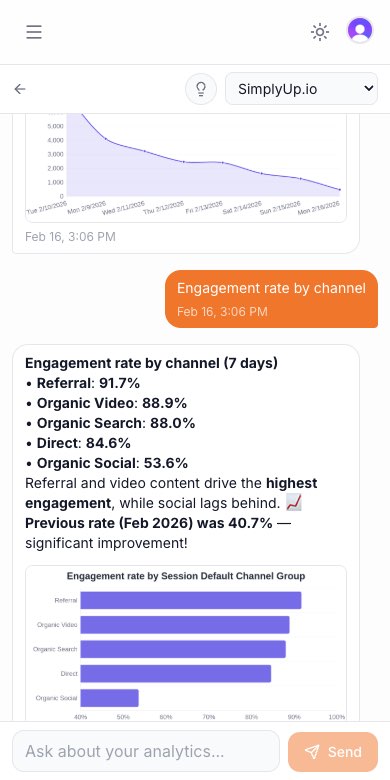
Check your analytics from anywhere

On your morning commute. At a coffee shop. In a meeting. Pull up your analytics on any device and get instant answers.

  • Web dashboard on desktop & mobile
  • Discord bot for team channels
  • Slack integration for your workspace
  • MCP server for AI agents (Claude, Cursor)
See your traffic in 60 seconds →
ClawAnalytics mobile chat showing engagement rate breakdown with charts

How ClawAnalytics helps

Skip the dashboards. Get answers in seconds.

🔗
1

Connect GA4

One-click OAuth. Read-only access. Takes 30 seconds to link your Google Analytics property.

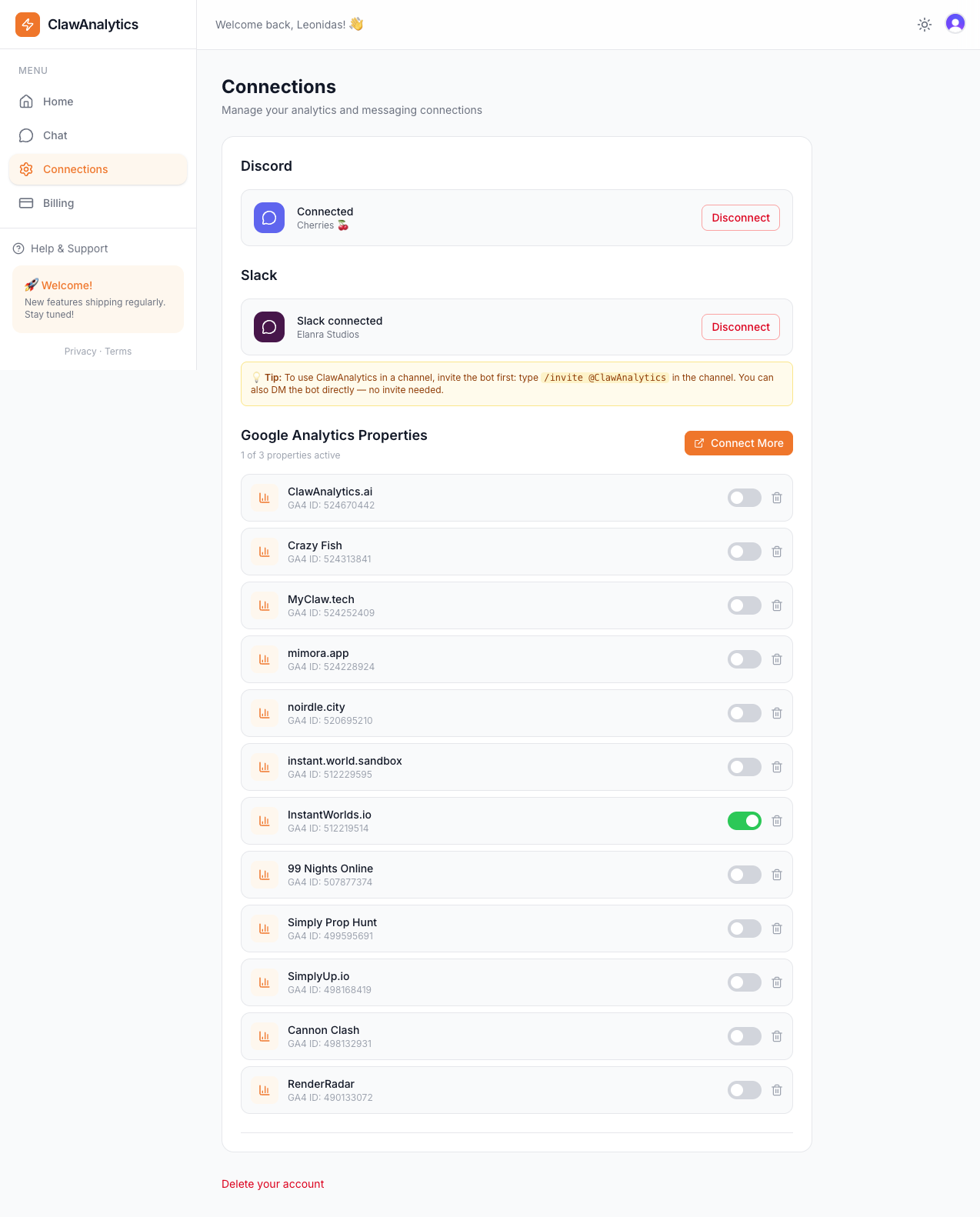
ClawAnalytics connections page showing Google Analytics properties linked
💬
2

Ask questions

Type in plain English. No query language, no filters, no date pickers. Just ask what you want to know.

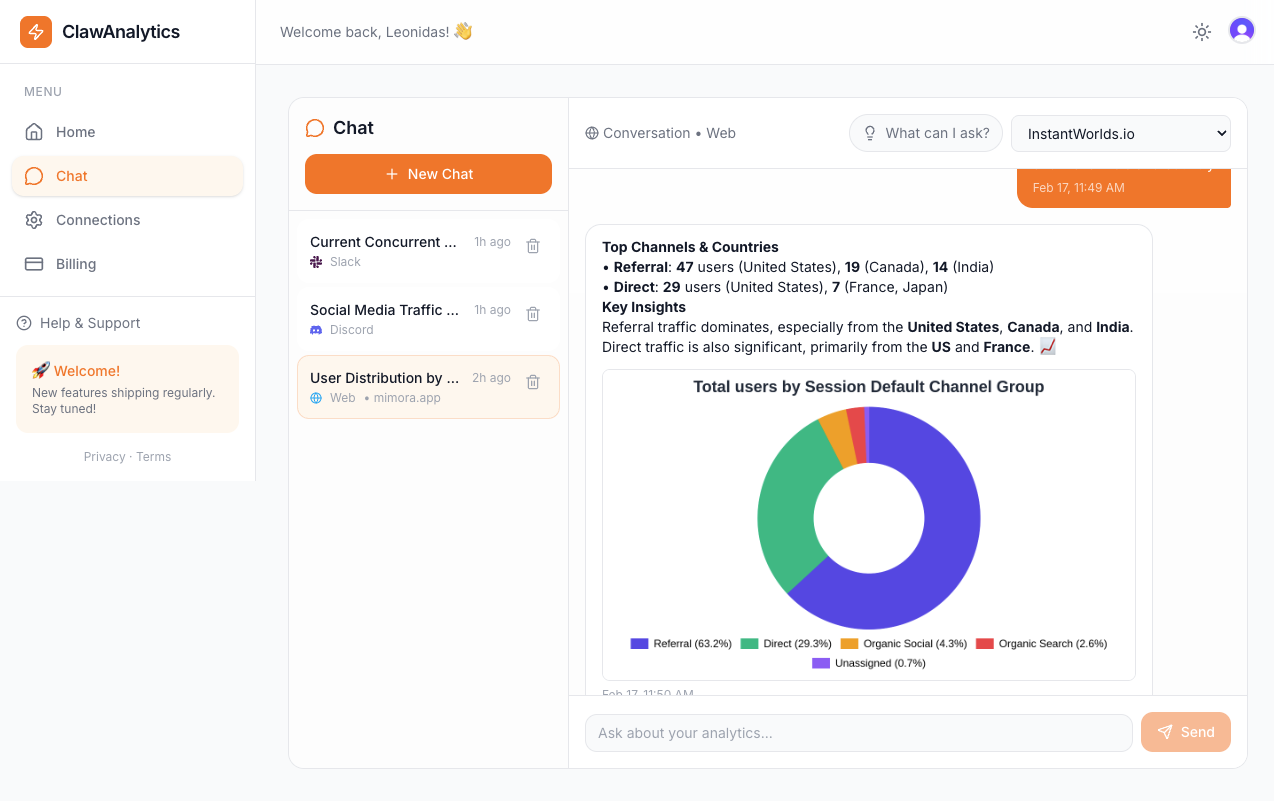
ClawAnalytics chat interface with natural language query
📊
3

Get answers with charts

Instant responses with visualizations. Share charts with your team or export the data.

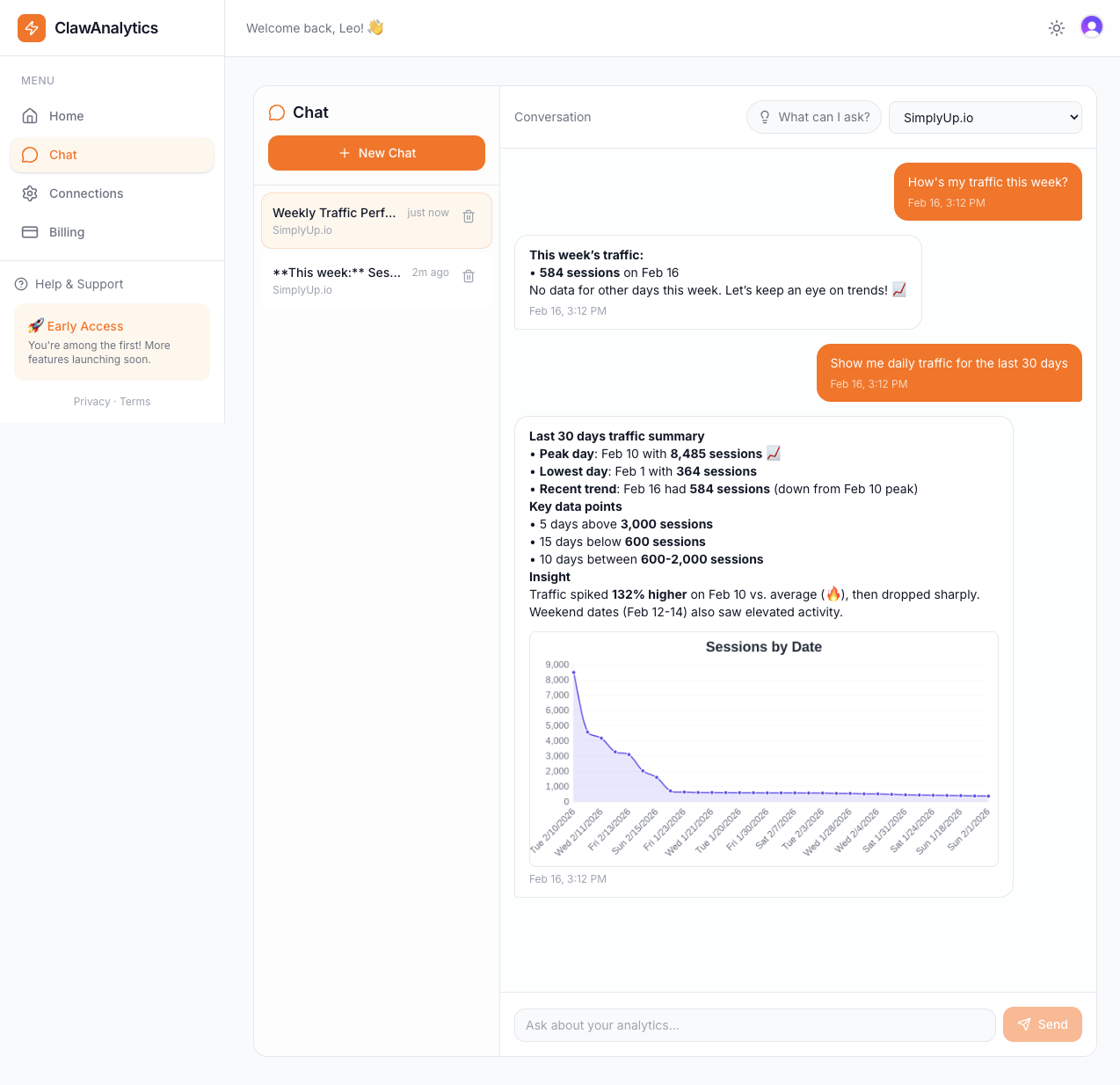
ClawAnalytics showing chart response to analytics query

See it in action

Ask a question. Get a chart. That simple.

ClawAnalytics Chat
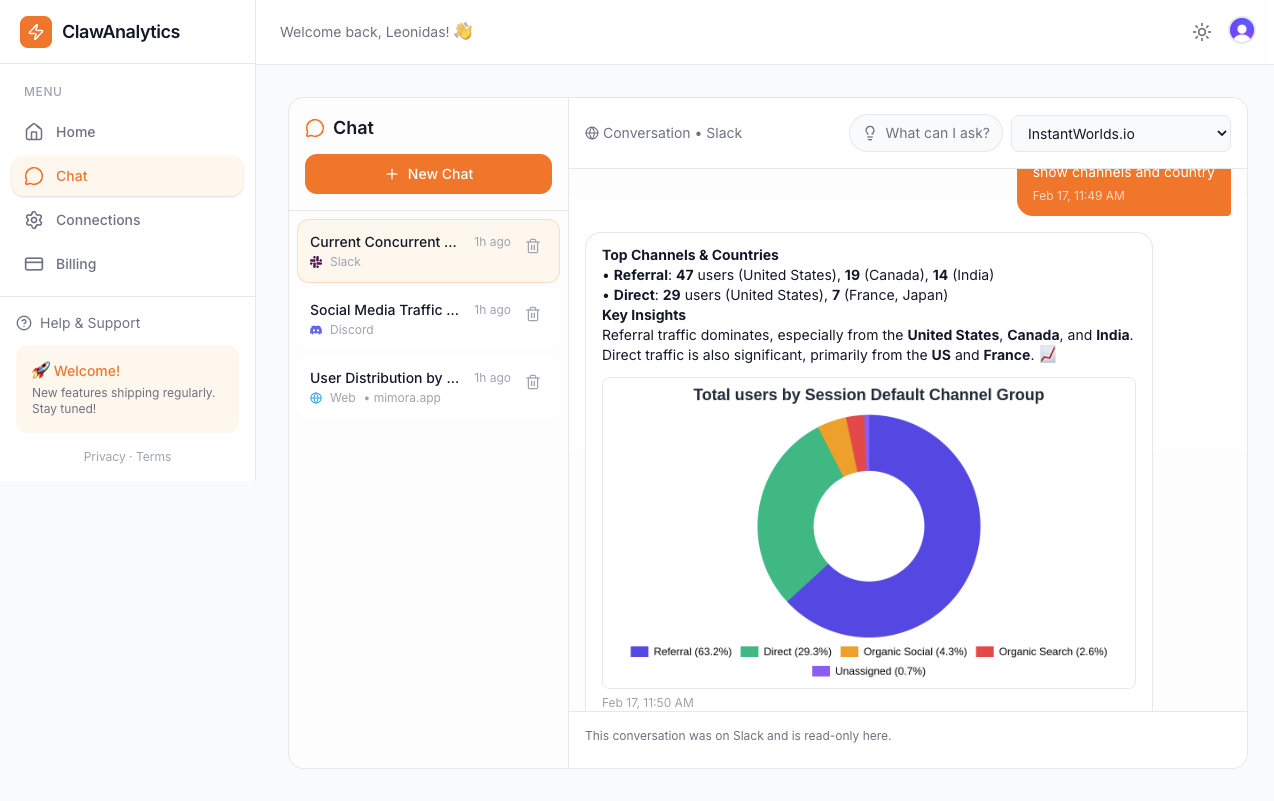
ClawAnalytics chat interface showing a natural language analytics query with chart response

Works on web, Discord, and Slack. Also available as an MCP server for AI agents.

Leonidas Maliokas
"I used to open Google Analytics 5 times a day and still miss things. Now I get a summary every morning and ask follow-ups when something looks off. Takes 10 seconds instead of 10 minutes."

Leonidas Maliokas

Founder, Elanra Studios

🎮 5 games monitored 💼 3 businesses

Simple, honest pricing

Start free. Upgrade when you're ready.

Free

Try it out

$0 /month
  • 5 websites
  • 30 questions/month
  • Web dashboard
  • No credit card
Start Free

Website

For small businesses

$9 /month
  • 5 websites connected
  • 100 questions/month
  • Daily morning summary
  • Web dashboard + Discord
Get Started

Business

For agencies and portfolios

$79 /month
  • Unlimited websites
  • 2,000 questions/month
  • Everything in Pro
  • ✅ API access
  • ✅ MCP integration
  • ⭐ Priority support
Get Started

Stop opening dashboards.
Start asking.

Connect Google Analytics in 30 seconds. Get answers from the dashboard or Discord. Start free — no credit card needed.

Try it free — ask your first question
30-second setup Free plan available Cancel anytime

Got questions?

How do I set up cohort analysis in Google Analytics for my blog?
In GA4, go to Analytics > Configure > Data displays > Explore. Create a new exploration and select Cohort Exploration template. Choose your acquisition date and retention metric.
Which cohort metrics should I track for my blog?
Focus on user retention (readers who return), engagement per cohort (time on site, pages per session), and conversion rates (newsletter signups, ad clicks).
How does ClawAnalytics help with cohort analysis for bloggers?
ClawAnalytics automatically groups your readers by acquisition date and shows retention trends over time. You can see which blog posts bring loyal readers and optimize your content strategy accordingly.

Related guides

More resources to help you get the most from your analytics.