How to Track Cohort Analysis for Florists
Every Valentine’s Day brings a surge of one-time customers. They spend big on roses, then vanish until next year. Cohort analysis shows exactly how valuable these holiday customers really are compared to customers who discover you for a birthday arrangement and return throughout the year.
Why Cohort Analysis Matters for Florists
Holiday customer value becomes clear. That massive Valentine’s Day rush looks impressive in your daily sales, but cohort analysis reveals the truth. Do these customers return for Mother’s Day, or do they disappear? Knowing this helps you decide how much to invest in holiday marketing.
Event-based customers transform into loyal buyers. Customers who first bought from you for a wedding might need anniversary flowers, holiday décor, or events throughout the year. Cohorts show how many event customers become regulars.
Seasonal inventory planning improves. When you know which months bring customers who stick around, you can stock accordingly. A cohort that signs up in September might be planning holiday parties. Knowing this helps you prepare.
Customer lifetime value calculates accurately. Instead of guessing, you see real data on how much different customer groups spend over time. This matters when deciding how much to spend on advertising or loyalty programs.
How to Check in GA4
Open GA4 and navigate to Analytics > Explore. Choose the Cohort Exploration template. Select “First purchase date” or “First visit source” as your cohort dimension.
Add metrics like “Revenue,” “Transactions,” and “Average order value.” Look at how customer cohorts behave over time. Pay special attention to retention rates at 3, 6, and 12 months.
For florists, create a custom dimension tracking “Occasion type” if possible. Then compare cohorts based on whether customers first bought for a holiday, event, or regular purchase. This reveals which occasion types drive loyalty.
The Easier Way
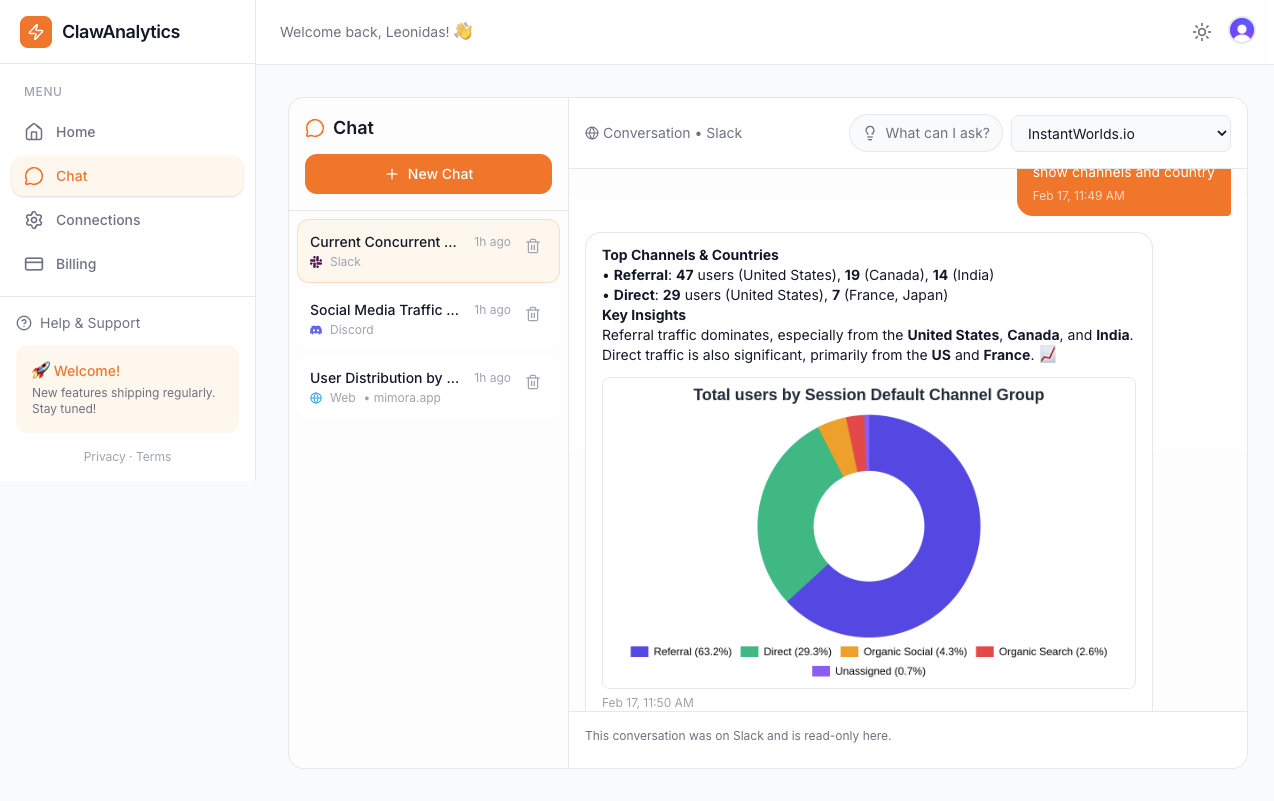
ClawAnalytics connects to your point of sale or order data and automatically builds customer cohorts without requiring technical setup. You see which occasions and arrangements bring customers back.
With ClawAnalytics, you can ask “Which month’s customers spent the most this year?” or “Do wedding customers become regular holiday shoppers?” The platform surfaces these insights automatically.
Many florists use this data to create loyalty programs. When you know which customers are most likely to return, you can send targeted offers at the right time.
Quick Wins
Start tracking the occasion for each first-time order. Note whether it was a holiday, wedding, funeral, or regular purchase. This builds your cohort foundation.
Create a simple customer list grouping everyone by their first purchase month. Note who returned for additional orders. This shows your baseline retention rate.
Focus marketing efforts on cohorts with the highest return rates. If customers who buy for birthdays return more often than holiday buyers, prioritize birthday-focused promotions.