How to Track Cohort Analysis for Interior Designers
You just finished a stunning living room redesign for a client who loved your work. Six months later, they reach out about their master bedroom. Cohort analysis would have helped you predict this and prepare a loyalty offer. Instead, you’re scrambling to fit them into your schedule.
Why Cohort Analysis Matters for Interior Designers
Repeat project rates become crystal clear. Interior design naturally lends itself to multiple projects. Cohort analysis shows exactly what percentage of clients return for kitchens, bedrooms, or whole-home makeovers. Design firms using this data report 30% more repeat business.
Marketing source quality emerges. Not all leads are equal. A client who finds you through Pinterest might book faster but spend less than someone who discovers you through a local referral. Cohorts let you compare lifetime value across sources.
Client nurturing gets targeted. Instead of generic email newsletters, you can tailor follow-ups based on cohort behavior. Clients who haven’t returned within 6 months get different outreach than those in their first year.
Seasonal patterns surface. Maybe your spring clients are more likely to book additional rooms than fall clients. Cohort analysis reveals these timing insights that improve your year-round planning.
How to Check in GA4
Open GA4 and go to Analytics > Explore. Select the Cohort Exploration template. Choose “First visit date” or create a custom dimension for “Initial inquiry date.”
Add metrics like “Inquiries,” “Proposals sent,” and “Projects completed.” Look at how each monthly cohort behaves over time. Pay special attention to the 6-month and 12-month columns to see long-term retention.
For interior design, create a segment for clients who spent more than a threshold amount. Then compare this segment’s cohort behavior against lower-value clients. This reveals which client types are worth pursuing aggressively.
The Easier Way
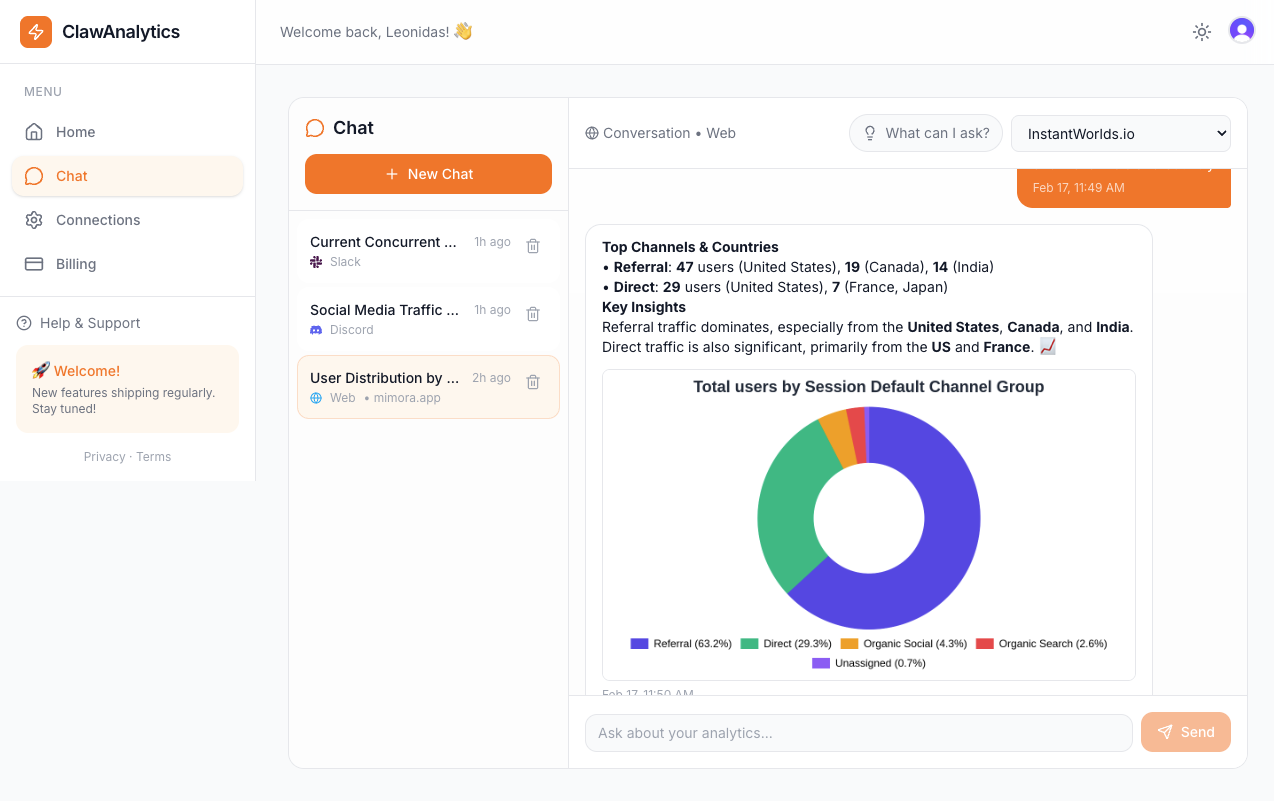
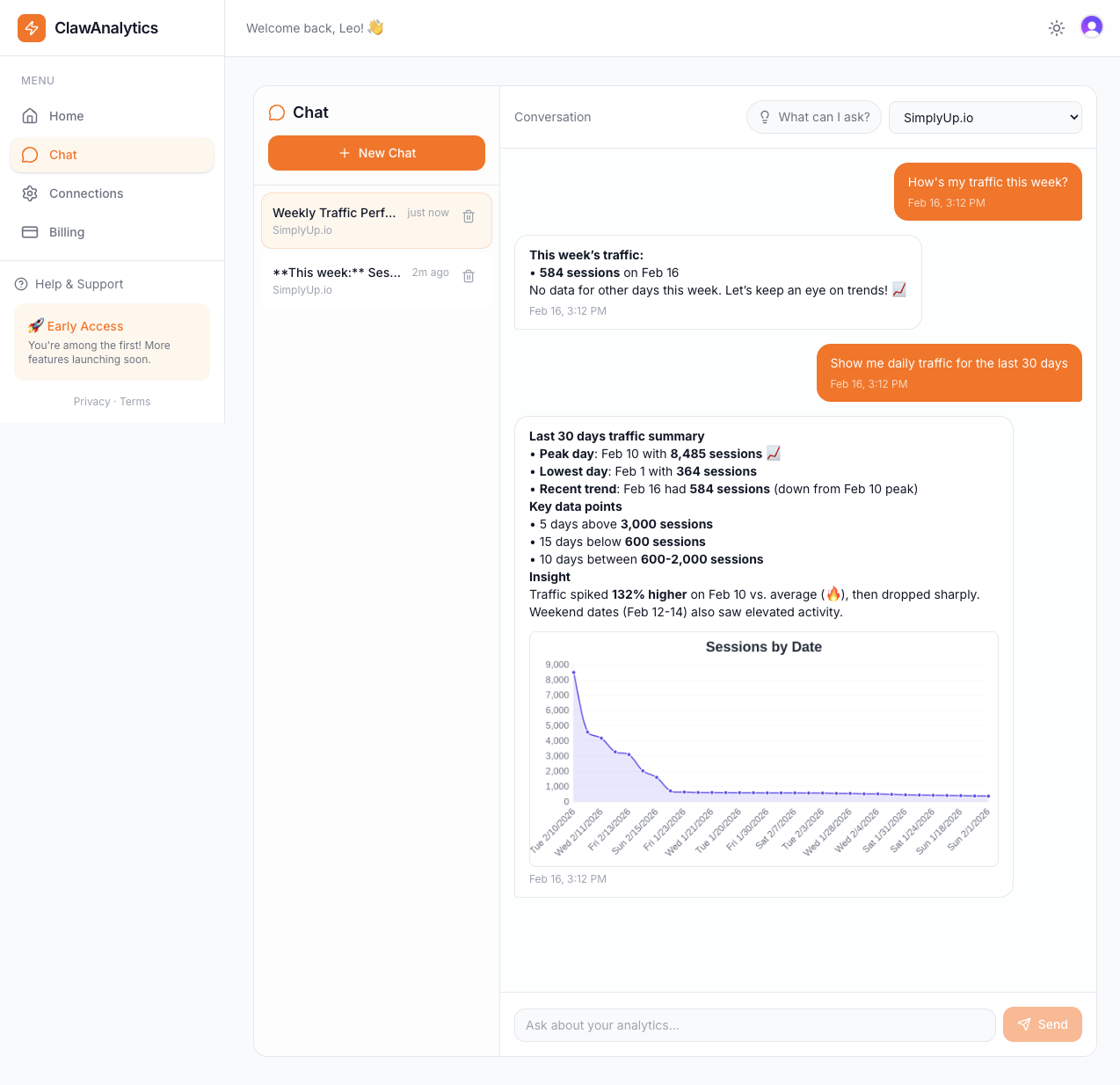
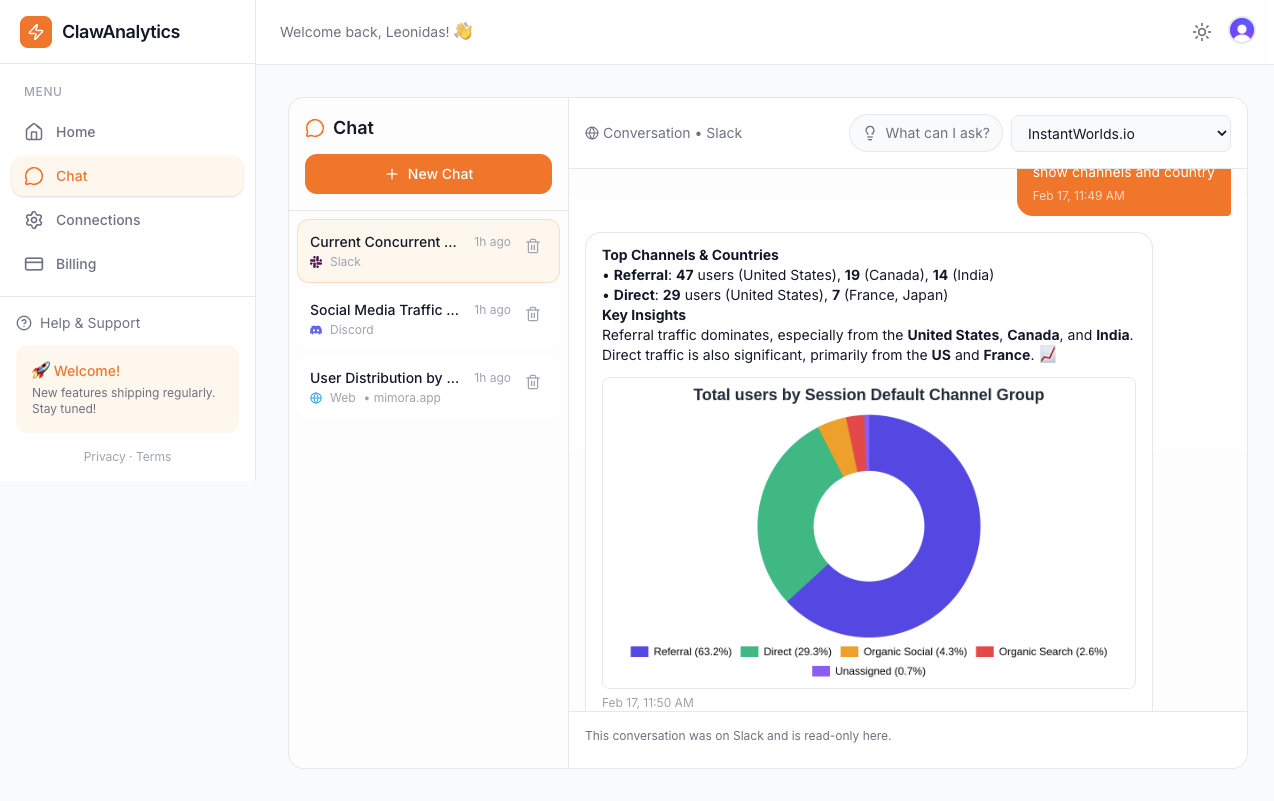
ClawAnalytics removes the complexity of building custom cohort reports. The platform automatically identifies patterns in your client data and presents them in plain English.
You can ask questions like “Which of my clients from last year came back for more work?” or “Do referral clients stay longer than leads from online ads?” The answers come instantly, without fiddling with GA4 configurations.
Many interior designers use these insights to create targeted referral programs. When you know that clients from certain sources convert at higher rates, you can reward those sources appropriately.
Quick Wins
Start by recording when each client first contacted you. Even a simple note in your project management system helps. The goal is building a timeline for each client relationship.
Create a simple cohort report in a spreadsheet. Group clients by the month they first reached out, then note how many returned for additional projects. Update this quarterly.
Focus your referral asks on your best-performing cohorts. If clients from specific sources or project types return more often, prioritize those relationships for referrals.