How to Track Cohort Analysis for Wedding Planners
You planned a wedding in May. The couple loved your work. In August, the groom’s sister got engaged. She called you first. Without cohort analysis, that’s a nice surprise. With it, that’s a predictable referral pipeline.
Understanding which clients lead to more business changes everything.
Why Cohort Analysis Matters for Wedding Planners
Wedding planning is seasonal and relationship-driven. Cohort analysis helps you see the full picture:
- Track add-on service uptake. Do couples who book day-of coordination also book honeymoon planning? Cohorts show conversion rates.
- Measure referral sources. Some weddings bring more referrals. Know which venues and vendors send clients who actually book.
- Improve forecasting. If you know 45% of 2024 couples will inquire about 2025 services, you can plan capacity.
- Identify your ideal client. Look at cohorts with highest retention and referral rates. Replicate those traits in marketing.
The wedding industry runs on relationships. Cohort data tells you which relationships matter most.
How to Check in GA4
GA4 offers cohort tracking. Here’s how to apply it to wedding planning:
- Open Cohort Exploration in GA4.
- Select “User acquisition date” as the basis.
- Choose retention or revenue as the metric.
- Apply a filter for inquiry source: organic, referral, paid ads.
- Compare at least 3 cohorts side by side.
Look for cohorts with referral rates above 20%. Those are your gold-standard clients. Study what made them different.
The Easier Way
Setting up custom filters in GA4 takes expertise. Most wedding planners just need to know: “Where do my best clients come from?”
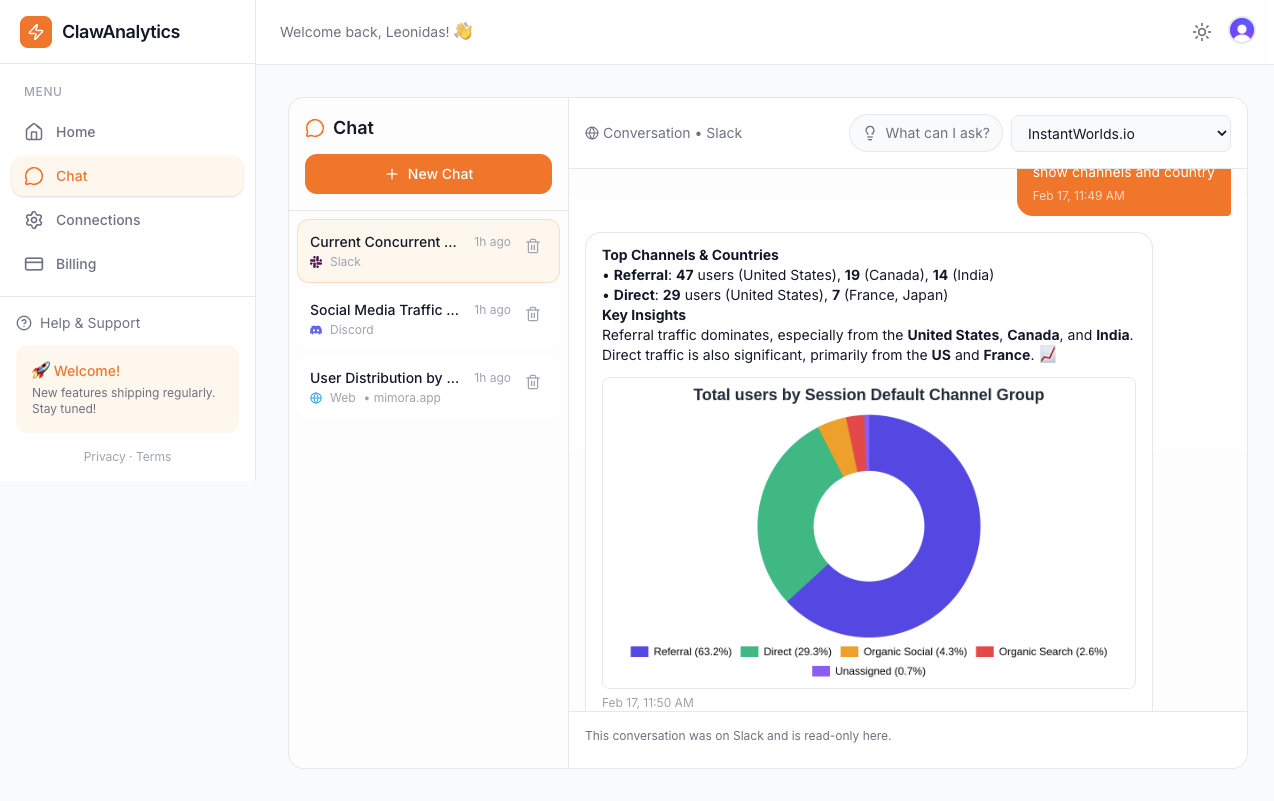
ClawAnalytics connects to your inquiry system and booking software. It automatically builds cohorts based on wedding date, package type, and how couples found you. You get:
- Clear view of which marketing sources bring clients who refer others
- Average time from first inquiry to booking, by cohort
- Revenue per client over 24 months
For instance: “Are couples who book full planning referring more than those who book partial planning?” ClawAnalytics answers in seconds. No spreadsheet gymnastics required.
This means you spend less time in reports and more time planning weddings.
Quick Wins
- Track inquiry source from first contact. Ask: “How did you hear about us?” Record every answer.
- Create a post-wedding follow-up sequence. Reach out at 6 months, 12 months, and anniversary. Ask for referrals naturally.
- Offer referral incentives. Past clients are your best source. Make asking easy with a simple referral program.
- Review cohorts monthly. Look at inquiry-to-booking conversion by source. Kill what doesn’t work.
Start tracking cohorts now. Next wedding season, you’ll have data-driven confidence.