How to Track Conversion Rate for Affiliate Marketing
Your affiliate income depends on turning readers into buyers. Traffic alone does not pay the bills. Conversion rate tells you how well your content converts visitors into customers who generate commissions.
Why Conversion Rate Matters for Affiliate Marketing
When you promote products as an affiliate, your earnings come from a percentage of each sale. Here is why conversion rate determines your success.
First, it reveals which content works. You might write ten blog posts but only a few generate sales. Conversion rate shows which content actually converts readers into buyers. This helps you create more of what works.
Second, it helps you choose offers. Different affiliate programs pay different commissions. When you know your conversion rate, you can calculate which offers make more money per visitor. A 1% conversion with a 50% commission may beat 5% conversion with 10% commission.
Third, it guides traffic buying. If you run paid ads, conversion rate tells you which campaigns profit. Without this data, you risk spending money on campaigns that look busy but deliver no sales.
Fourth, it improves your SEO strategy. When you know which pages convert, you can optimize for similar keywords and topics. This builds a content strategy that grows your income over time.
How to Check in GA4
GA4 lets you track conversion rate for your affiliate links. Here is how to set it up.
First, ensure your affiliate links track properly. Use URL parameters or a plugin to mark when someone clicks your affiliate links. In GA4, mark these link clicks as conversions.
Go to Configure > Events and find your link click events. Toggle them to mark as conversions. If you use a tool like ThirstyAffiliates or PrettyLinks, tracking may be automatic.
Now go to Reports > Acquisition > Traffic Acquisition. You will see conversion data by source and campaign. Add a custom conversion rate metric to see percentages.
To analyze by content, use the Explore tool. Create a free form exploration with “Page path” as a dimension and your conversion events. This shows which pages or posts generate the most conversions.
You can also set up conversion paths to see how visitors move through your site before converting. This helps you understand the buyer journey and optimize your content accordingly.
The Easier Way
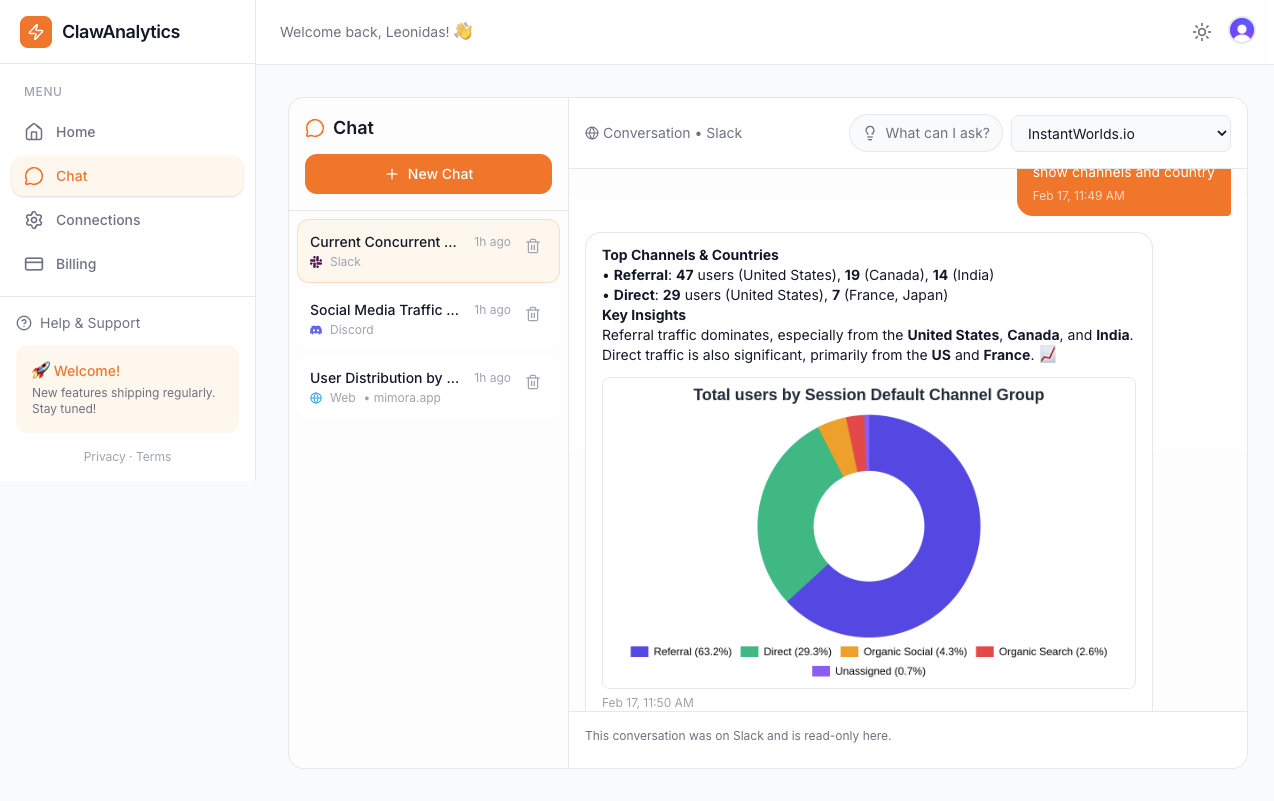
GA4 setup takes time that could go into creating content. ClawAnalytics gives you instant conversion insights without the technical work.
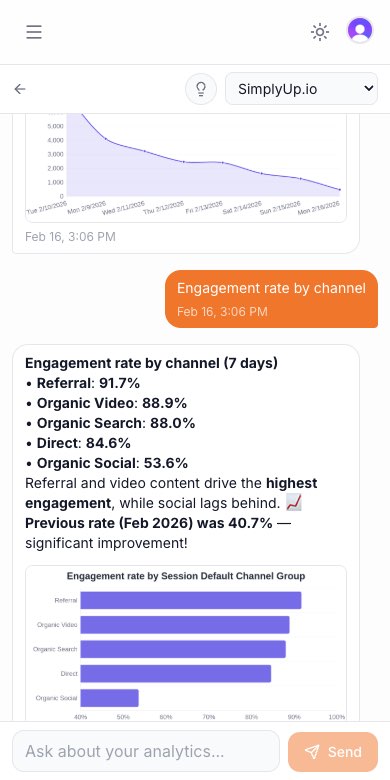
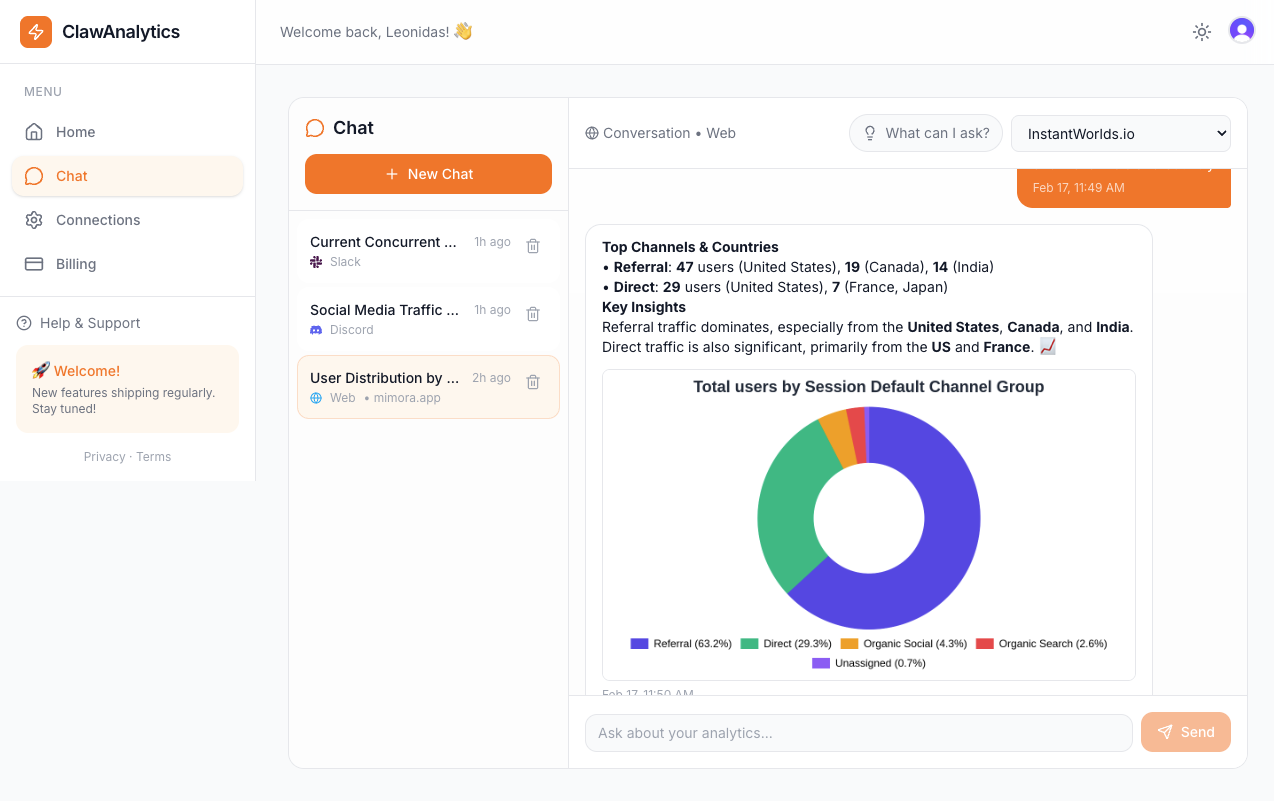
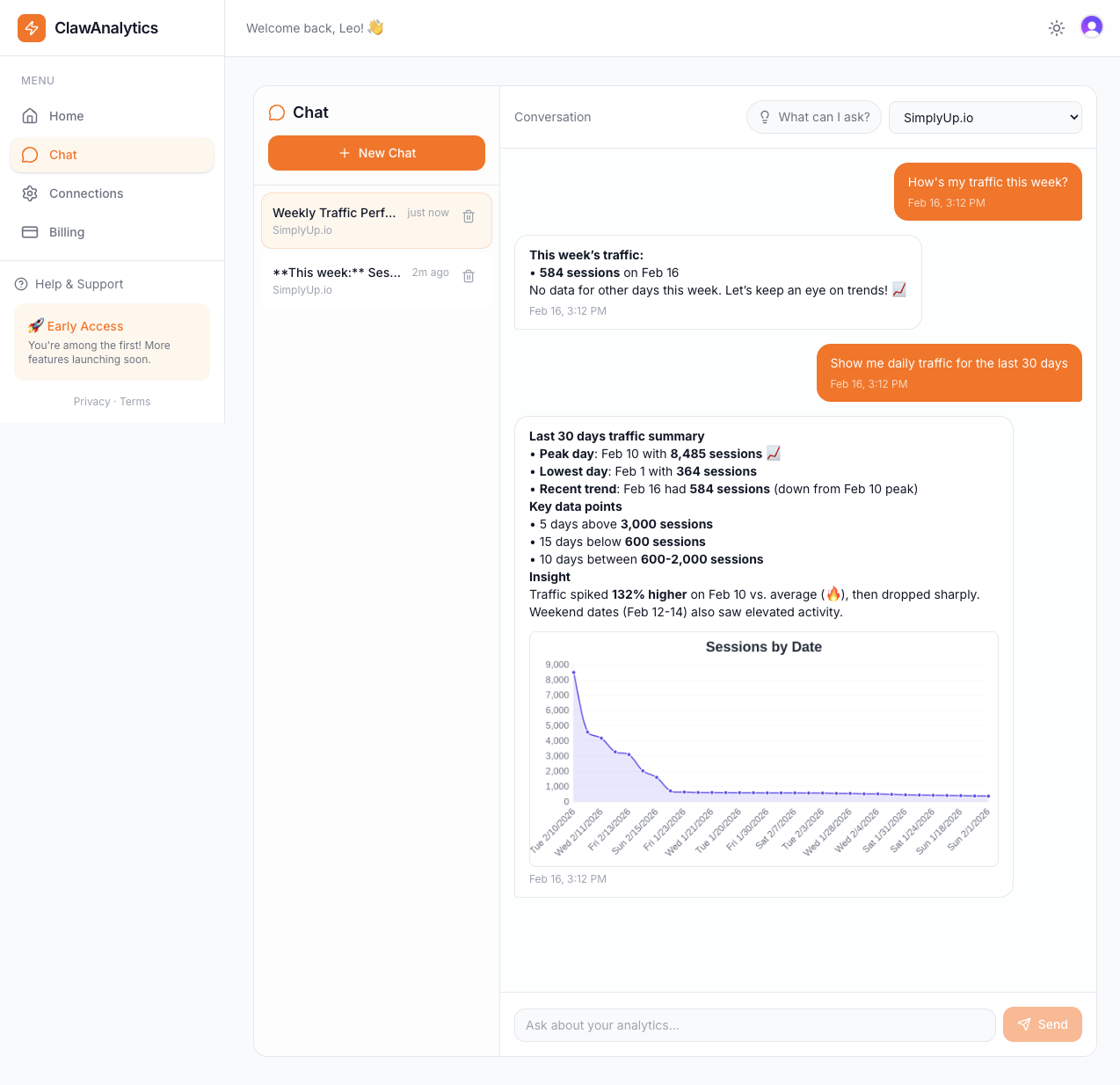
ClawAnalytics automatically tracks affiliate link clicks and purchases as conversions. You see conversion rates across all your content in a simple dashboard.
Ask questions like “Which blog post converts best this month?” or “What traffic source brings the most affiliate sales?” Get answers instantly without building reports.
ClawAnalytics also alerts you when conversion rate drops. If a top-performing post suddenly stops converting, you can investigate and fix the issue quickly.
For example, ClawAnalytics might show that your product review pages convert at 4% while your comparison posts convert at only 1%. You can create more reviews and fewer comparisons based on this data.
Quick Wins
Improving conversion rate as an affiliate means creating content that persuades. Try these tactics.
First, write honest reviews that include real results. Readers trust specific numbers and honest opinions more than generic praise.
Second, add clear call-to-action buttons. Make them stand out with contrasting colors and action verbs like “Get My Discount” or “Start Free Trial.”
Third, include multiple internal links in your content. Guide readers from your blog post to relevant product pages. More touchpoints increase conversion chances.
Fourth, test different product placements. Try in-content links versus buttons at the end. Track which placement converts better.
Track conversion rate weekly for each piece of content. Focus your efforts on high-converting content and optimize or retire the rest.