How to Track Cost Per Acquisition for Consultants
You might be speaking at conferences, writing LinkedIn posts, and running targeted ads. But when a new client signs, do you know which effort brought them? If your CPA is $400 on conference speaking but $800 on ads, you need to know that. Without tracking, you cannot repeat what works or fix what does not.
Why Cost Per Acquisition Matters for Consultants
Consulting engagements are often high-value, which means a single client can justify significant marketing investment. Understanding your CPA helps you spend wisely.
First, you can justify marketing spend to yourself. If a client brings $20,000 in revenue and cost $400 to acquire, that is a 50x return. Knowing the numbers makes spending on marketing easier. Second, you can prioritize channels. You might find that LinkedIn outreach costs less per client than cold email campaigns. Third, you can bid accurately. Knowing your CPA helps you set realistic client acquisition budgets and forecast revenue. Fourth, you can negotiate better rates. If you know exactly what each client costs to acquire, you can price accordingly.
How to Check in GA4
Google Analytics 4 can track consulting conversions if you set it up thoughtfully.
Define your key conversion events. These might include discovery call bookings, proposal requests, contract signings, or project starts. Assign values based on average engagement size. A typical consulting project might be worth $15,000. Then, set up goals or conversions in GA4 that match these actions. Link your Google Ads account to import ad costs if you run campaigns. Finally, look at your acquisition reports to see which sources generate the most valuable leads.
The tricky part is that many consulting clients come from offline activities like networking or referrals, which GA4 cannot directly track.
The Easier Way
Most consultants would rather do the work they are experts in than build tracking systems.
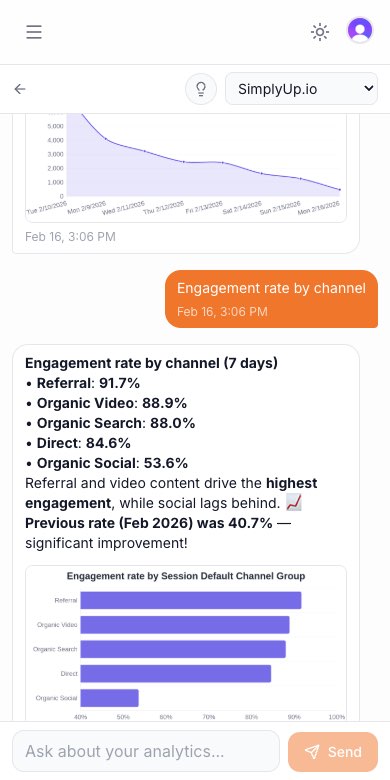
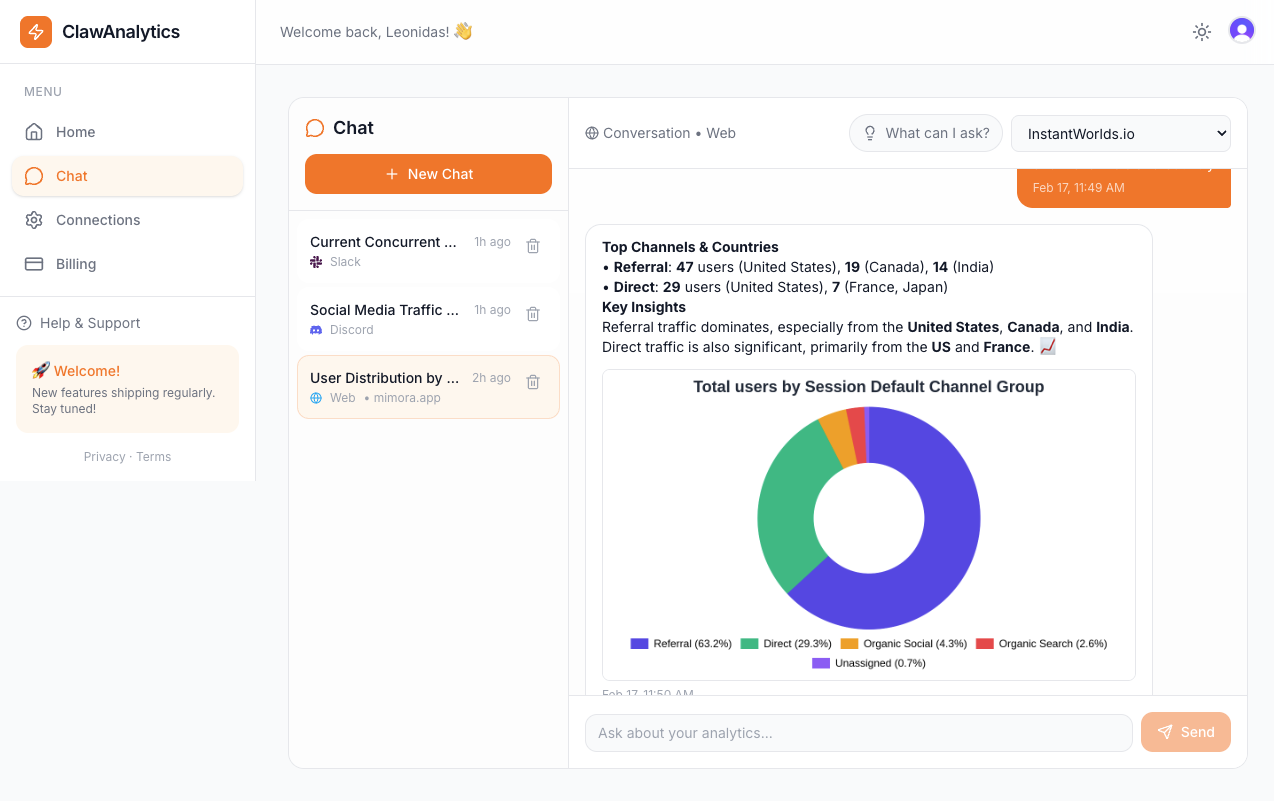
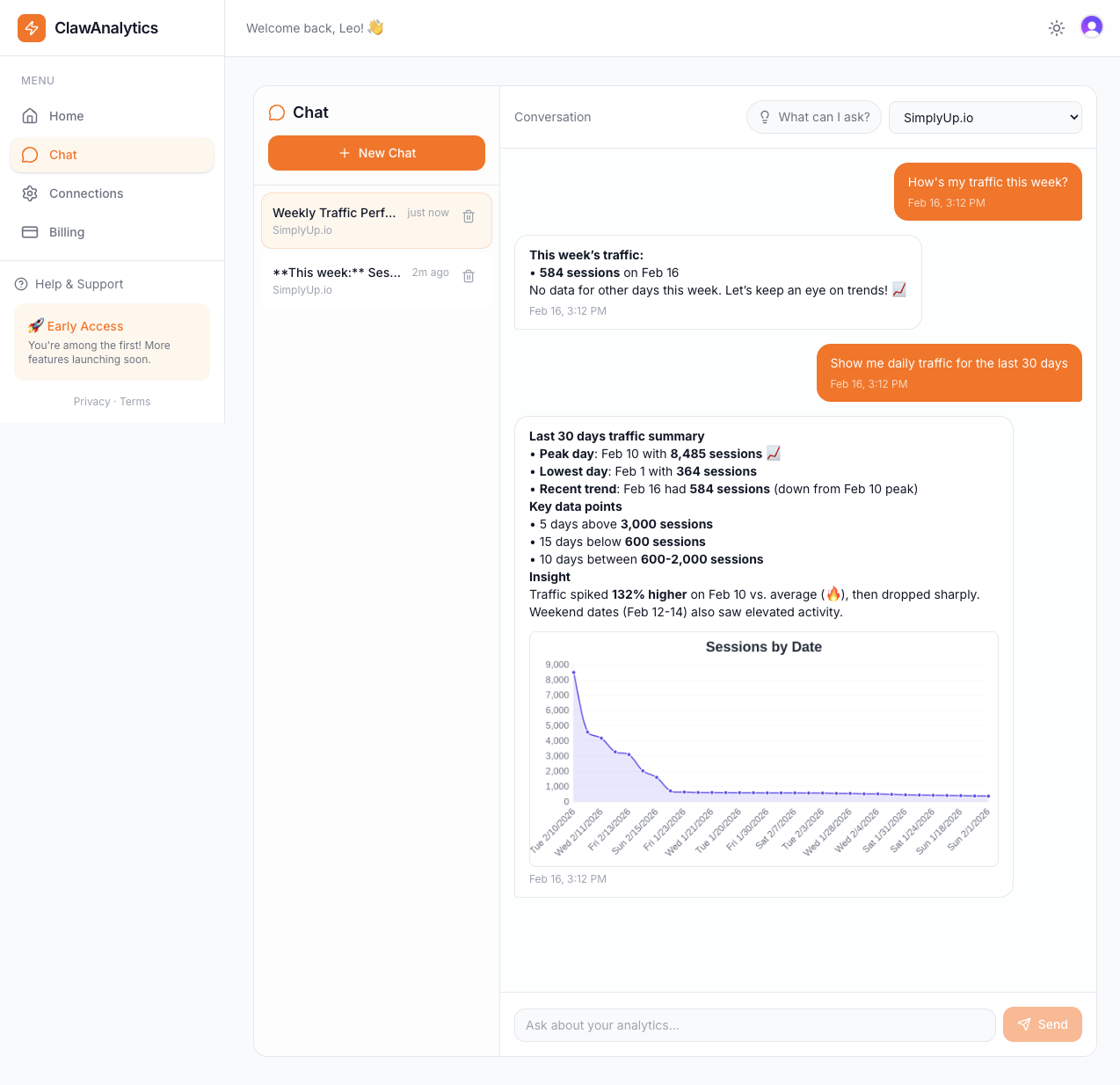
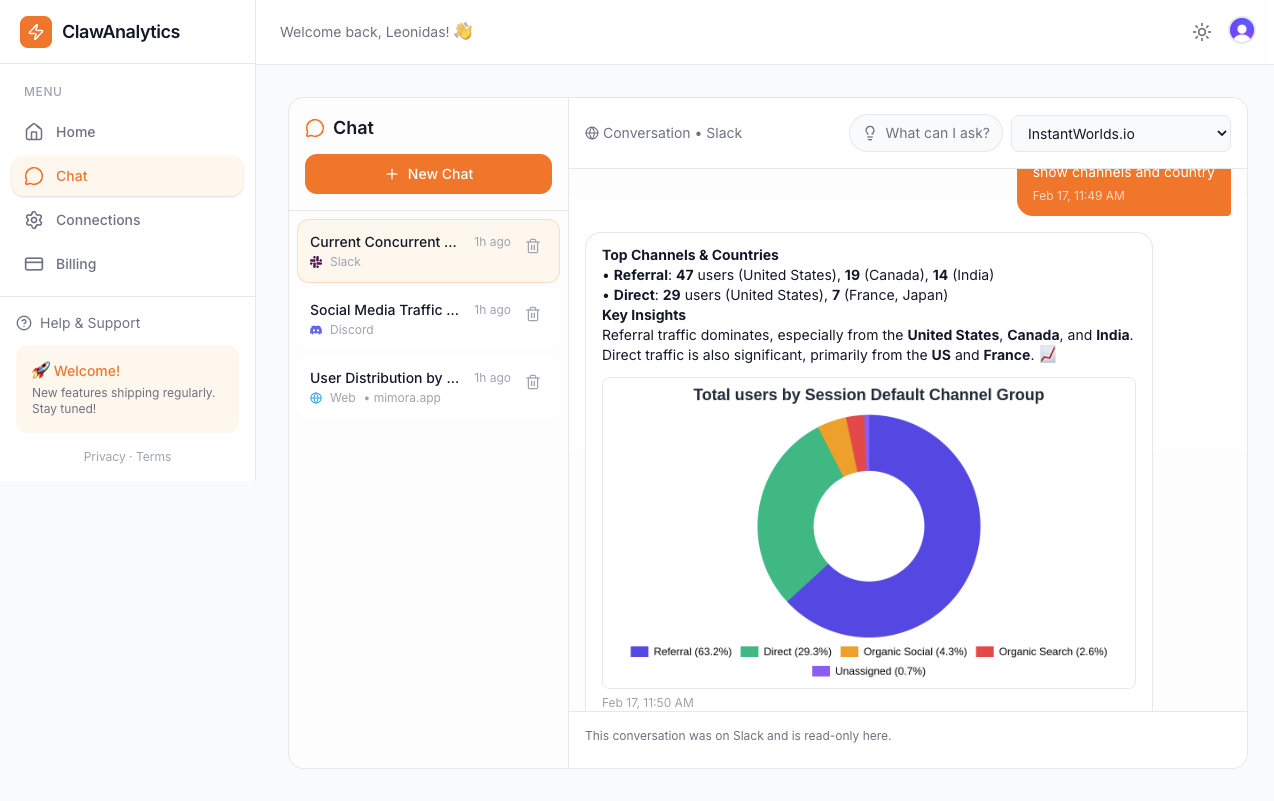
ClawAnalytics brings together data from your marketing channels and shows you cost per acquisition for each source. You can see whether your thought leadership content is generating cheaper leads than your paid campaigns. The platform makes it easy to understand what is working without spending hours in analytics.
With ClawAnalytics, you can answer questions like: “Did our recent webinar bring more clients than our LinkedIn ads?” or “Which referral source gives us the lowest CPA?” The data is ready to help you make better decisions.
Quick Wins
Here are three things you can do today to start tracking consulting CPA better.
Ask every new client how they found you. This simple question builds a database of what actually works in your business development.
Create trackable links for every campaign. Whether it is a LinkedIn post, an email signature, or a conference banner, use unique URLs to trace where leads come from.
Calculate your average CPA. Take your monthly business development spend and divide by new clients signed. This baseline helps you improve from a known point.