How Customer Lifetime Value Transforms Veterinary Practices
A new puppy walks through your door for its first checkup. Over the next 10 to 15 years, that same pet will need annual exams, vaccinations, dental cleanings, and possibly surgery. The client could be worth $8,000 or more. Now imagine knowing which marketing brings clients like this versus ones who come once and never return. CLV tracking makes this possible.
Why Customer Lifetime Value Matters for Veterinarians
Client loyalty drives revenue. Pets age, and older pets need more care. Clients who stay with you for years bring consistent revenue and are more likely to accept recommended treatments.
Referrals are powerful. Satisfied pet owners recommend their vet to friends. High-CLV clients are your best referral source, often bringing new clients who become equally valuable.
Marketing ROI becomes clear. If clients from Google searches stay twice as long as those from social media ads, you will adjust your spend. CLV reveals which channels deliver quality clients.
Prevent client loss. Clients rarely leave suddenly. They fade after a bad experience or missed appointment. CLV data helps you spot at-risk clients before they disappear.
Staff morale improves. When you focus on long-term client relationships rather than just next-visit revenue, your team builds deeper connections with pets and owners alike.
How to Check Customer Lifetime Value in GA4
Google Analytics 4 can track lifetime value with effort:
- Connect your practice management software data through GA4 data import
- Set up client-side tracking if clients book online or access a portal
- Define key events like exam_completed, vaccination_boost, surgery_completed
- Create lifetime value reports using the Explore section
- Build cohorts by pet type, first visit reason, or acquisition source
GA4 struggles with complex veterinary billing and does not easily handle multi-pet households.
The Easier Way
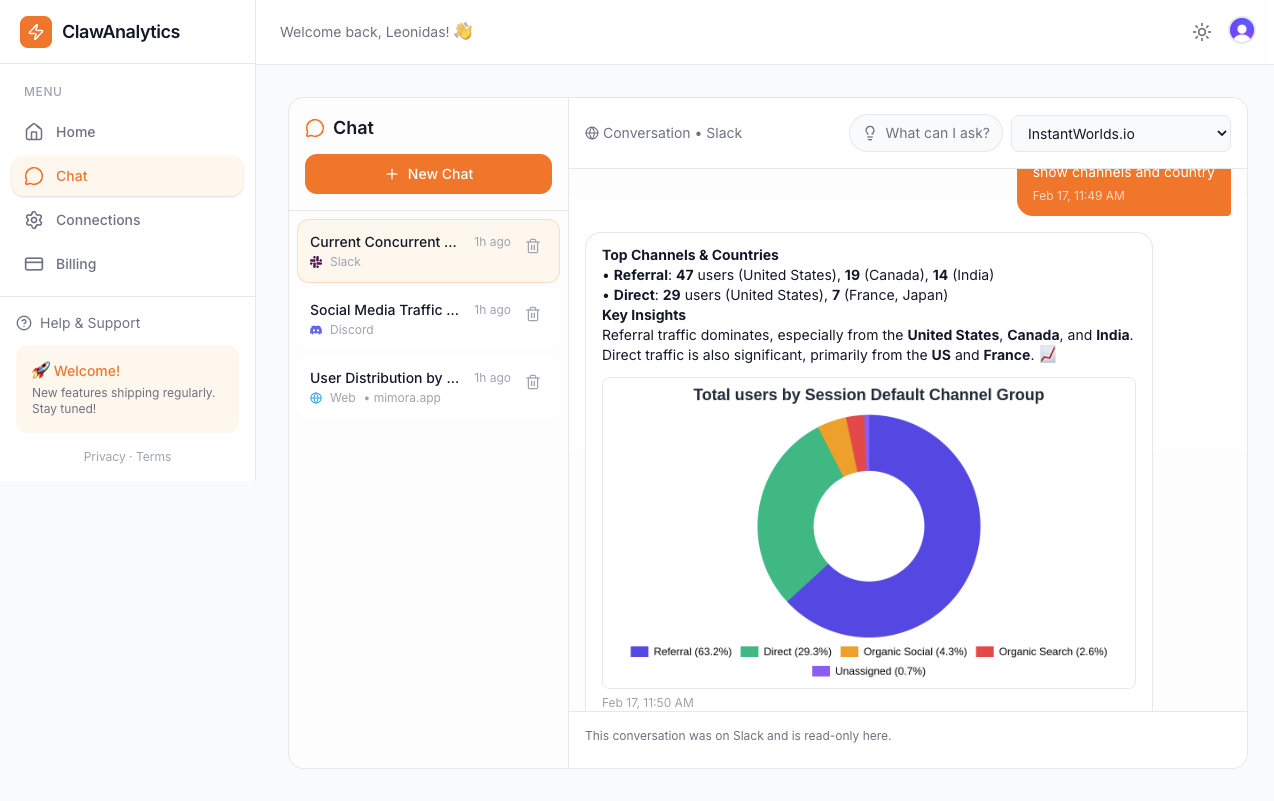
ClawAnalytics understands veterinary practice patterns.
You get instant answers to:
- Which clients are most valuable over their pet’s lifetime
- How long clients typically stay with your practice
- Which acquisition sources bring the best long-term clients
- Revenue forecasts based on current client base
For example, you might discover clients who first visited for emergency care have a higher CLV than routine checkup clients. Or that cat owners stay longer than dog owners. These insights shape your marketing and client outreach.
You could also ask: Which pets have the highest lifetime value? Do multi-pet households spend more? What services lead to the strongest client retention? ClawAnalytics surfaces these answers quickly.
Quick Wins
Calculate your baseline CLV. Pull revenue data from your practice management system and compute average client value over a typical relationship length.
Segment by pet type. Compare dog, cat, and exotic pet client value. You might find unexpected patterns.
Track client engagement. Monitor appointment frequency and service variety. Declining engagement often predicts churn.
Build recall programs. Use CLV to justify robust reminder systems for annual checkups and vaccinations. Prevention keeps clients longer.
Create VIP programs. Offer loyalty benefits to high-CLV clients. Early access, extended hours, or small perks strengthen relationships.
Tracking customer lifetime value is essential for veterinary practices that want to build lasting client relationships and sustainable growth.