How to Track Desktop Traffic for Architects
An architect’s website is a portfolio, a first impression, and a sales tool all at once. When someone is spending $50,000 or more on a building project, they don’t make that decision lightly. They visit your website dozens of times. They zoom in on project photos. They read case studies. They’re doing this on their desktop computer, probably late at night or on weekends. If you’re not tracking desktop traffic, you’re missing the story.
Why Desktop Traffic Matters for Architects
Architecture is visual, complex, and expensive. Desktop traffic reveals how clients actually research your services:
Portfolio viewing happens on desktop. High-resolution project images, floor plans, and 3D renders look best on large monitors. Clients want to see details, which is impossible on phone screens.
Project timelines and budgets require desktop research. Comparing renovation costs, understanding permitting processes, and reading about construction phases requires reading comfort that only desktop provides.
Commercial clients exclusively use desktop. Business owners, developers, and property managers researching architectural services do so from work computers during business hours.
Desktop traffic shows true engagement. A visitor who spends 20 minutes on your residential addition portfolio is not browsing. They’re evaluating whether you can handle their project.
Mobile traffic often comes from casual browsers. Someone who quickly landed on your site from Instagram might stay 30 seconds on mobile. Desktop visitors have different, usually higher intent.
How to Check in GA4
Log into GA4 and access Reports. Click “Users,” then select “User devices” to see your device breakdown. Architecture firms often see 55-70% desktop traffic, higher than most industries.
Create a portfolio-specific report by building a new exploration. Add “Page path and screen class” as a dimension and “Sessions” and “Average engagement time” as metrics. Filter to include your portfolio or projects directory.
Compare project types by device by creating a comparison. One side includes only Desktop sessions, the other includes only Mobile. Add “Page views” and “Engagement rate” as metrics. Now you see exactly which projects resonate with which devices.
Track lead generation by device by setting up conversion events for “Contact form submitted” and “Project inquiry.” Filter each to Desktop only. This reveals your true desktop ROI.
The Easier Way
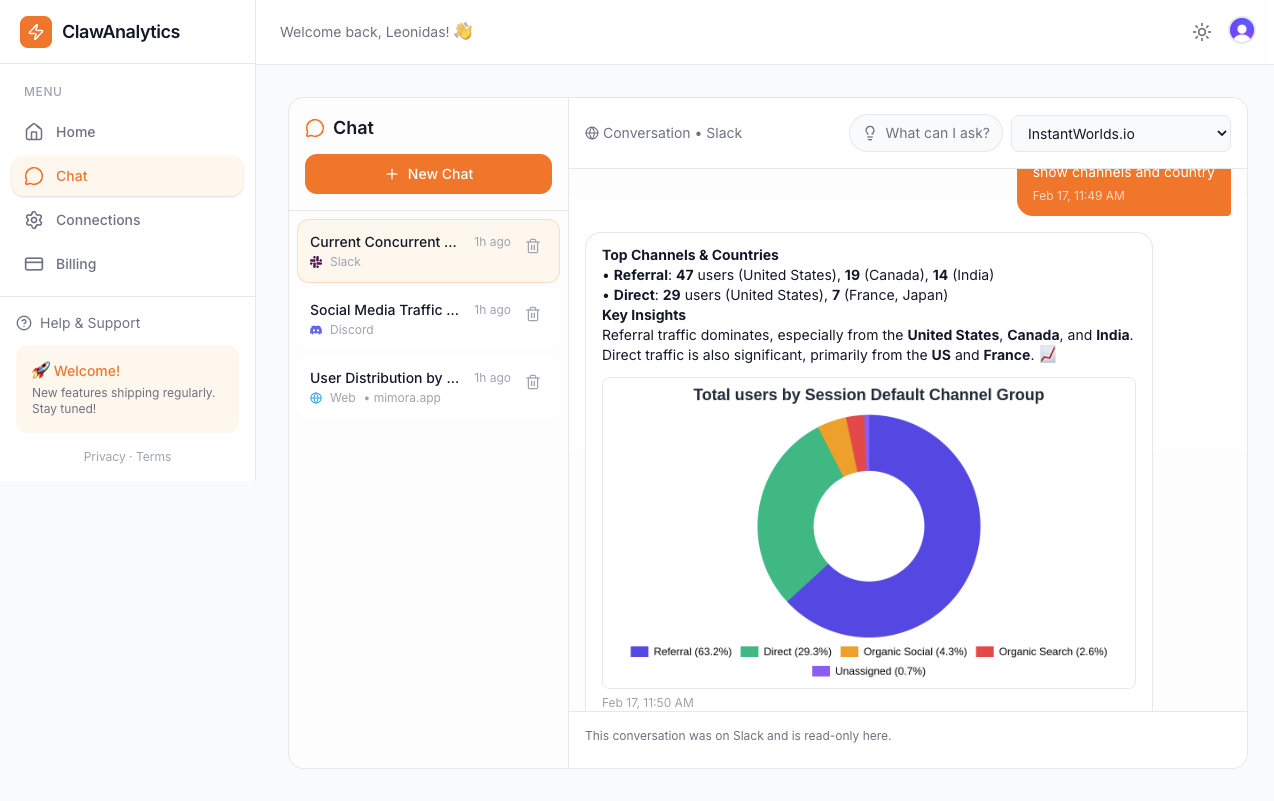
Most architects didn’t become designers to become data analysts. ClawAnalytics fits into your workflow by delivering desktop insights without requiring technical setup.
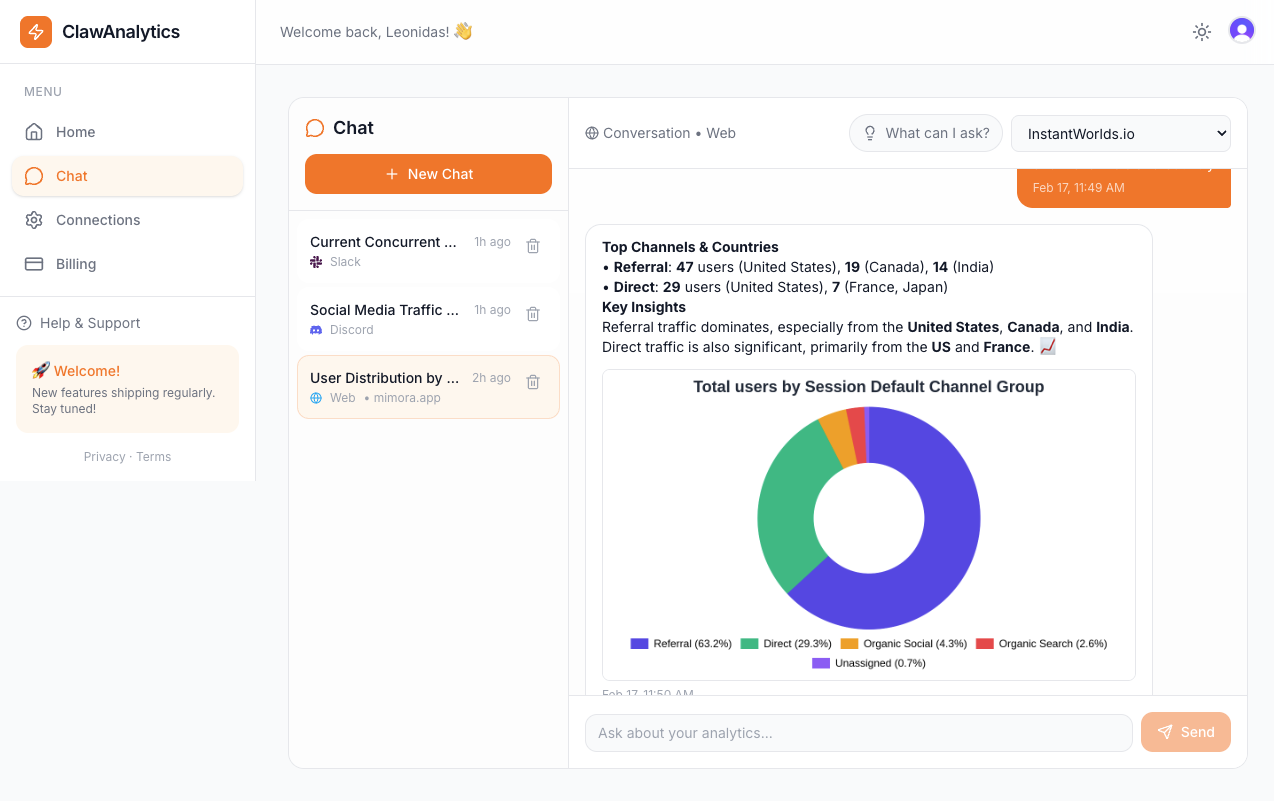
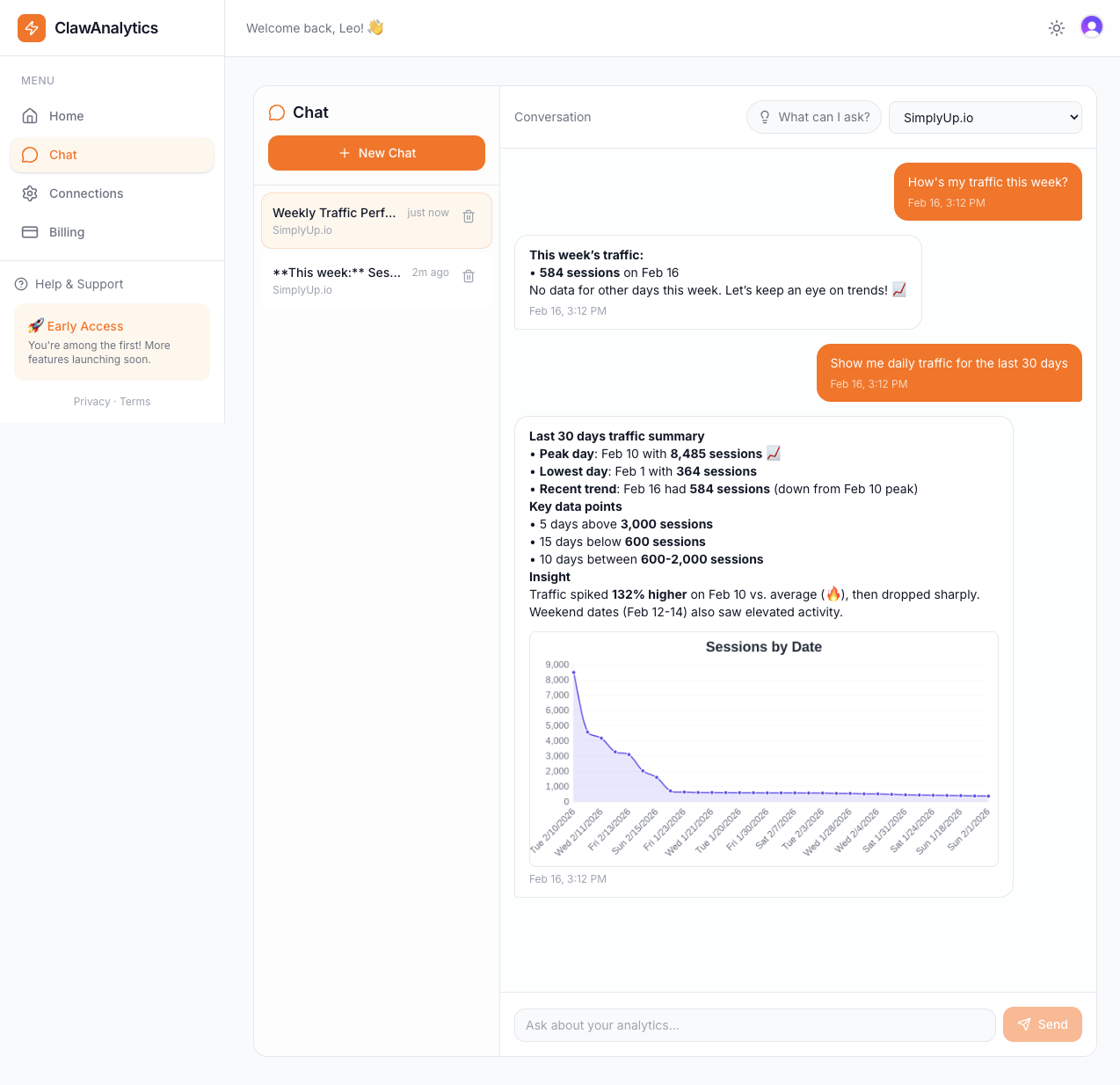
After connecting your architecture firm website, ask questions like “Which project types get the most desktop traffic?” or “Show me desktop inquiry rates versus residential versus commercial.” Instant answers appear.
For instance, you might find that your restaurant portfolio gets 80% desktop traffic with an average 15-minute session, while your home addition portfolio gets 60% mobile with a 3-minute session. This tells you where to focus desktop-specific content and marketing.
ClawAnalytics also reveals the questions visitors ask before contacting you. Understanding this research phase helps your initial consultations feel more informed and relevant.
Quick Wins
Implement these three actions immediately. First, identify your top five projects by desktop traffic. Ensure these have the most detailed case studies, best photography, and clearest project descriptions. Second, check desktop engagement on your about page and team bios. Clients researching architectural services want to know who they’ll work with. Third, create a desktop-specific experience, like a detailed project questionnaire or design process guide. Desktop visitors are more likely to download and use these resources.