How to Track Desktop Traffic for Home Services
Imagine this: You own a home renovation company. You spend €500 on Google Ads but get few calls. Then you check your desktop traffic and realize desktop visitors book consultations 3x more often than mobile users. You shift your ad budget to target desktop users. Your leads double.
Why Desktop Traffic Matters for Home Services
Home improvement decisions are big. People want to read about your services, see past projects, and get quotes. Here’s why desktop traffic deserves attention:
- Research-driven conversions. Desktop users spend more time reading service pages and testimonials.
- Form completion. Requesting quotes is easier on desktop with keyboard typing.
- Multiple page views. Desktop visitors typically view 3-5 pages before contacting you.
- Trust signals. They read your about page, portfolio, and reviews on bigger screens.
How to Check in GA4
Here’s how to access your desktop traffic data:
- Log into GA4 and navigate to Reports > Acquisition
- Select Traffic acquisition from the dropdown
- Click Add dimension and choose Device category
- Find the “desktop” row in your data
- Compare the Leads or Conversions column between device types
For deeper insights:
- Go to Explore > Free form
- Create a segment for “Desktop users”
- Apply it to see exactly what desktop visitors do on your site
The Easier Way
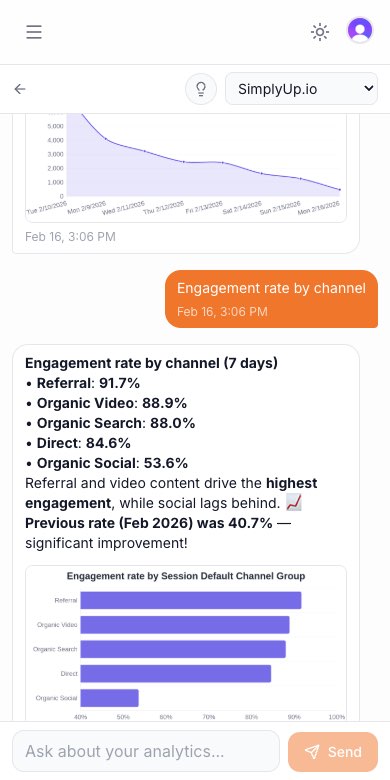
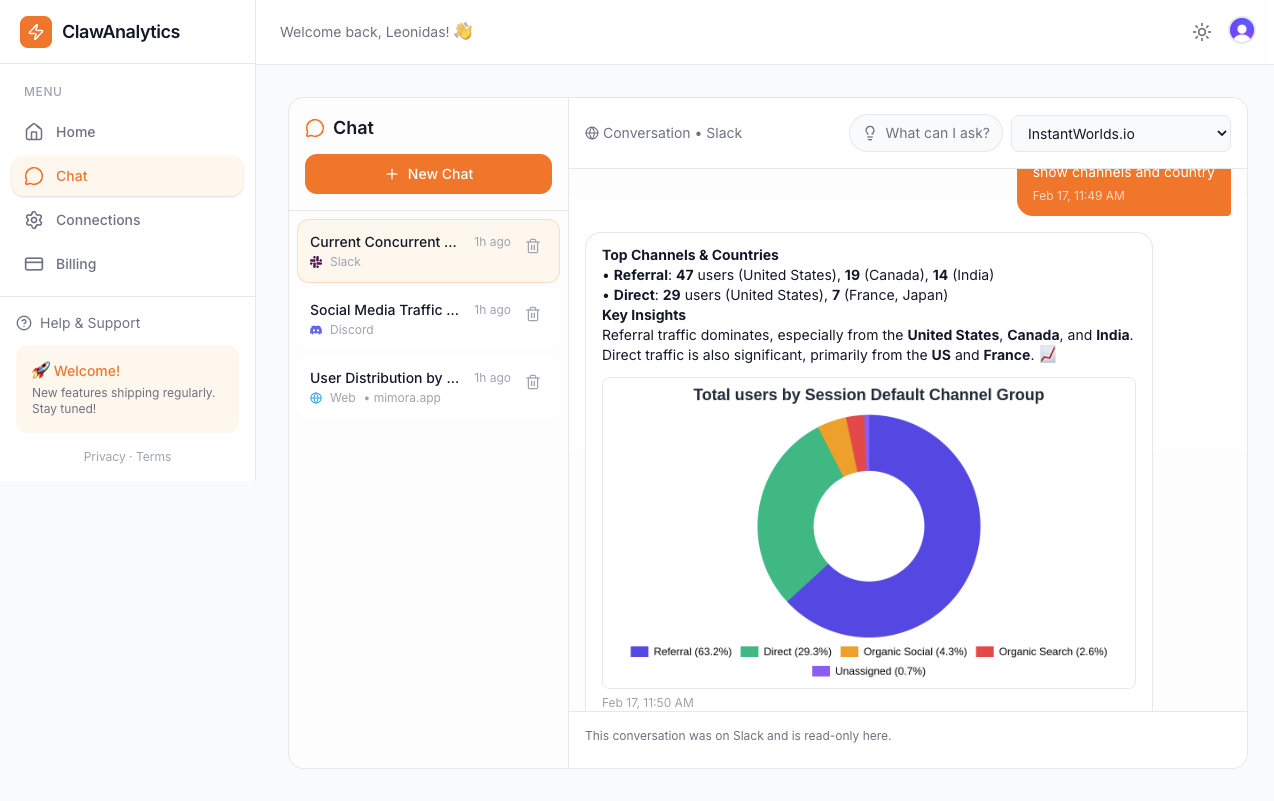
Setting up GA4 segments and custom reports takes expertise. ClawAnalytics handles all of this automatically.
Try asking:
- “Which services get the most desktop leads?”
- “What’s my desktop-to-lead conversion rate?”
- “Are desktop visitors requesting quotes?”
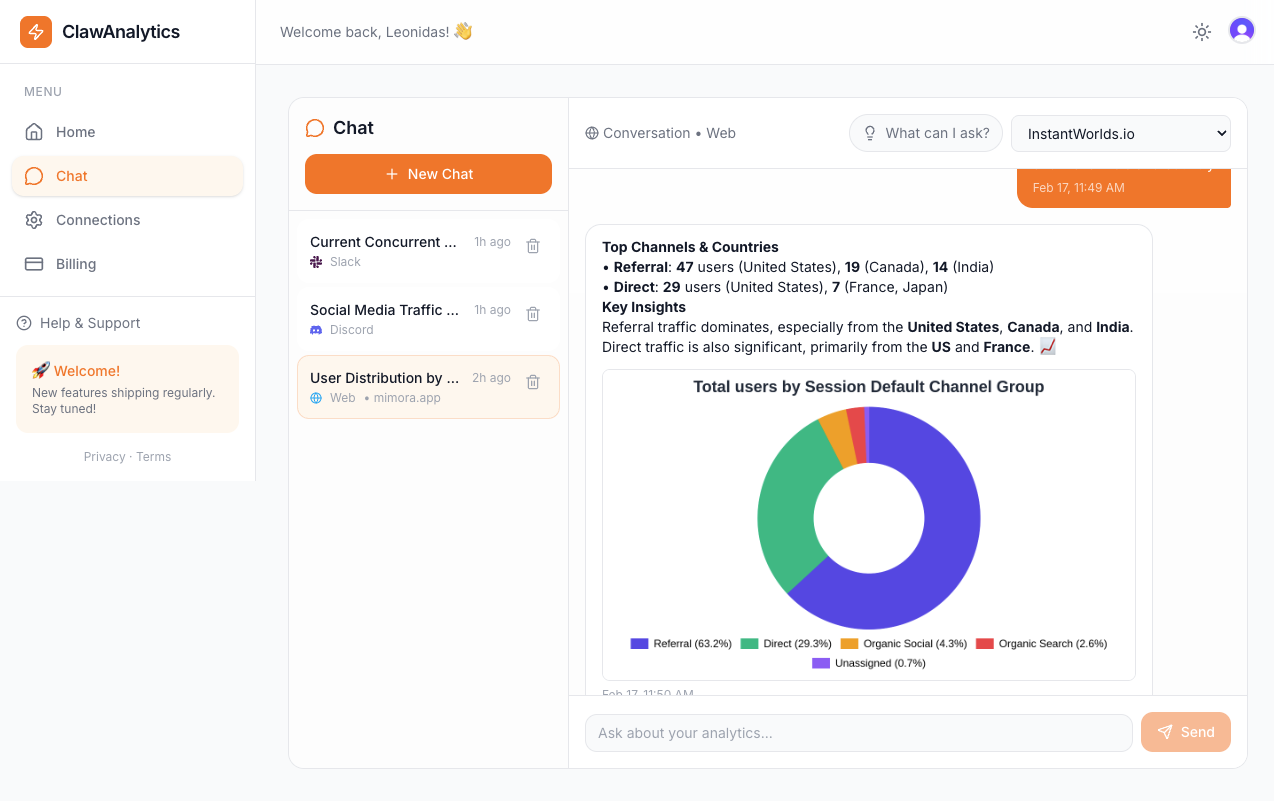
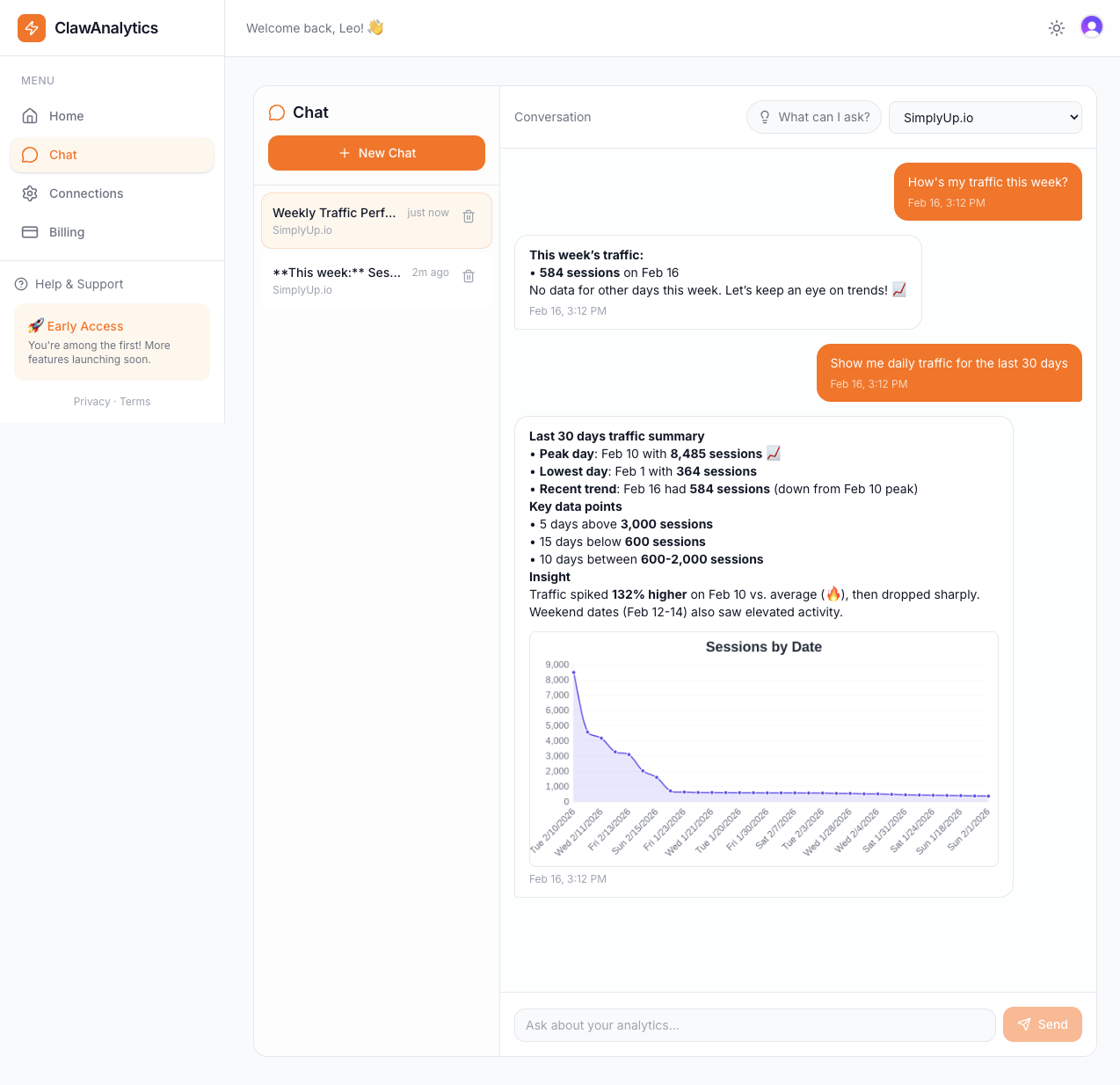
ClawAnalytics gives you instant answers. No dashboards to configure.
Quick Wins
Tips for home services companies:
- Track desktop leads separately. Create a specific goal for quote requests.
- If desktop bounce rate is high, improve your homepage. Desktop users expect detailed service information.
- Monitor which pages desktop visitors see before converting. This shows your path to booking.
- Use desktop traffic trends to plan busy seasons. More research happens before holidays.