Every music school offers a range of instruments and programs — piano, guitar, voice, drums, and more. Some are for kids, some for adults. When someone visits your website from a desktop computer, they’re usually researching a specific instrument or program. Desktop traffic tracking helps you understand what they’re looking for.
Why Desktop Traffic Matters for Music Schools
Desktop visitors behave differently than mobile users. Here’s what desktop traffic tells you:
- Instrument research — Parents and adult learners spend time on desktop comparing music programs, teacher credentials, and lesson structures.
- Adult program interest — Adults seeking music education for personal fulfillment or career development research extensively on desktop.
- Recital and performance information — Current students and parents search for performance schedules, venue details, and ticket information on desktop.
- Teacher background exploration — Visitors want to know about instructor experience, teaching styles, and student achievements before committing.
How to Check in GA4
Open GA4 and navigate to the Traffic Acquisition report. At the top, click “Add comparison” and set Session device category equals Desktop. This filters your data to show only desktop traffic.
For detailed analysis, go to Explore and create a new report. Add Sessions and Conversions as metrics. Add Page path, Session source/medium, and Session device category as dimensions. Filter to desktop sessions only.
Set up conversion events for key actions: “Submit lesson inquiry,” “Book trial lesson,” or “Request information” for specific instruments. This measures interest by program type.
The Easier Way
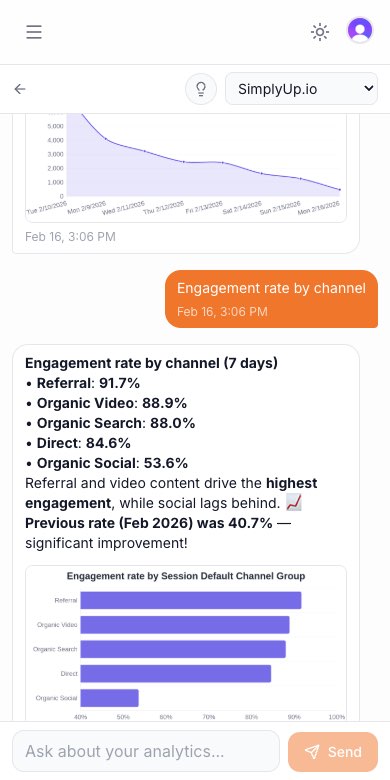
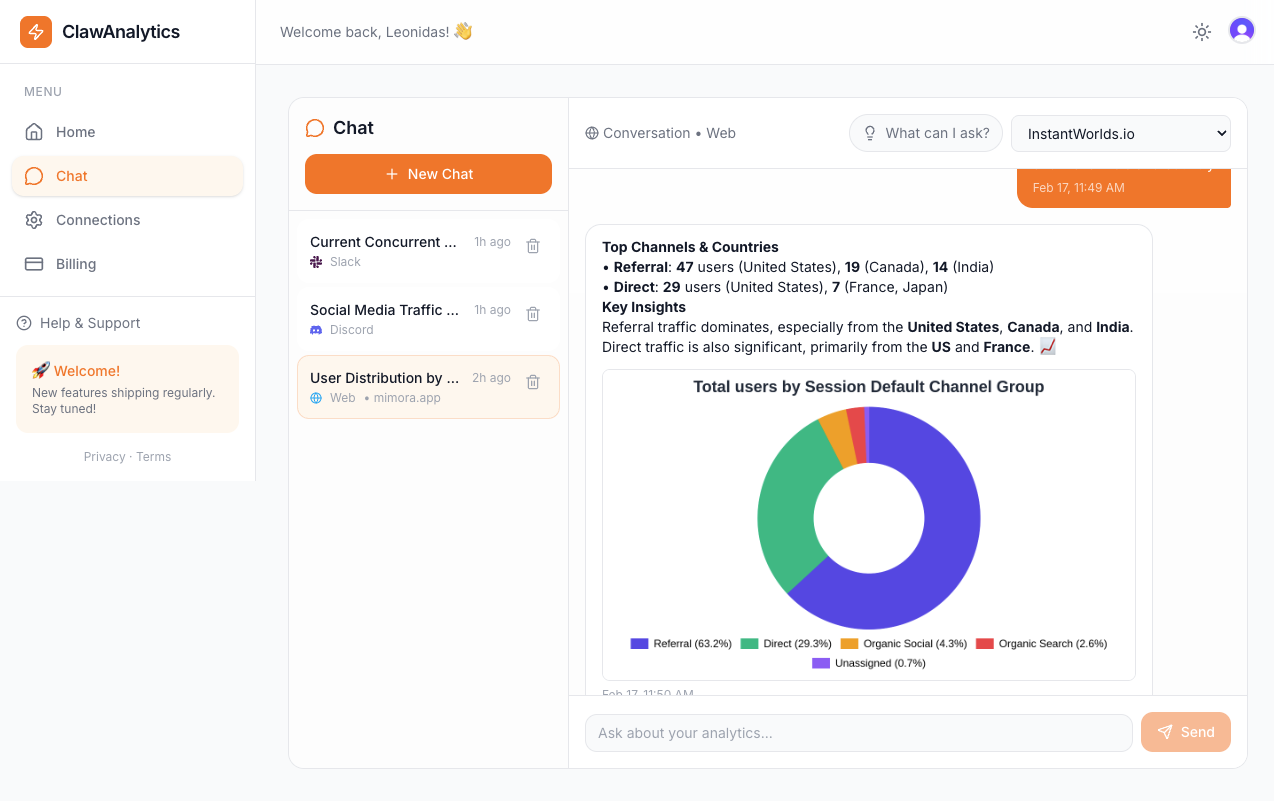
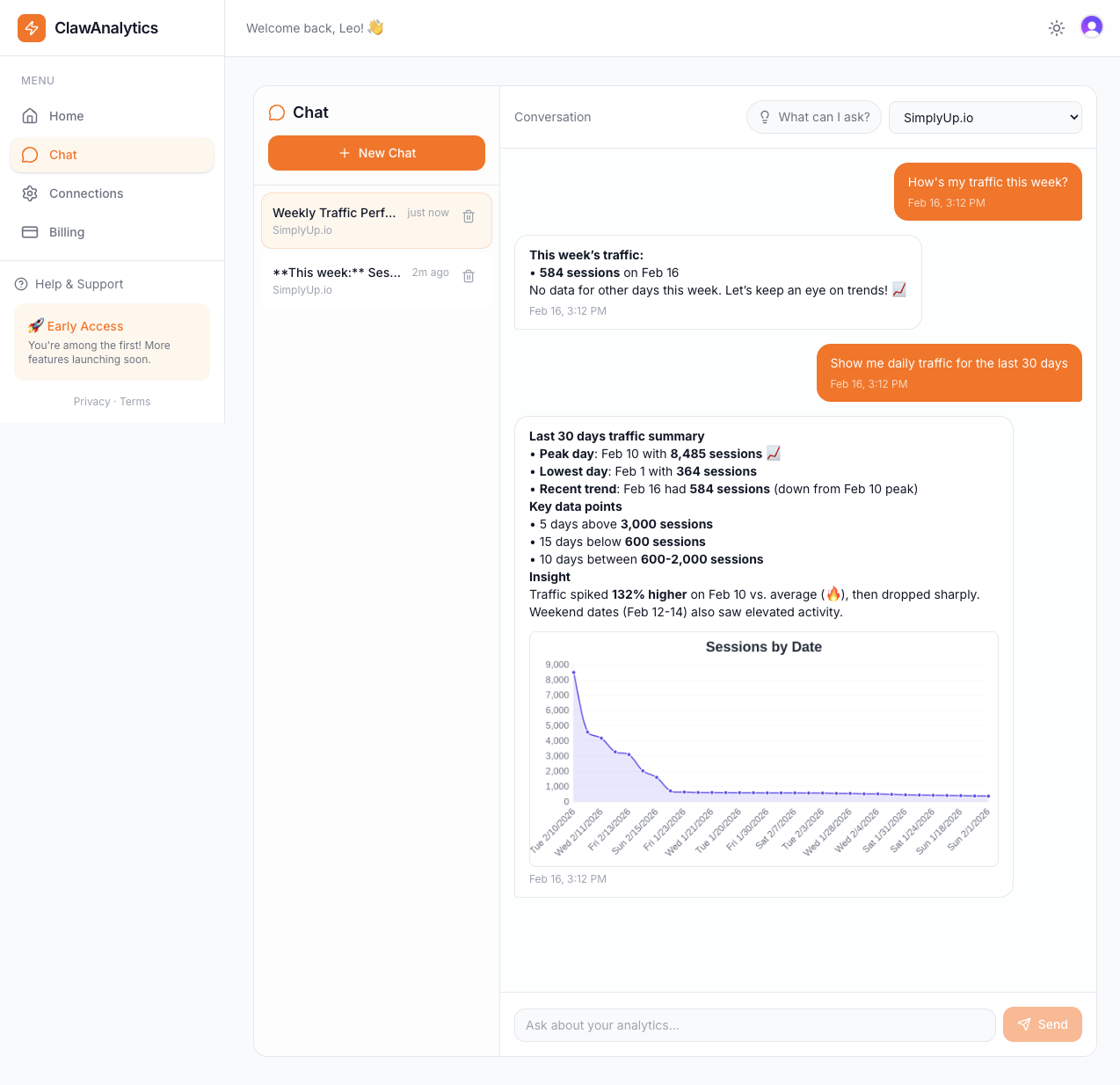
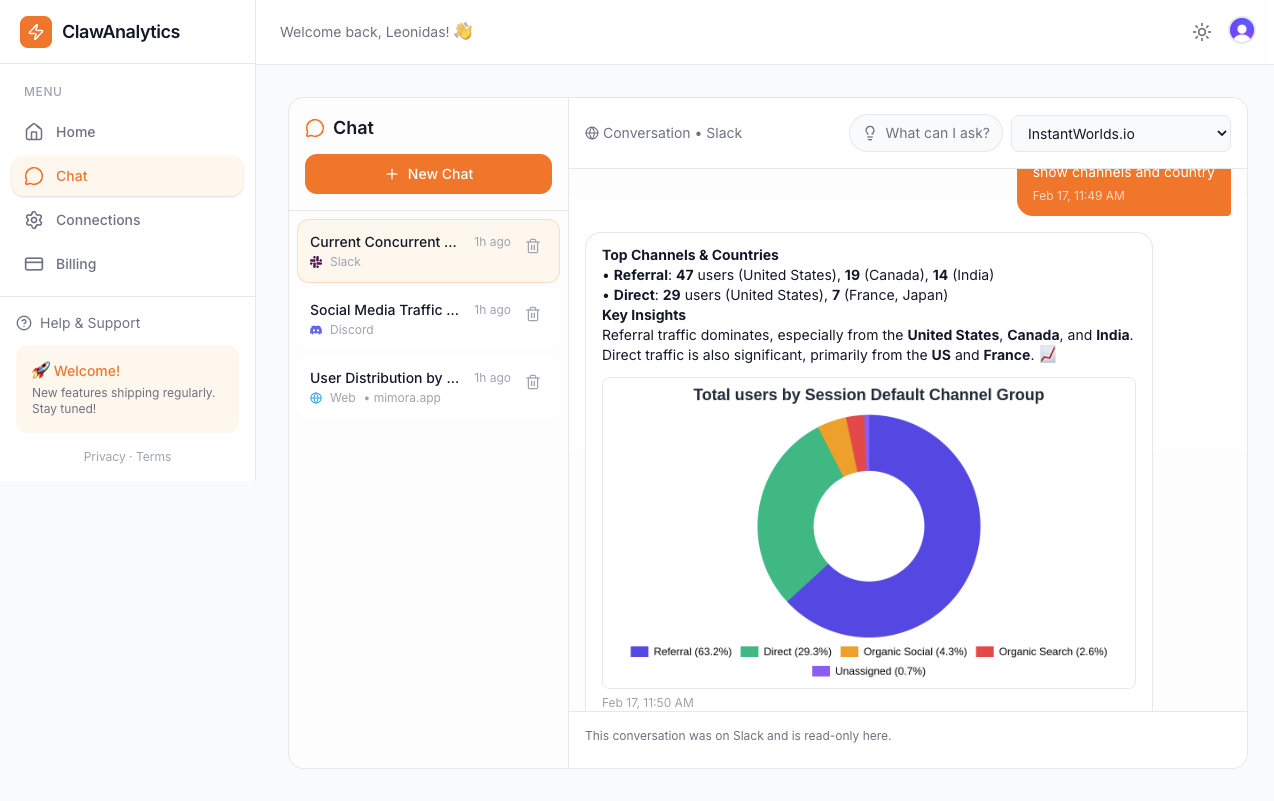
ClawAnalytics makes desktop tracking simple for music school owners. You see instantly whether desktop visitors are exploring kids’ lessons, adult programs, or specific instruments.
For instance, ClawAnalytics might show that desktop visitors from local school district websites convert to piano lessons at high rates. Or it could reveal that your guitar program page gets significant traffic from adults in their 30s — tailor your messaging accordingly.
You get quick answers to questions like: “Which desktop traffic sources bring the most lesson inquiries?” or “Are parents who visit our kids’ page scheduling trial lessons?” No more analytics confusion.
The tool also helps with program decisions. If desktop traffic to your voice lessons page is growing but conversions are flat, you might need clearer pricing or more teacher availability.
Quick Wins
Put your desktop traffic data into action:
- Build instrument-specific landing pages — Desktop visitors researching specific instruments (piano, guitar, violin) need detailed pages with teacher info, schedules, and pricing.
- Create adult program pages — Adult learners have different needs than kids. Create dedicated pages for adult music programs with flexible scheduling options.
- Optimize for local music education searches — Terms like “piano lessons near [neighborhood]” or “music school [city]” deserve strong local SEO pages.
- Retarget desktop prospects — Visitors who viewed your lesson page but didn’t book are warm leads for retargeting with first-lesson discounts.
- Track teacher inquiries separately — If desktop traffic includes potential teacher applications, create a separate lead capture with audition requirements.