A CEO scrolling through LinkedIn on their phone sees an article about operational efficiency. They click through to the consultant’s profile, visit their website, and read for a few minutes. They do not call yet. A week later, back in the office, they pull up the site on their desktop, dive into case studies, and send an inquiry.
This is the typical consultant client journey. Discovery on mobile, deep research on desktop, decision on a big screen. Treat these as one journey and you misunderstand how clients actually hire consultants.
Why Device Breakdown Matters for Consultants
Consulting is a high-trust, high-value transaction. The device journey reflects this:
Professional discovery is mobile. Busy executives browse LinkedIn, industry publications, and podcasts on phones during commutes or between meetings. Your mobile presence matters for first impressions.
Enterprise deals need desktop depth. When a company is spending six figures on consulting, they will not make that decision on a phone. They need detailed case studies, methodology explanations, and team profiles on desktop.
RFP responses live on desktop. Serious prospects review proposals on laptops and monitors. Your documents need to look professional at full size, not just render well on mobile.
Relationship building spans devices. Initial contact might happen on mobile, but strategy discussions, workshops, and ongoing collaboration happen across devices. Understanding this helps you serve clients at every touchpoint.
How to Check in GA4
Finding your device data in GA4 is straightforward:
Open GA4 and go to Reports. Navigate to Acquisition and select User acquisition. This shows where your visitors come from.
Add Device category as a dimension. Use the dimension dropdown to add “Device category.” Now you can see Mobile, Tablet, and Desktop traffic side by side.
Analyze inquiry conversions by device. Look at your contact form submissions or inquiry conversions alongside sessions for each device type.
Check content engagement by device. Use the Pages and screens report to see which content performs best on mobile versus desktop.
The Easier Way
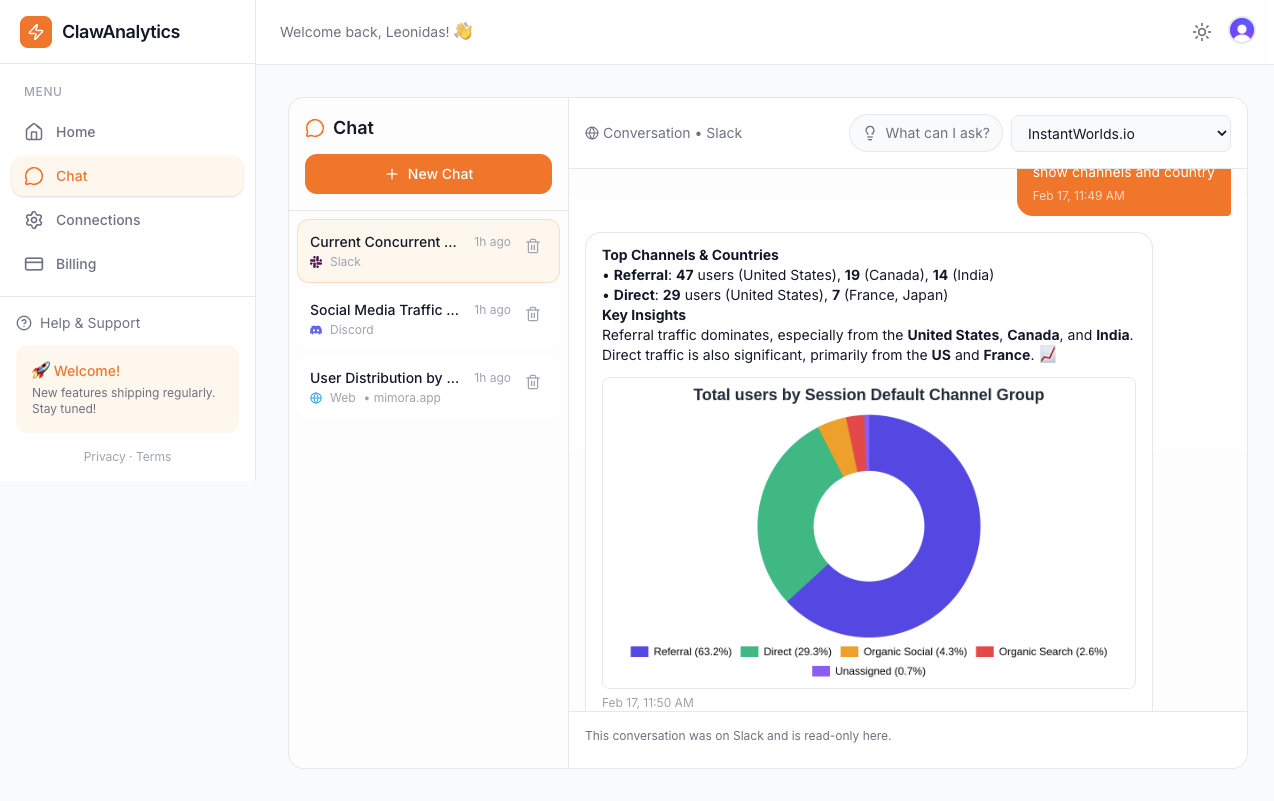
You became a consultant to solve business problems, not to analyze web traffic. ClawAnalytics gives you the insights without the complexity.
It might tell you: “Mobile drives discovery but desktop drives conversions. Create mobile-friendly entry points with detailed desktop content.” Or: “Case study page visitors on desktop convert at 3x the rate. Make sure your success stories are comprehensive.”
Simple questions become answerable. Which industries find you on mobile? What content do desktop visitors consume most? Where do high-value prospects spend their time?
These insights help you focus on the activities that actually win business.
Quick Wins
Try these three actions this week:
First, optimize mobile discovery. Make sure your homepage and service overview pages work perfectly on mobile. This is where busy executives first find you.
Second, build comprehensive desktop resources. Create detailed case studies, white papers, and methodology documents for serious prospects researching on desktop.
Third, ensure seamless cross-device experience. Your brand, messaging, and contact information should be consistent and accessible whether someone visits on phone, tablet, or desktop.