A toothache strikes at 9 PM. The person in pain opens their phone, searches “emergency dentist near me,” and calls the first site that loads quickly and looks trustworthy. They are not switching to desktop. They need help now.
This is the reality of dental patient acquisition. Your website must work perfectly on mobile because that is where urgent cases find you. But for planned treatments like implants or orthodontics, desktop research plays a bigger role. Understanding this split is the key to filling your appointment book.
Why Device Breakdown Matters for Dentists
Dental practices compete for two very different types of patients, and they use devices differently:
Emergency patients need immediate answers. Toothaches, broken teeth, and sudden pain send people straight to their phones. If your mobile site is slow or confusing, they call your competitor instead.
Planned treatment patients do deep research. Someone considering braces or dental implants will spend hours reading reviews, comparing prices, and looking at before-and-after photos. They often switch to desktop for this deeper dive.
Referral patients behave differently. If a friend recommended you, they might book immediately on mobile. Understanding this helps you tailor your booking experience.
Practice management matters too. Existing patients use different devices for appointment reminders, bill pay, and communicating with your office. These patterns affect patient satisfaction and retention.
How to Check in GA4
Finding device data in GA4 is straightforward:
Log into GA4 and go to Reports. Navigate to Acquisition and select User acquisition. This shows where your patients come from.
Add the Device category dimension. Click the dimensions dropdown, search for “Device category,” and add it. You will now see traffic split by Mobile, Tablet, and Desktop.
Compare conversion rates by device. Look at your booking conversions alongside sessions for each device. If mobile has many sessions but few bookings, your mobile booking experience needs work.
Check specific page performance by device. Use the Pages and screens report, filtered by device, to identify which pages cause mobile users to leave.
The Easier Way
Most dentists did not go to school to learn Google Analytics. You went to dental school to care for patients.
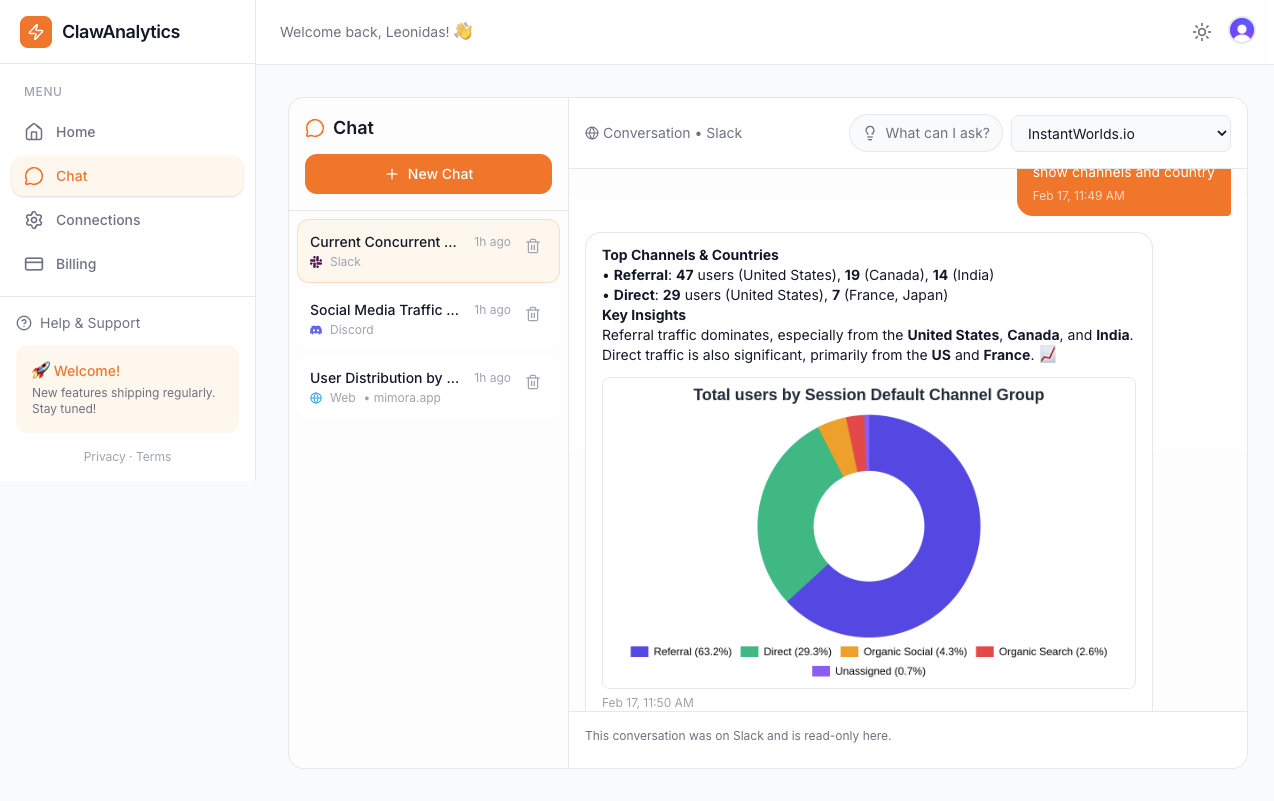
ClawAnalytics was built for busy practitioners. It might tell you: “Mobile users are 70% of your traffic but only 40% of online bookings. Improve your mobile booking flow.” Or: “Desktop users researching implants convert at 3x the rate of mobile users. Create detailed implant content for desktop visitors.”
Simple questions become answerable. Which treatments are mobile users searching for? At what point do mobile users abandon the booking form? Which device brings patients who accept more treatment plans?
These insights help you stop wondering why your appointment book is not full and start doing something about it.
Quick Wins
Implement these three changes this week:
First, prioritize mobile speed. Use a speed test tool to check how fast your site loads on mobile. Anything over three seconds means you are losing patients.
Second, simplify mobile booking. Reduce form fields to the minimum needed. A patient with a toothache should be able to book in under 60 seconds.
Third, create emergency-focused content. Make sure your mobile landing page immediately shows emergency contact information, hours, and a clear call button.