Bloggers

How to Track Direct Traffic for Bloggers

Learn how to track direct traffic for blogs, understand your most loyal readers, and use direct traffic insights to grow your audience and earnings.

How to Track Direct Traffic for Bloggers

Someone reads your latest post, loves it, and bookmarks your site. Next week, they type your URL directly to see what’s new. That’s direct traffic. It’s the heartbeat of a successful blog.

Why Direct Traffic Matters for Bloggers

Direct traffic is the ultimate validation for bloggers. It means readers remember your URL and care enough to return without a nudge. These visitors are your core audience. They’re more likely to subscribe to your newsletter, leave comments, and share your posts on social media. Direct traffic also shows content resonance. When readers return directly, your content made enough of an impression to stick. This traffic is also free and sustainable. Unlike social media algorithms that constantly shift, direct readers are yours indefinitely. Finally, direct traffic boosts ad revenue. Returning visitors generate more page views over time, increasing your earning potential.

How to Check Direct Traffic in GA4

Open Google Analytics 4 and click on Reports in the left sidebar. Select Acquisition, then User Acquisition. The traffic acquisition table shows all channels. Find “Direct” and click to see detailed metrics.

For blog-specific insights, examine which posts direct readers prefer. Go to Reports > Engagement > Pages and Screens. Apply a segment for direct traffic users. This shows which content resonates most with loyal readers.

Track subscriber conversions from direct traffic. Create a custom event for newsletter signups. Then compare conversion rates between direct traffic and other sources.

The Easier Way with ClawAnalytics

ClawAnalytics gives bloggers clear answers about their loyal readership. It reveals: Which blog posts turned readers into direct visitors? Which topics create the most devoted audience?

ClawAnalytics tracks the journey from first-time reader to direct visitor. It shows which content creates that “I need to come back” feeling. Example insights include identifying your most bookmarked posts, understanding which topics generate returning readers, and tracking if email newsletters eventually lead to direct visits.

Quick Wins for Bloggers

Make your URL memorable. Keep your domain short and consistent with your brand.

Encourage bookmarking. At the end of posts, remind readers to bookmark your site for later.

Build an email list. Send posts directly to subscribers, then track which ones eventually visit directly.

Create a consistent posting schedule. Readers who know when to expect new content are more likely to return directly.

Feature a search function. When readers use your search, they’re engaging deeply and are more likely to return directly.

Track your direct traffic monthly. Growing direct visitors means you’re building a real community.
Check your analytics from anywhere

On your morning commute. At a coffee shop. In a meeting. Pull up your analytics on any device and get instant answers.

  • Web dashboard on desktop & mobile
  • Discord bot for team channels
  • Slack integration for your workspace
  • MCP server for AI agents (Claude, Cursor)
See your traffic in 60 seconds →
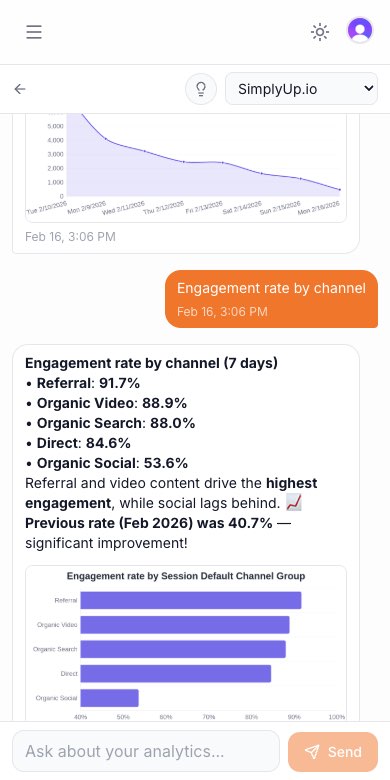
ClawAnalytics mobile chat showing engagement rate breakdown with charts

How ClawAnalytics helps

Skip the dashboards. Get answers in seconds.

🔗
1

Connect GA4

One-click OAuth. Read-only access. Takes 30 seconds to link your Google Analytics property.

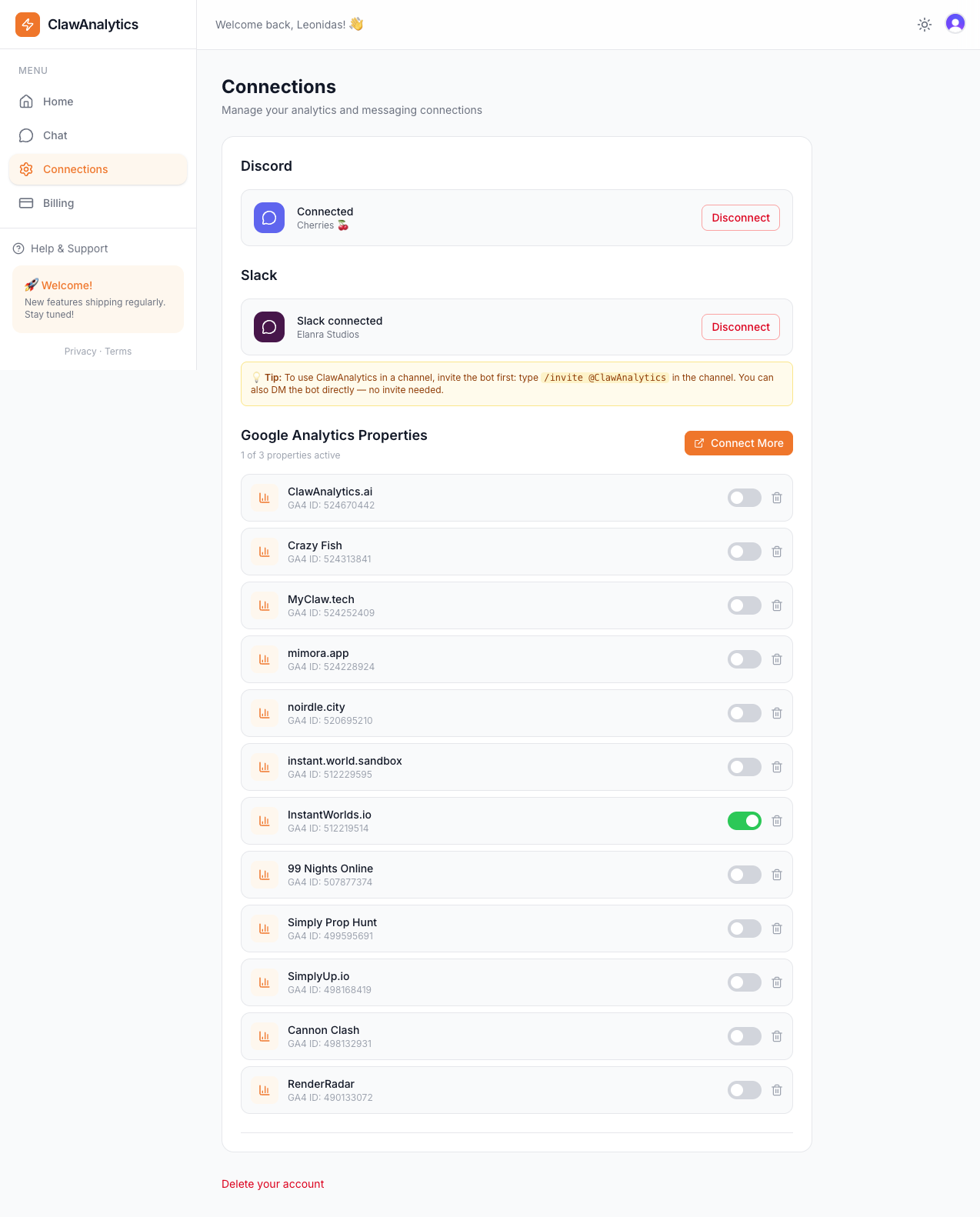
ClawAnalytics connections page showing Google Analytics properties linked
💬
2

Ask questions

Type in plain English. No query language, no filters, no date pickers. Just ask what you want to know.

ClawAnalytics chat interface with natural language query
📊
3

Get answers with charts

Instant responses with visualizations. Share charts with your team or export the data.

ClawAnalytics showing chart response to analytics query

See it in action

Ask a question. Get a chart. That simple.

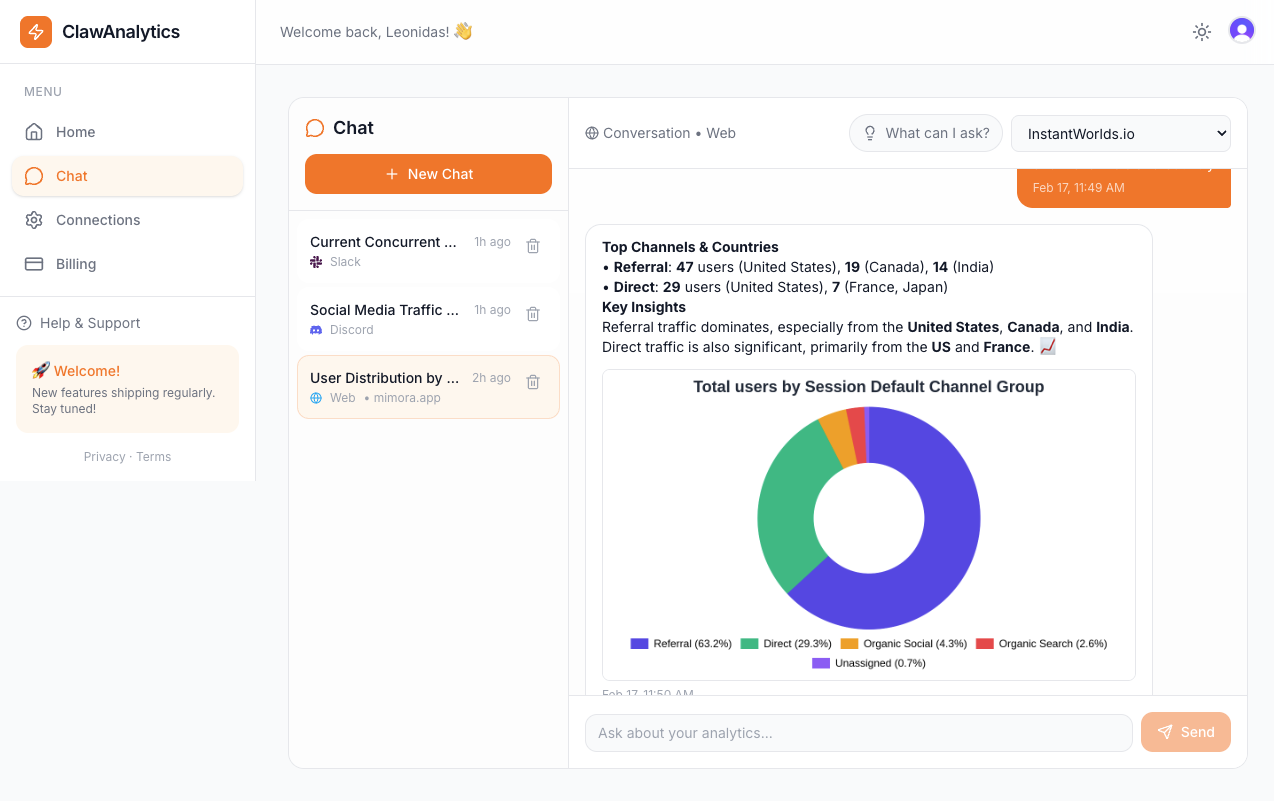
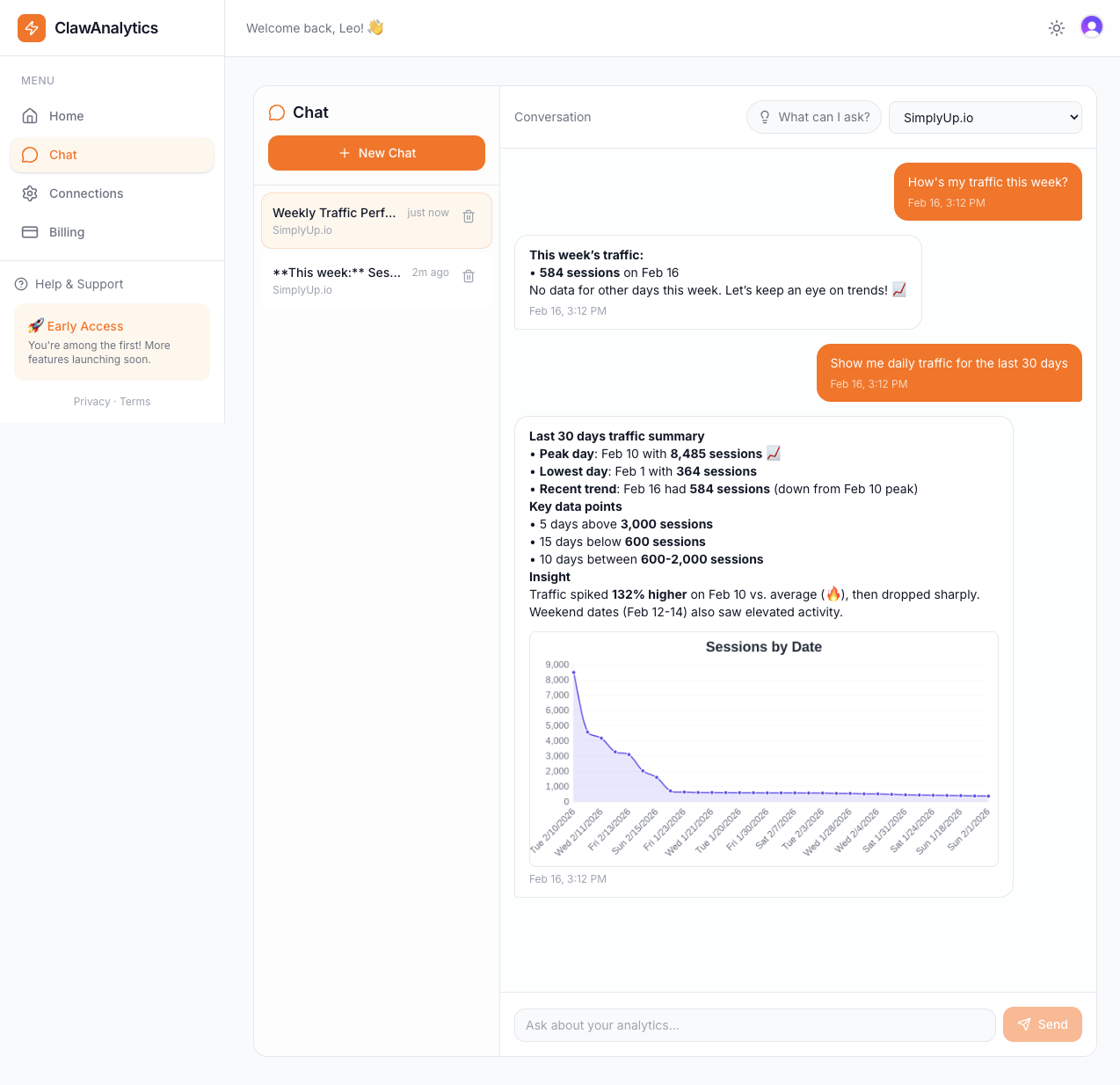
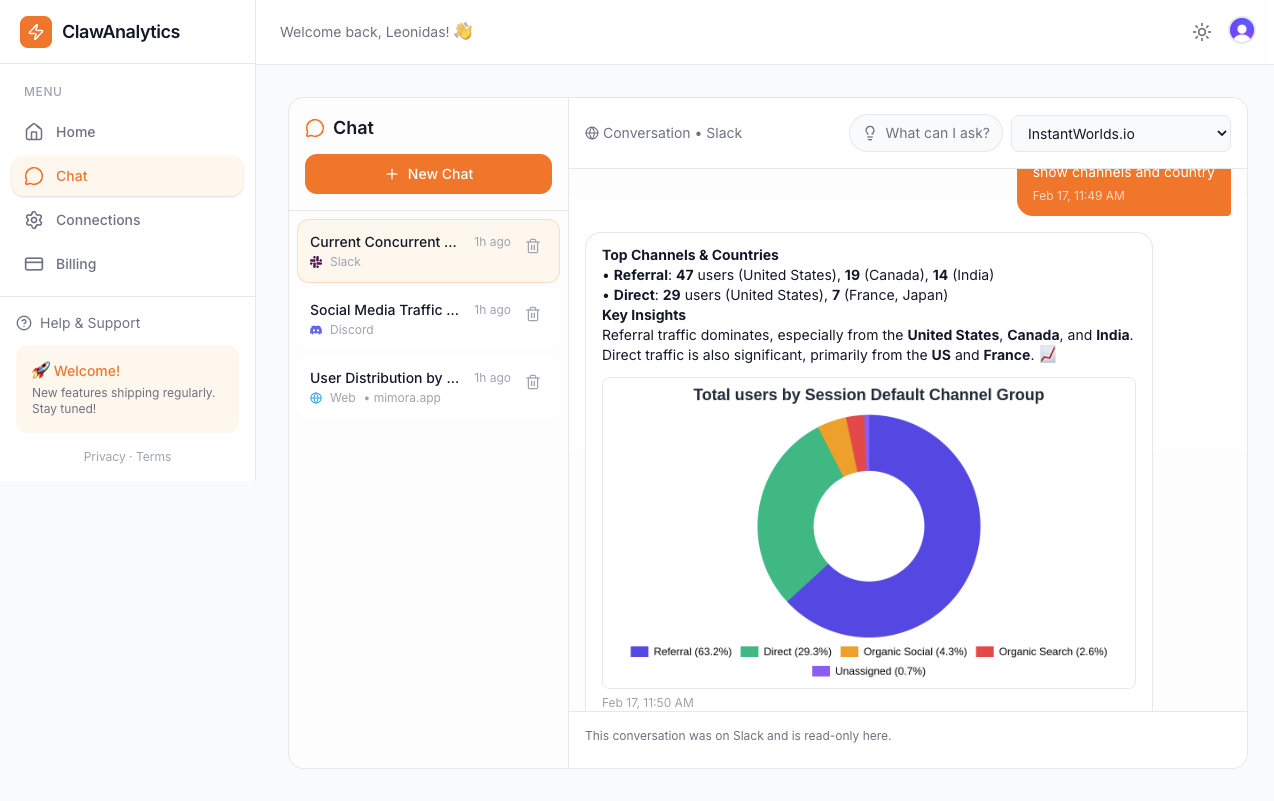
ClawAnalytics Chat
ClawAnalytics chat interface showing a natural language analytics query with chart response

Works on web, Discord, and Slack. Also available as an MCP server for AI agents.

Leonidas Maliokas
"I used to open Google Analytics 5 times a day and still miss things. Now I get a summary every morning and ask follow-ups when something looks off. Takes 10 seconds instead of 10 minutes."

Leonidas Maliokas

Founder, Elanra Studios

🎮 5 games monitored 💼 3 businesses

Simple, honest pricing

Start free. Upgrade when you're ready.

Free

Try it out

$0 /month
  • 5 websites
  • 30 questions/month
  • Web dashboard
  • No credit card
Start Free

Website

For small businesses

$9 /month
  • 5 websites connected
  • 100 questions/month
  • Daily morning summary
  • Web dashboard + Discord
Get Started

Business

For agencies and portfolios

$79 /month
  • Unlimited websites
  • 2,000 questions/month
  • Everything in Pro
  • ✅ API access
  • ✅ MCP integration
  • ⭐ Priority support
Get Started

Stop opening dashboards.
Start asking.

Connect Google Analytics in 30 seconds. Get answers from the dashboard or Discord. Start free — no credit card needed.

Try it free — ask your first question
30-second setup Free plan available Cancel anytime

Got questions?

Why is direct traffic important for bloggers?
Direct traffic represents loyal readers who bookmark your blog or type your URL directly. These readers return consistently and are more likely to subscribe, comment, and share your content.
How do I check direct traffic in Google Analytics 4 for my blog?
In GA4, navigate to Reports > Acquisition > User Acquisition. Find the Direct row in the traffic table. Click it to see page views, engagement time, and subscriber conversions from direct visitors.
How does ClawAnalytics help bloggers understand direct traffic?
ClawAnalytics helps bloggers see which content builds loyal readership, showing which posts turn casual readers into regular direct visitors.

Related guides

More resources to help you get the most from your analytics.