How to Track Direct Traffic for Real Estate
You’ve built a professional real estate website with listings, market reports, and neighborhood guides. Yet when you check your analytics, direct traffic seems mysterious. You know people are visiting, but understanding who arrives directly versus through other channels helps you make better marketing decisions.
Why Direct Traffic Matters for Real Estate
Direct traffic matters significantly for real estate professionals in several key ways.
It reveals past client loyalty. When former clients return to your site directly, they’re thinking about their next transaction. These warm leads often convert faster than cold prospects from other sources.
Direct traffic indicates referral network strength. When attorneys, mortgage brokers, or past clients send people your way, some will visit directly. Tracking this helps you understand which professional relationships drive business.
It measures brand recognition in your market. High direct traffic means your name is memorable in your community. People aren’t just clicking through Zillow or Realtor.com. They specifically seek you out.
Direct traffic often represents serious buyers and sellers. Someone who takes the time to type your URL directly has usually decided they want to work with a professional, not just browse listings casually.
How to Check in GA4
Setting up GA4 for your real estate website helps you understand your audience better.
Create a GA4 property at analytics.google.com. During setup, select real estate as your business category. This configures appropriate tracking defaults.
Add the tracking code to your website. Most website platforms allow you to insert tracking scripts through settings or theme files. Ensure the code appears on all listing pages, your homepage, and contact forms.
After data accumulates, log into GA4 and navigate to Reports, then Traffic Acquisition. Look for “Direct” in the channel breakdown. This shows visitors who arrived without any referral source.
Set up conversion tracking for lead forms. Track when visitors submit contact forms, schedule showings, or request property valuations. Compare these conversions across traffic channels to see how direct visitors convert.
Consider tracking specific listing pages. Create custom events for property searches so you can understand which listings attract direct visitors versus those from portals.
The Easier Way
Many real estate agents find GA4 overwhelming when just wanting simple answers.
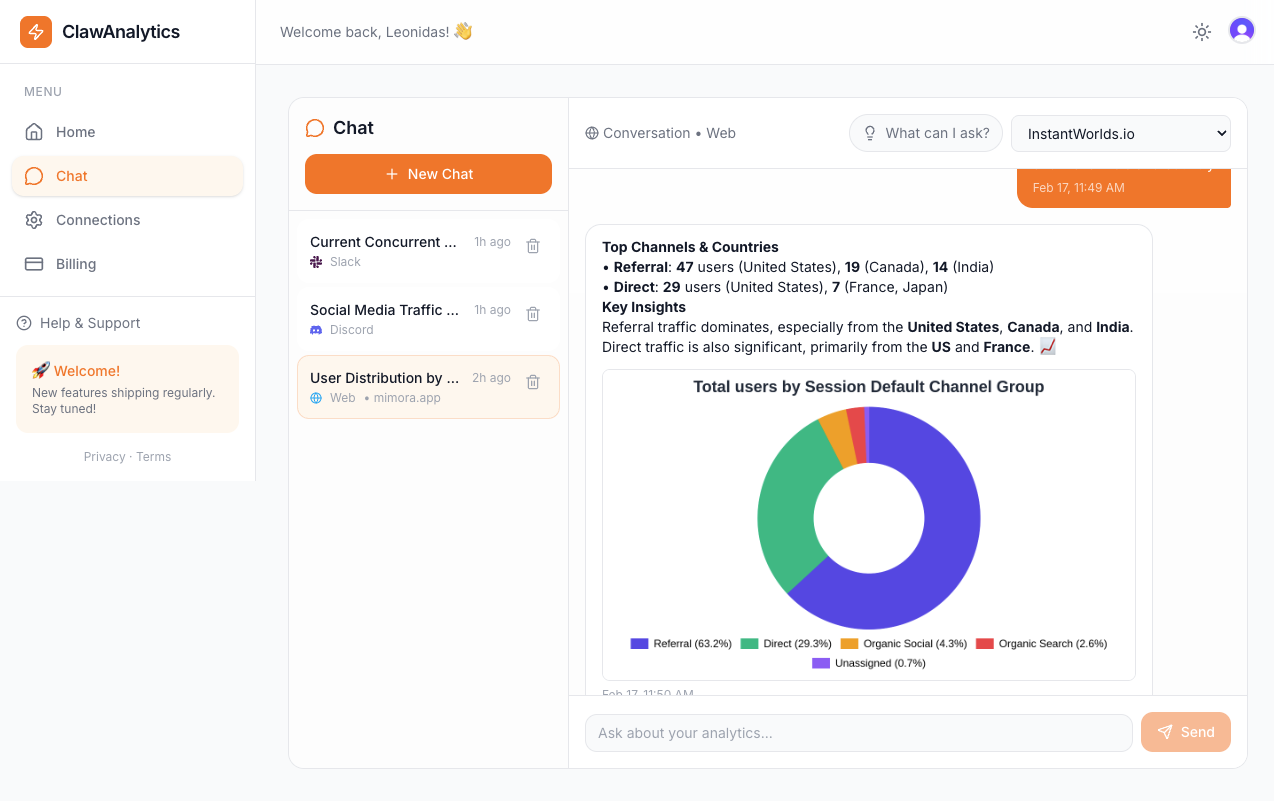
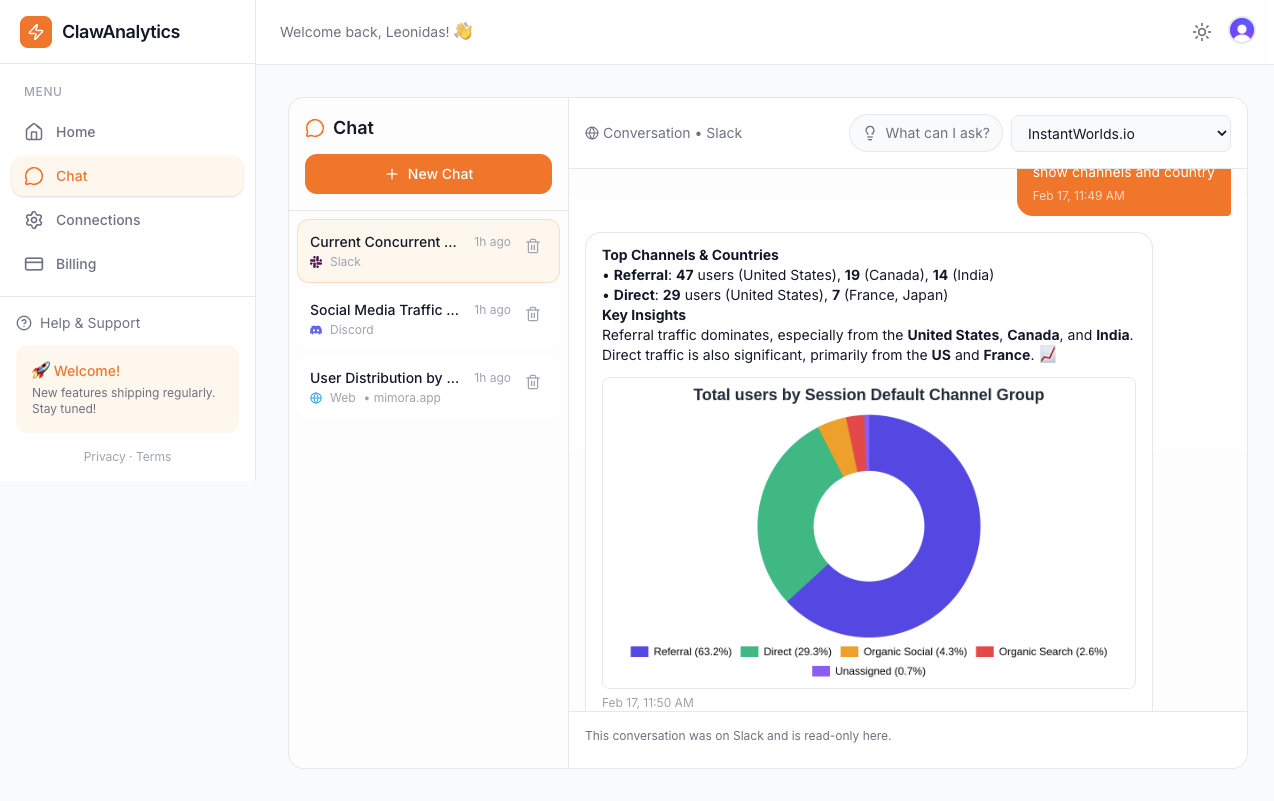
Common questions like “Did my just-listed campaign drive direct traffic?” or “Are past clients visiting my site for market updates?” require custom setup in GA4. ClawAnalytics answers these instantly.
Another frequent question is “Which open house generated the most direct website visits?” With ClawAnalytics, you see this at a glance. The platform also helps you understand whether your sphere of influence marketing creates lasting impressions.
ClawAnalytics provides real estate-specific dashboards that simplify complex analytics. You get actionable insights to grow your business without technical complexity.
Quick Wins
Here are practical steps real estate professionals can take to increase direct traffic.
Use a memorable, professional domain. Your name or team name works best. Avoid long or confusing URLs that are hard to remember.
Include your URL on everything. Business cards, yard signs, vehicle wraps, and flyers should feature your website prominently. Every marketing touchpoint builds direct traffic.
Encourage past clients to bookmark your site. After closing, remind clients they can return anytime for market reports, new listings, or referrals. A simple “bookmark our site for easy access” works.
Add your URL to email signatures. Every email you send is an opportunity for recipients to remember your website and visit directly later.
Partner with local businesses for cross-promotion. Mortgage brokers, attorneys, and home inspectors often refer clients. When they mention your name, some people will visit your site directly.