How to Track Event Tracking for Dropshipping
You run a dropshipping store selling fitness products. You spend $500 on Instagram ads, get 200 clicks, but only 3 sales. Where did the others go? Event tracking tells you exactly what happened on each step of the customer journey.
Why Event Tracking Matters for Dropshipping
Dropshipping means you pay for every sale. Wasted ad spend eats into your profits directly. Event tracking helps you stop the bleeding.
Identify checkout leaks. Track each step from product page to purchase. If 100 people reach checkout but only 10 buy, something is wrong with your checkout flow.
Optimize ad creative. Track which product images get more engagement. If video ads drive more add-to-cart events than static images, shift your budget accordingly.
Understand customer behavior. See which products people view most. Use this data to feature popular items on your homepage.
Test landing pages effectively. Run A/B tests on product pages. Track which version gets more add-to-cart events.
How to Check in GA4
GA4 offers built-in e-commerce tracking that works well for dropshipping.
Start with enhanced e-commerce. In your GA4 property, enable e-commerce in the data stream settings. This automatically tracks product views, adds to cart, and purchases.
Create a purchase event. Connect your payment processor or use Google Tag Manager to fire the purchase event when a customer completes an order. This is critical for calculating your true return on ad spend.
Build a monetization overview. GA4 provides this automatically. It shows revenue, transactions, and average order value. Drill down into specific products to see which items sell best.
Use the purchase path explorer. This tool shows the exact sequence of events leading to a purchase. You might discover that customers who view three products before buying have higher lifetime value.
The Easier Way
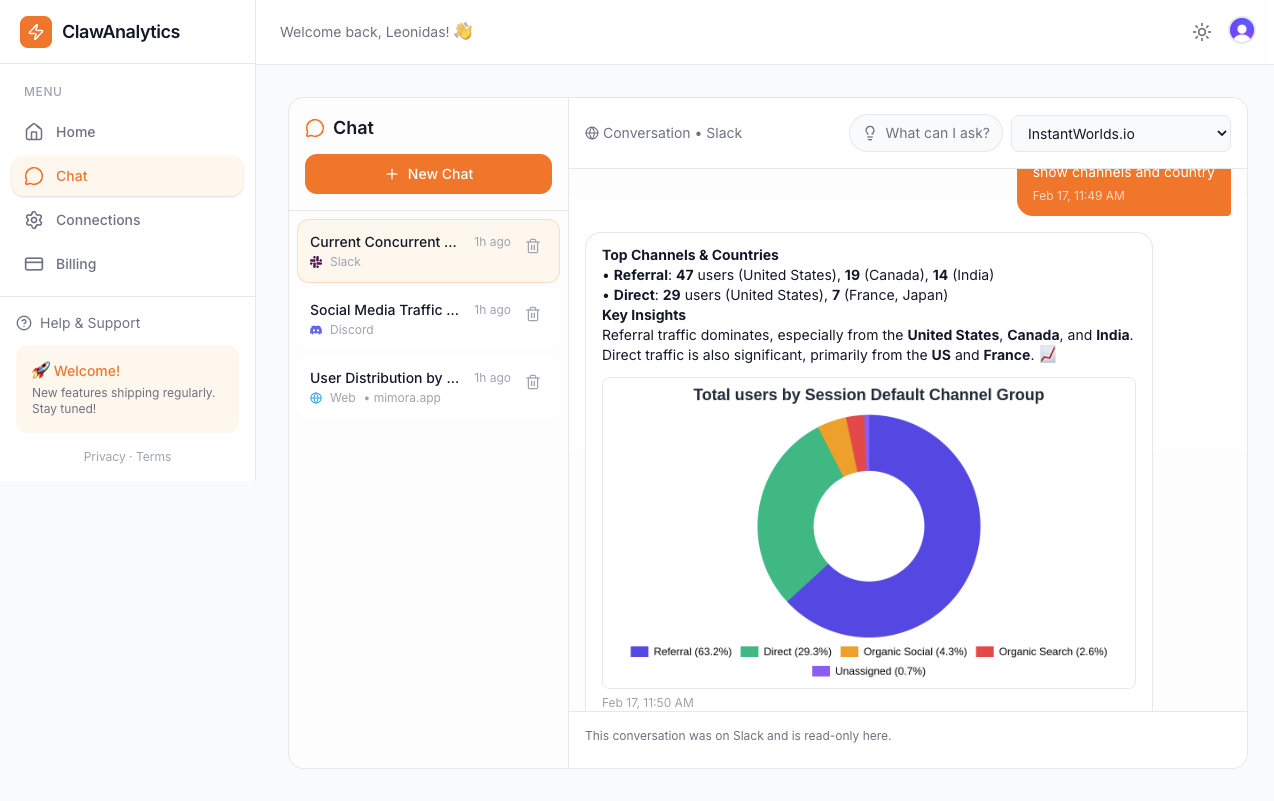
Setting up e-commerce tracking takes technical time you might not have. ClawAnalytics removes the complexity.
ClawAnalytics connects to your store and automatically tracks the events that matter. You see a visual funnel showing drop-off at each stage. If 40% of customers leave after adding to cart, you know exactly where to focus your optimization efforts.
Common questions ClawAnalytics answers include: Which product categories have the highest add-to-cart rate? What is my average cost per acquisition by ad source? Which landing pages have the best conversion rate?
The tool also tracks post-purchase behavior. You see repeat purchase rates and customer lifetime value, helping you identify which customers are worth retargeting.
Quick Wins
Add these event tracking elements this week to improve your store performance.
Set up cross-domain tracking if you use a separate checkout page. This ensures you see the full customer journey.
Track email signup conversions. Build an email list even from visitors who do not buy immediately.
Monitor exit intent on product pages. Create pop-ups offering discounts to capture abandoning visitors.
Create a dashboard showing cost per acquisition by product. Stop promoting items that lose money.