How to Track Event Tracking for Interior Designers
An interior designer spent months promoting their modern farmhouse work but couldn’t understand why inquiries stayed flat. Event tracking revealed that visitors spent three times longer on mid-century modern projects and often clicked to book consultations. They adjusted their homepage to showcase mid-century work and consultation bookings doubled within two months. The data showed what the designer thought was popular versus what actually attracted clients.
Why Event Tracking Matters for Interior Designers
Design is personal and visual. Tracking helps you understand client preferences:
- Style preference clarity removes guesswork. You’ll know if clients want modern, traditional, bohemian, or minimal designs.
- Room type interest reveals what clients need most. Kitchens, bathrooms, and living rooms each attract different project types and budgets.
- Portfolio conversion tracking shows if your work actually sells. High views but low inquiries mean the presentation isn’t compelling enough.
- Client journey understanding shows how prospects move from inspiration to action.
How to Check in GA4
Setting up event tracking for interior design requires visual and engagement events:
- Track gallery interactions: Record
room_view,style_filter_click,before_after_slide, andimage_zoom. - Monitor project engagement: See which projects users spend time on and if they visit multiple in the same style.
- Create inquiry events:
consultation_book_start,mood_board_download,pricing_view,contact_form_start. - Set up conversion tracking: Mark consultation bookings and project starts as conversions.
- Build style-based audiences: Segment visitors by which design styles they explore, then tailor follow-up.
The Easier Way
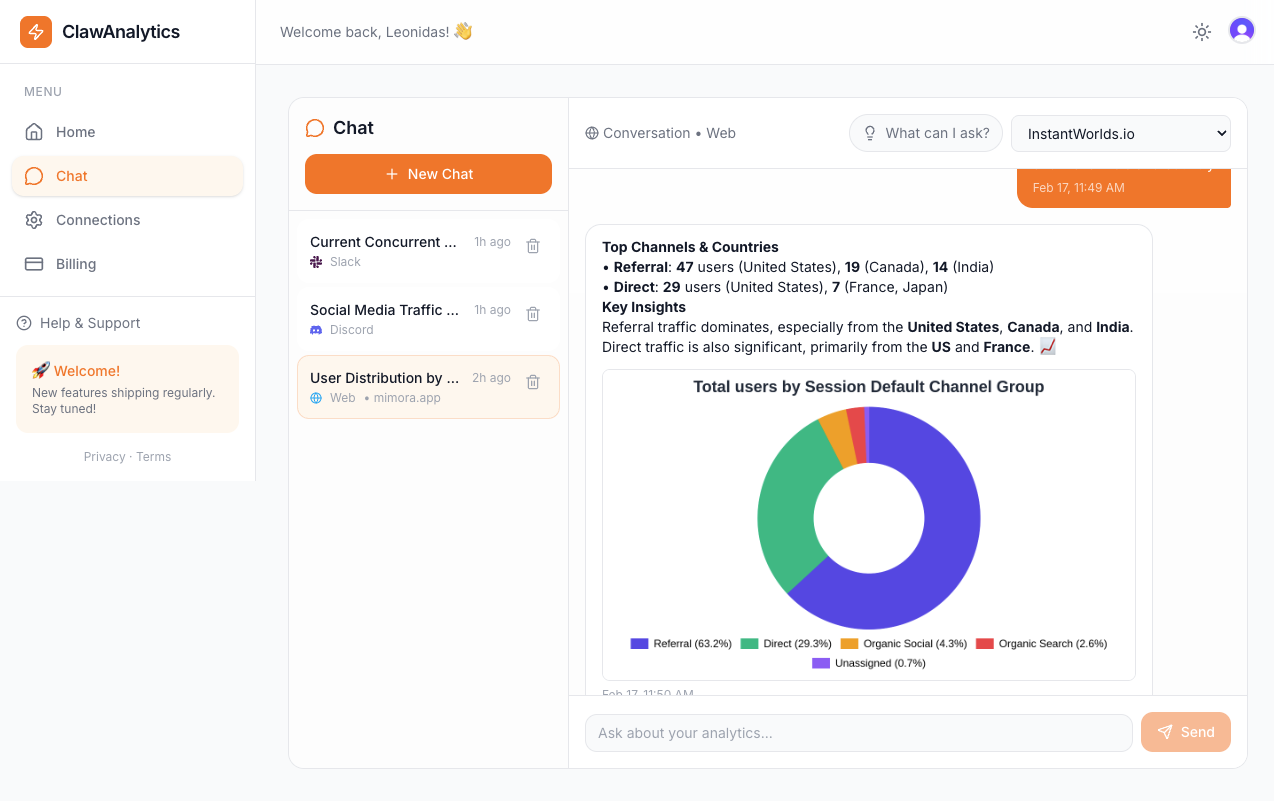
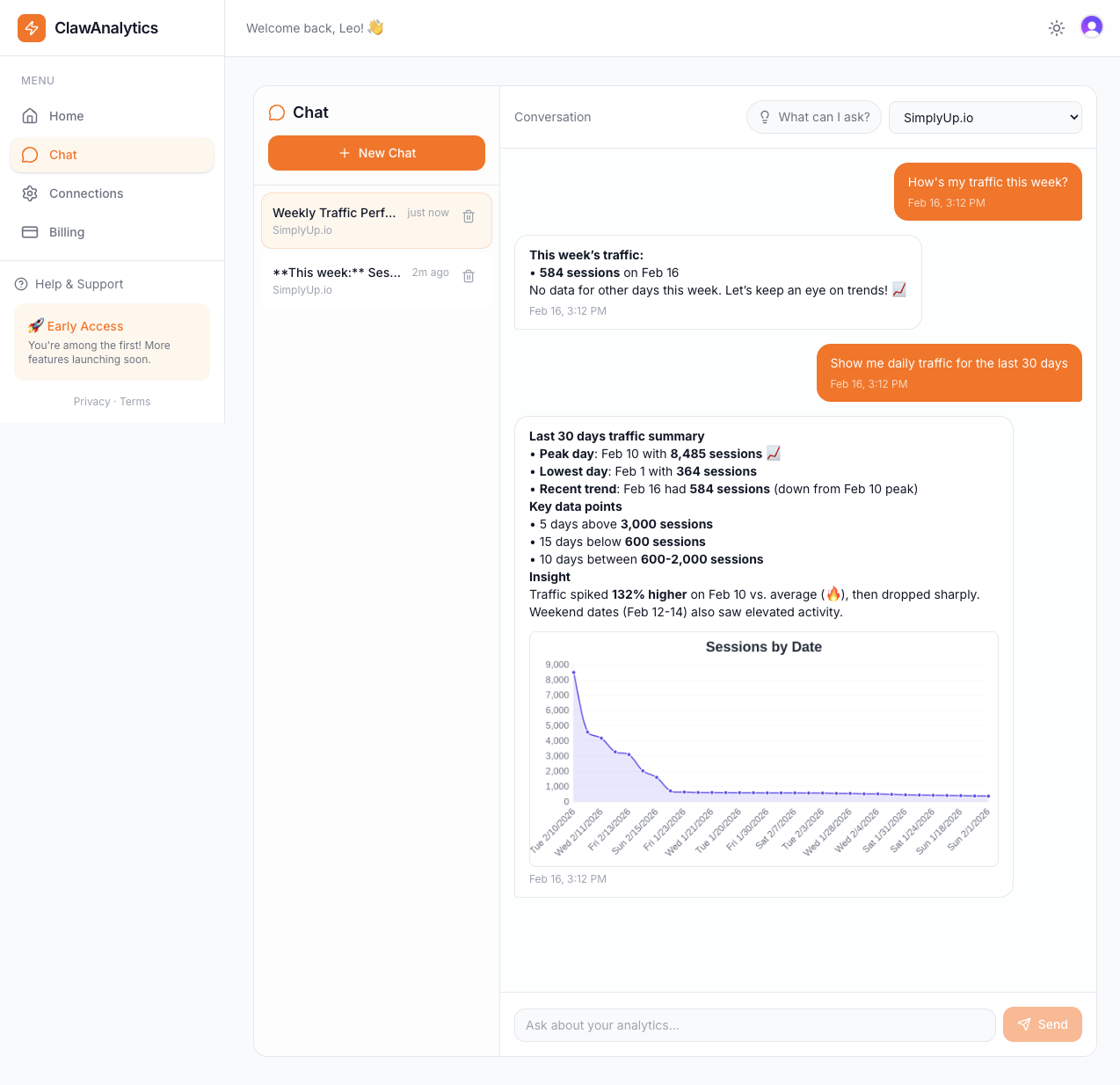
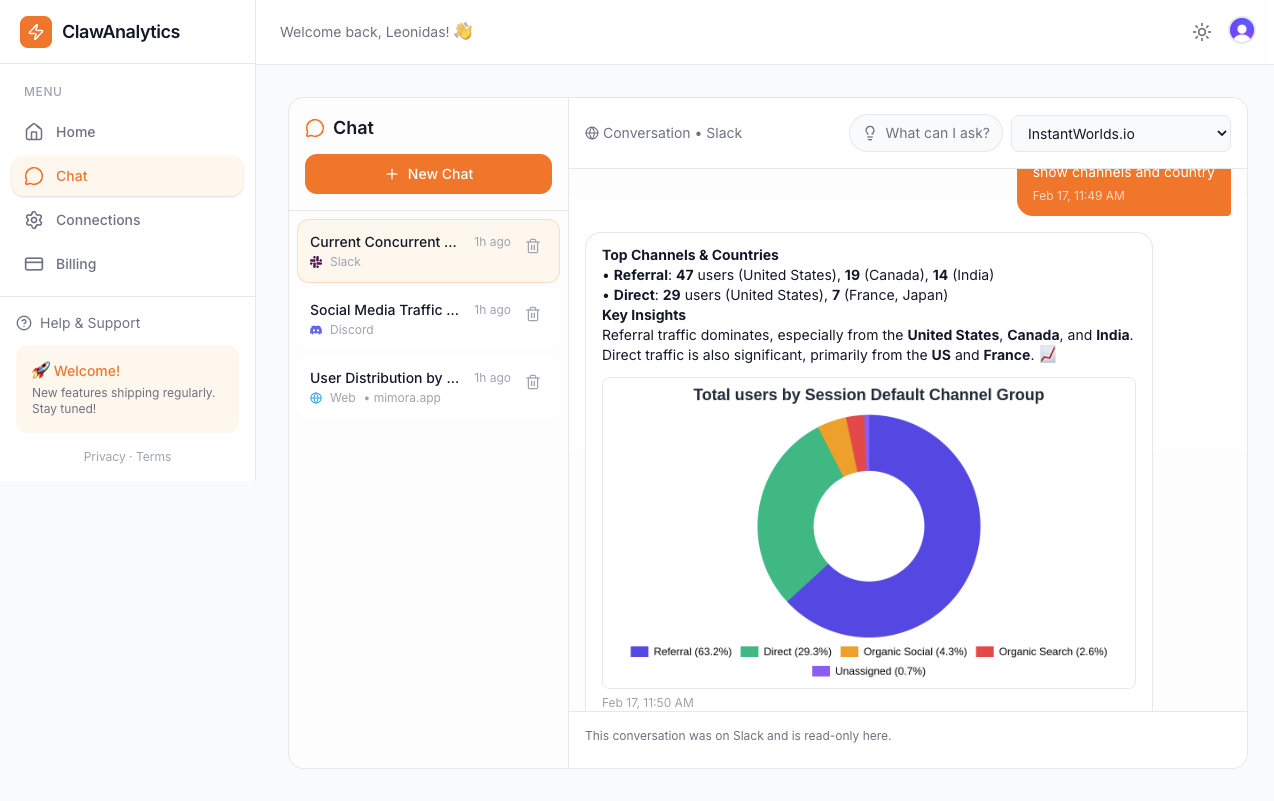
ClawAnalytics makes design analytics simple. You can ask “Which room types get the most traffic?” or “Do residential or commercial clients convert better?”
The platform also shows which styles generate the most serious inquiries. If minimalist projects get more consultation requests, you know where to focus marketing. ClawAnalytics answers these questions automatically.
You can also track how users interact with your before-after sliders. High interaction means clients care about transformation. Low interaction might mean the feature isn’t prominent enough.
Quick Wins
Implement these three event tracking setups this week:
- Mood board engagement: Track when users download mood boards. This is a high-intent signal worth following up personally.
- Style filter usage: See which styles users filter by most. This tells you what’s most requested and can guide new portfolio work.
- Mobile portfolio behavior: Many clients browse on phones. Make sure your mobile experience showcases images clearly.
These three changes help you understand what attracts clients and how to present your work for maximum impact.