Ecommerce

How to Track Exit Rate for Ecommerce

Discover how monitoring exit rate helps ecommerce stores identify weak pages and reduce lost sales.

Exit rate for ecommerce measures the percentage of visitors who leave your site from a specific page. If 100 people view your product page and 12 of them close their browser afterward, your exit rate is 12 percent. This metric tells you which pages fail to keep shoppers engaged.

Why Exit Rate Matters for Ecommerce

Every exit represents a lost sale. In ecommerce, even small exit rate improvements translate to significant revenue. A 2 percent reduction on a 100000 monthly traffic site means 2000 additional conversion opportunities.

Exit rate reveals several problems. High exit on product pages might mean unclear pricing or missing size guides. High exit on checkout pages usually indicates unexpected costs or complex forms. Homepage exits suggest weak navigation or slow load times.

Comparing exit rates across pages shows where to focus. A category page with 20 percent exit needs attention. Your checkout at 40 percent is an emergency. Data guides your efforts efficiently.

How to Check in GA4

Google Analytics 4 makes exit rate visible in several reports. Heres how to find it.

Open GA4 and go to Reports, then Life cycle, then Engagement, then Pages and screens. This table shows all your pages with key metrics.

By default, exit rate might not appear. Click the Customize report button, then add Exit rate from the available metrics. Drag it into your table.

Now you see each page and its exit rate. Sort by highest exit rate to find problem pages. Click any page to see the flow where users went next or what brought them there.

You can also create an exploration. Use the Users paths report to visualize exactly where visitors leave. This shows the journey, not just the destination.

The Easier Way

ClawAnalytics simplifies exit rate analysis for ecommerce stores. Instead of digging through GA4 reports, you get instant insights.

With ClawAnalytics, you see which products lose visitors most often. Maybe your bestseller has a high exit rate because the shipping information is buried. The tool flags this automatically.

ClawAnalytics also compares exit rates across device types. Desktop visitors might exit less than mobile users. If so, you know to prioritize mobile experience improvements.

Questions the tool answers include: Which product category has the highest exit rate? Does exit rate change by time of day? Are returning visitors less likely to exit than new ones? Simple dashboards make this clear.

Quick Wins

Lower your ecommerce exit rate with these three actions today.

Add exit intent popups. When a visitor moves toward closing the tab, show a discount or free shipping offer. This catches people before they leave.

Improve product page clarity. Add clear pricing, prominent shipping info, and multiple product images. Remove clutter that distracts from the buy button.

Streamline checkout. Reduce form fields, offer guest checkout, and show security badges. A complicated checkout kills more sales than any other factor.

Start with your highest exit rate pages. Fix those first and watch your conversion rate climb.
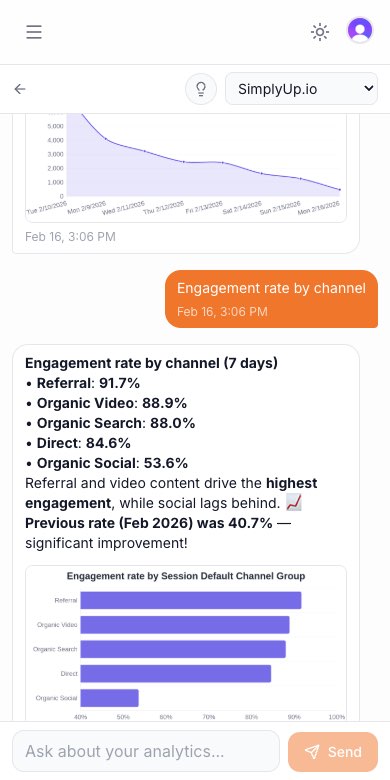
Check your analytics from anywhere

On your morning commute. At a coffee shop. In a meeting. Pull up your analytics on any device and get instant answers.

  • Web dashboard on desktop & mobile
  • Discord bot for team channels
  • Slack integration for your workspace
  • MCP server for AI agents (Claude, Cursor)
See your traffic in 60 seconds →
ClawAnalytics mobile chat showing engagement rate breakdown with charts

How ClawAnalytics helps

Skip the dashboards. Get answers in seconds.

🔗
1

Connect GA4

One-click OAuth. Read-only access. Takes 30 seconds to link your Google Analytics property.

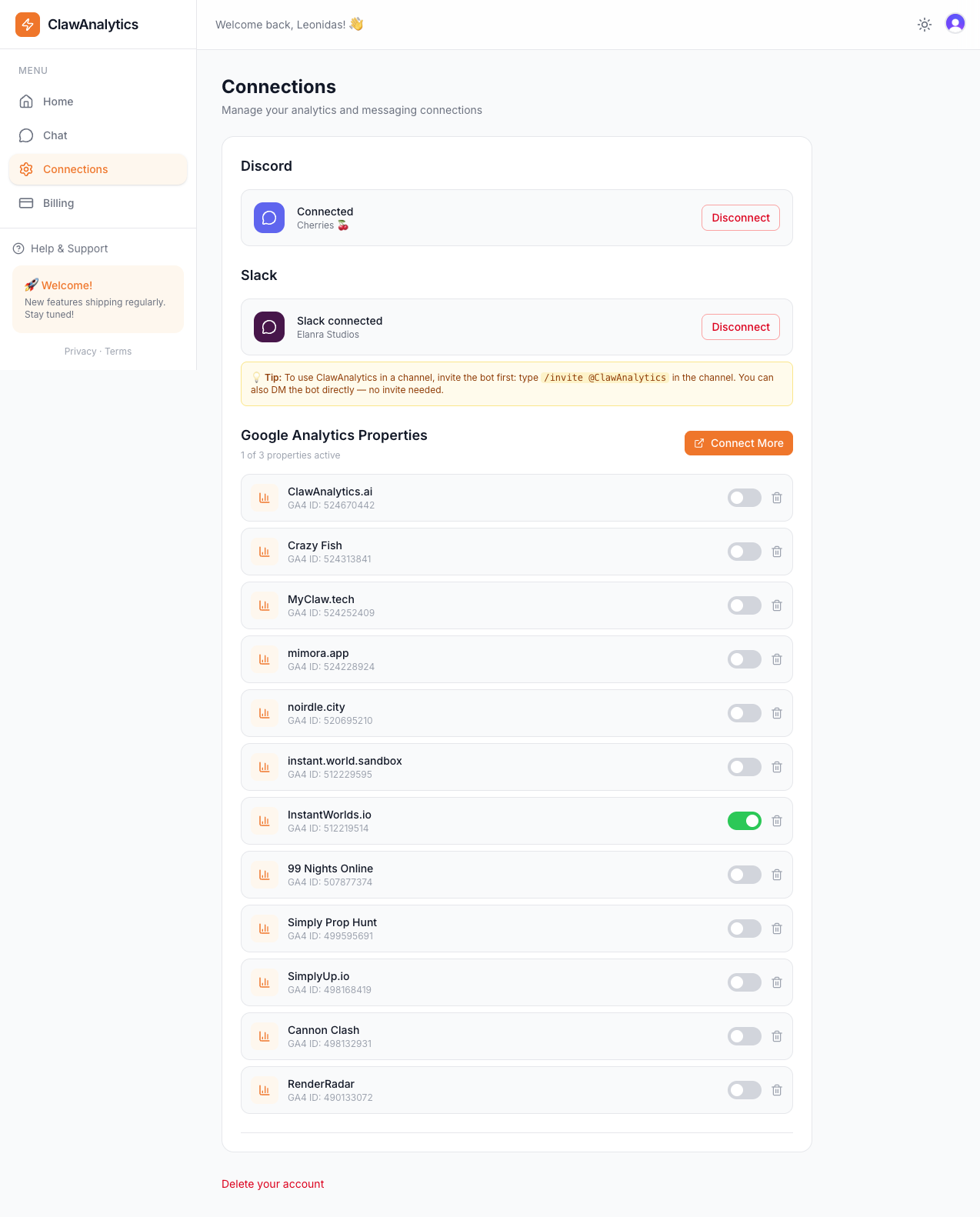
ClawAnalytics connections page showing Google Analytics properties linked
💬
2

Ask questions

Type in plain English. No query language, no filters, no date pickers. Just ask what you want to know.

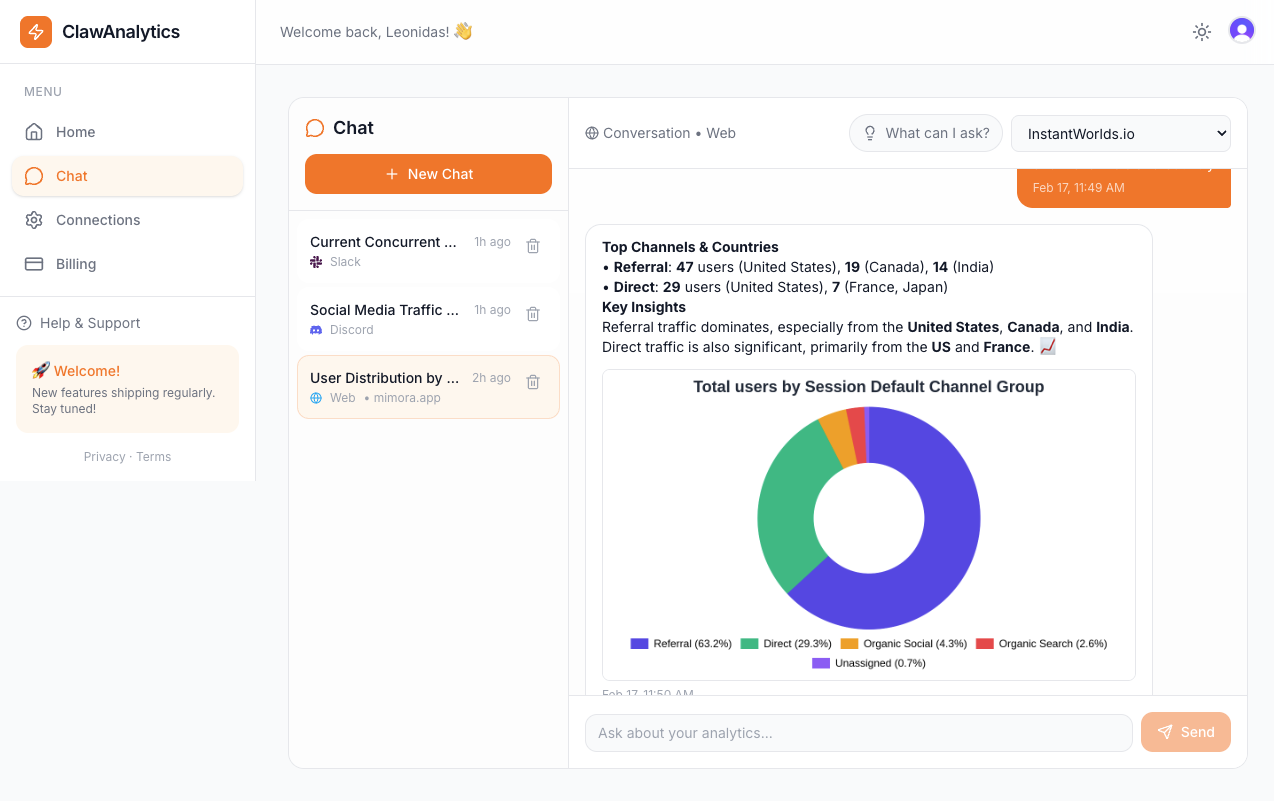
ClawAnalytics chat interface with natural language query
📊
3

Get answers with charts

Instant responses with visualizations. Share charts with your team or export the data.

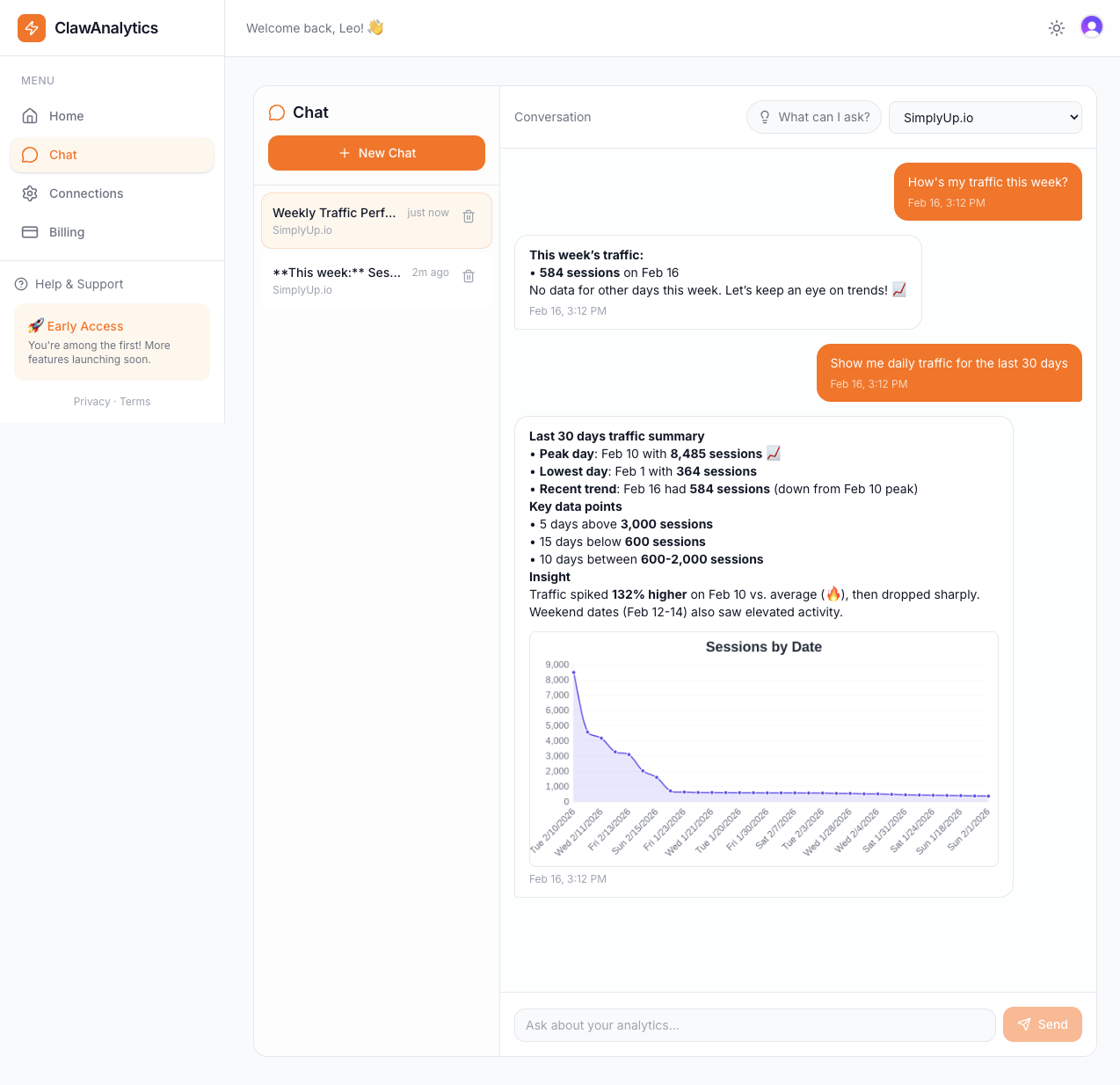
ClawAnalytics showing chart response to analytics query

See it in action

Ask a question. Get a chart. That simple.

ClawAnalytics Chat
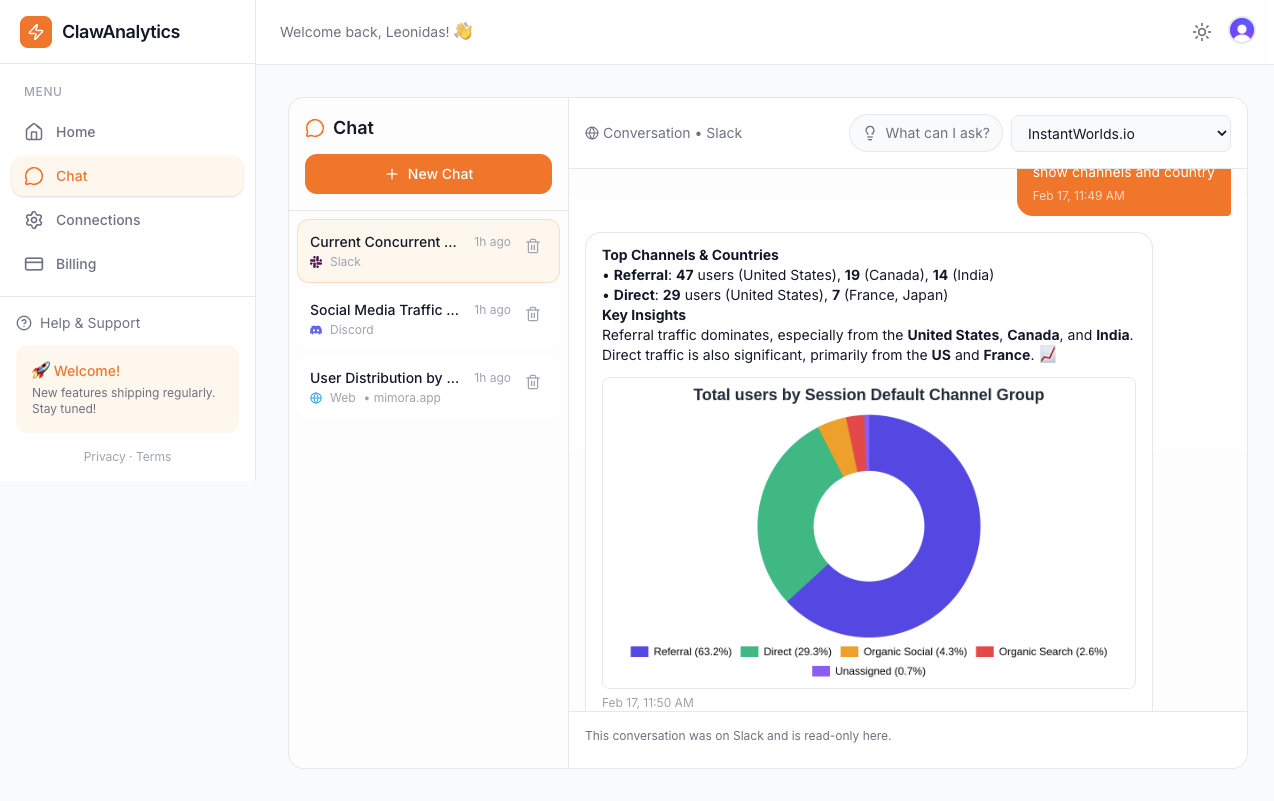
ClawAnalytics chat interface showing a natural language analytics query with chart response

Works on web, Discord, and Slack. Also available as an MCP server for AI agents.

Leonidas Maliokas
"I used to open Google Analytics 5 times a day and still miss things. Now I get a summary every morning and ask follow-ups when something looks off. Takes 10 seconds instead of 10 minutes."

Leonidas Maliokas

Founder, Elanra Studios

🎮 5 games monitored 💼 3 businesses

Simple, honest pricing

Start free. Upgrade when you're ready.

Free

Try it out

$0 /month
  • 5 websites
  • 30 questions/month
  • Web dashboard
  • No credit card
Start Free

Website

For small businesses

$9 /month
  • 5 websites connected
  • 100 questions/month
  • Daily morning summary
  • Web dashboard + Discord
Get Started

Business

For agencies and portfolios

$79 /month
  • Unlimited websites
  • 2,000 questions/month
  • Everything in Pro
  • ✅ API access
  • ✅ MCP integration
  • ⭐ Priority support
Get Started

Stop opening dashboards.
Start asking.

Connect Google Analytics in 30 seconds. Get answers from the dashboard or Discord. Start free — no credit card needed.

Try it free — ask your first question
30-second setup Free plan available Cancel anytime

Got questions?

What is a good exit rate for ecommerce product pages?
Most ecommerce sites see 2 to 5 percent exit rates on product pages. Rates above 8 percent often signal pricing or trust issues.
How do I find exit rate data in Google Analytics 4?
Navigate to the Pages and screens report. Add exit rate as a metric. This shows the percentage of sessions that ended on each page.
Can ClawAnalytics help reduce my stores exit rate?
ClawAnalytics highlights which pages lose the most visitors before purchase, so you can prioritize fixes where they matter most.

Related guides

More resources to help you get the most from your analytics.