A customer searches for “modern sofa sale” and lands on your furniture store. They browse your living room section, check a few prices, then leave to compare with competitors. You lost a $1,500 sale.
Furniture purchases are high-value and considered carefully. Exit rate tracking shows exactly where potential customers stop engaging and go elsewhere.
Why Exit Rate Matters for Furniture Stores
Furniture is a major investment. Customers spend weeks researching large purchases. If your website doesn’t answer their questions, they look elsewhere.
Size and scale are hard to judge online. When visitors exit from product pages, they might not feel confident about whether the piece will fit their space. Visual tools help.
Delivery concerns stop purchases. Furniture delivery is complicated. If customers leave from delivery information pages, they’re worried about costs, timing, or logistics.
Showroom vs. online expectations. Many customers browse online but buy in-store. Exit rate data helps you understand if your website is effectively driving showroom visits.
Long sales cycles require nurturing. Furniture customers often return multiple times before buying. Understanding which pages they exit helps you retarget them effectively.
How to Check in GA4
Accessing exit rate is straightforward:
- Open GA4 and select your furniture store property
- Go to Engagement > Pages and screens
- Find the Exit rate column
- Sort by exit rate to find problem pages
Key furniture pages to monitor:
- Individual product pages for sofas, beds, tables
- Room collection pages (living room, bedroom, dining)
- Delivery and pickup information pages
- Financing and payment plan pages
- Store locations and showroom hours
Compare exit rates between in-stock and special-order items. Customers might accept higher exit rates on custom pieces but expect immediate availability for stock items.
The Easier Way
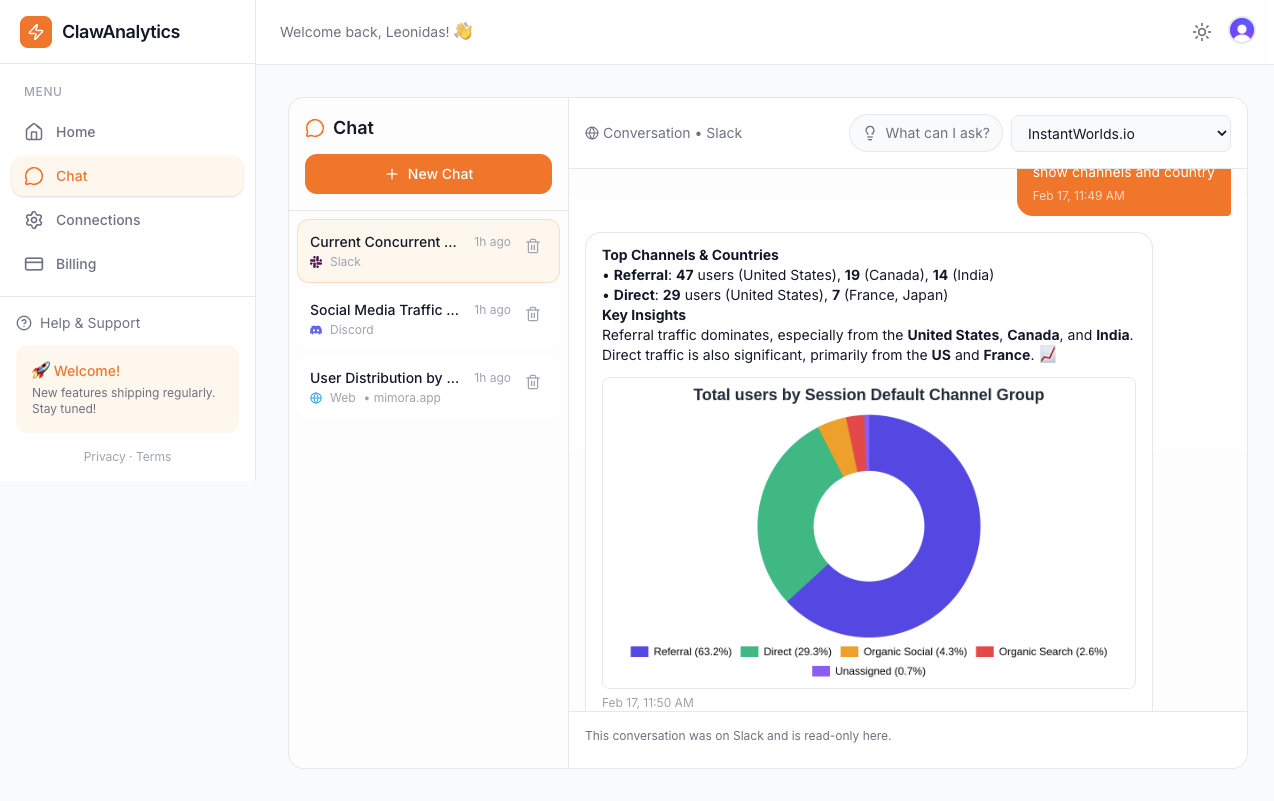
Furniture retailers have complex inventories to manage. ClawAnalytics simplifies understanding your website:
- “Which furniture collections have the highest exit rates?”
- “Are customers leaving because they can’t find delivery timeframes?”
- “What changes would help our sectional sofa pages convert better?”
You get actionable insights fast. A store owner might learn that their outdoor furniture section exits at 65% while indoor living room sits at 40%, revealing different customer intents.
Example: You could discover that customers consistently leave your financing page, meaning payment concerns are hurting high-ticket sales. Adding a simple payment calculator could help.
Quick Wins
Show room visualization tools. Help customers see furniture in their space. Room planners and AR tools reduce exit rates significantly.
Provide detailed dimensions. Furniture size is critical. Include exact measurements and scale comparisons.
Display shipping timelines clearly. “Ships in 2-3 weeks” or “In stock - delivers in 5-7 days” sets expectations.
Offer financing options prominently. High-ticket items need payment flexibility. Show financing early in the decision process.
Create lifestyle content. Blog posts about furniture trends, room makeovers, and design tips keep customers engaged longer.
Make showroom visits easy. Show store hours, directions, and appointment booking options. Many furniture buyers want to touch before buying.
Focus on your highest-value categories first. Living room and bedroom furniture typically drives the most revenue. Improve exit rates there for the biggest impact.