HVAC is seasonal and service-driven. Your website must capture people when they need heating or cooling help. Exit rate tells you which pages are not doing that job.
Why Exit Rate Matters for HVAC
HVAC customers often need service fast. They search, find a company, and either call or leave:
- Seasonal peaks: Summer brings AC calls, winter brings heating calls. Exit rates change with seasons.
- Emergency visibility: When someone’s AC breaks in July, they need your phone number instantly. High exit rate means it is hidden.
- Service page clarity: Each service—furnace repair, AC installation, duct cleaning—needs its own clear page.
- Location targeting: HVAC is local. City-specific pages must work or you lose local traffic.
How to Check in GA4
Finding exit rate for HVAC pages in GA4 works like this:
- Open GA4 and go to Reports
- Click on Engagement, then Pages and screens
- Find Exit rate in your metrics
- Filter for seasonal service pages: AC repair, furnace service, heat pump
- Compare exit rates between summer and winter months
Track seasonal patterns to see when your website performs best and when it needs work.
The Easier Way
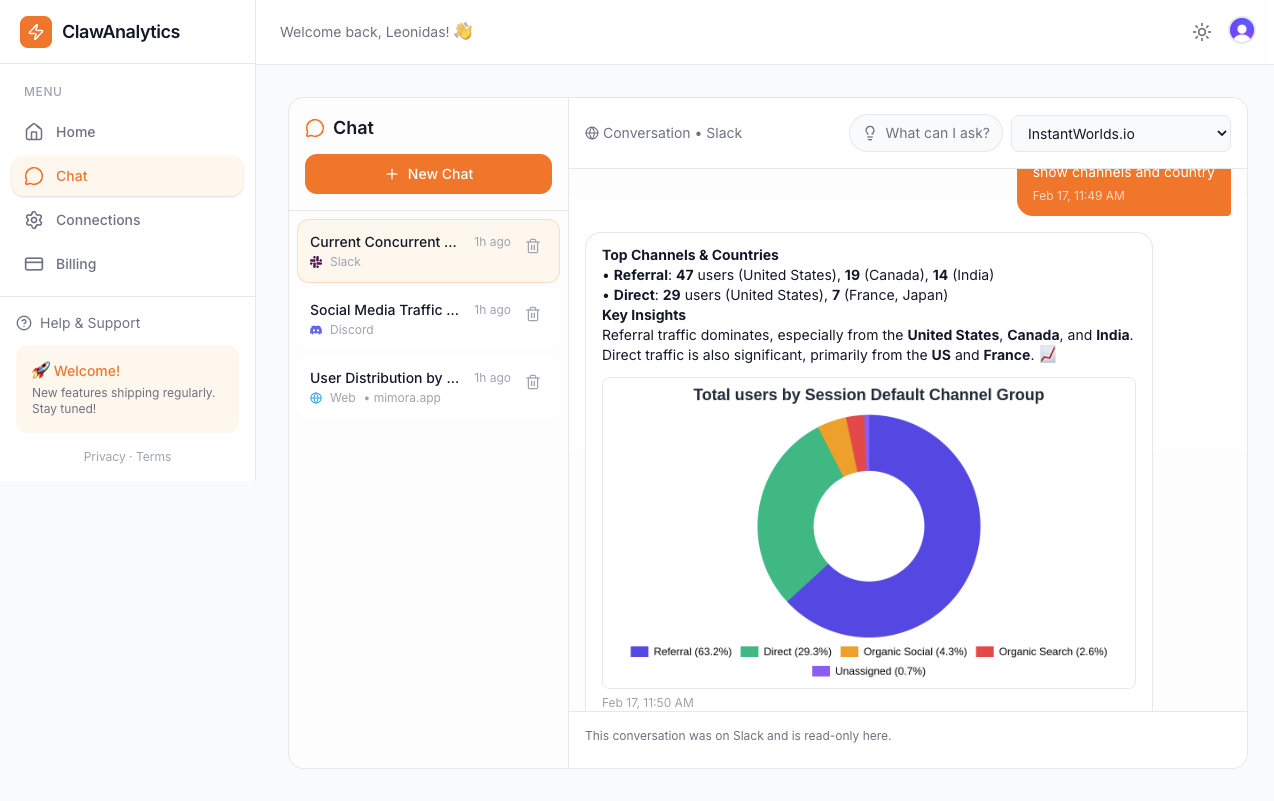
ClawAnalytics builds HVAC-specific dashboards that simplify exit rate tracking.
Questions you can answer with a click: “Which HVAC service page has the worst exit rate?” “Are people leaving my AC installation page?” “Should I add more customer photos to my furnace page?”
The tool might reveal that your air quality page has 52% exit rate because you have no “Schedule Service” button visible without scrolling.
Quick Wins
Three fast ways to lower HVAC exit rates:
- Make emergency numbers prominent: Add a bright “24/7 Emergency Service” banner to every page.
- Seasonal promotions: During peak season, add a banner for “Same-Day AC Repair” or “Furnace Service Special.”
- Add service area maps: Show you service their neighborhood. Local trust reduces exits.