How to Track Geographic Traffic for Architects
You design stunning buildings, but your website pulls visitors from everywhere. A homeowner 200 miles away loves your portfolio but cannot hire you. Meanwhile, your ideal clients three blocks away never find you. Geographic traffic data bridges that gap.
Why Geographic Traffic Matters for Architects
Architecture is personal and local. Projects require site visits, client meetings, and ongoing collaboration. Here is why location tracking matters:
- Realistic lead qualification. If 90% of your traffic comes from outside your service area, your conversion rates will suffer. Geographic data reveals whether your marketing reaches actual prospects.
- Project type targeting. Residential clients might cluster in suburbs while commercial projects concentrate in downtown districts. Location data shows what to pitch where.
- Competitive positioning. Traffic from wealthy neighborhoods signals demand for high-end residential work. Traffic near new developments suggests commercial opportunity.
- Portfolio location strategy. Knowing which areas generate traffic helps you showcase relevant projects. A suburban portfolio attracts suburban clients.
How to Check in GA4
Getting geographic data in GA4 takes moments:
- Open Reports > Traffic Acquisition in GA4.
- Add City as a dimension to see visitor origins.
- Use a secondary dimension like Page path or Landing page to understand what they viewed.
- Set up a conversion segment for your key actions, like “Contact Form Submitted” or “Portfolio View.”
- Compare cities. Look for patterns in high-converting areas.
The Geo visualization in the Explore workspace displays your traffic on a map, highlighting regions where interest is strongest.
The Easier Way
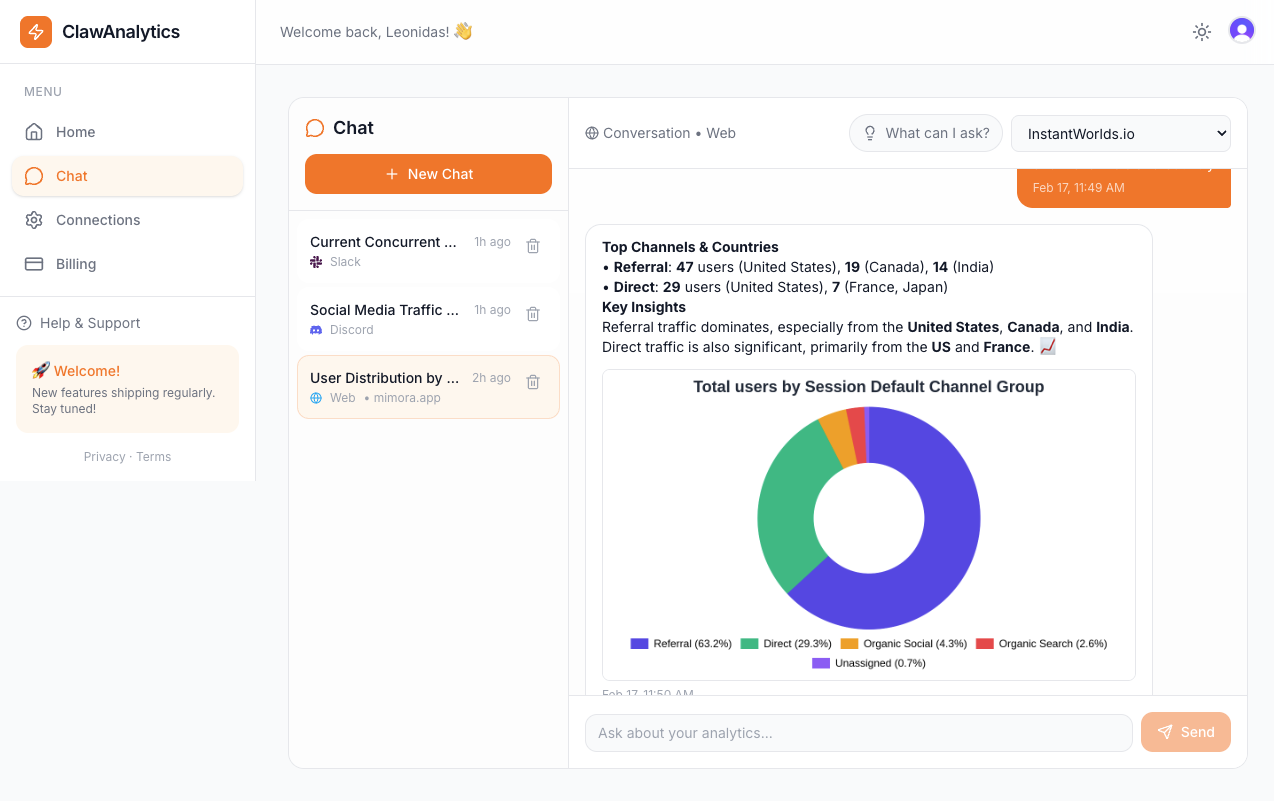
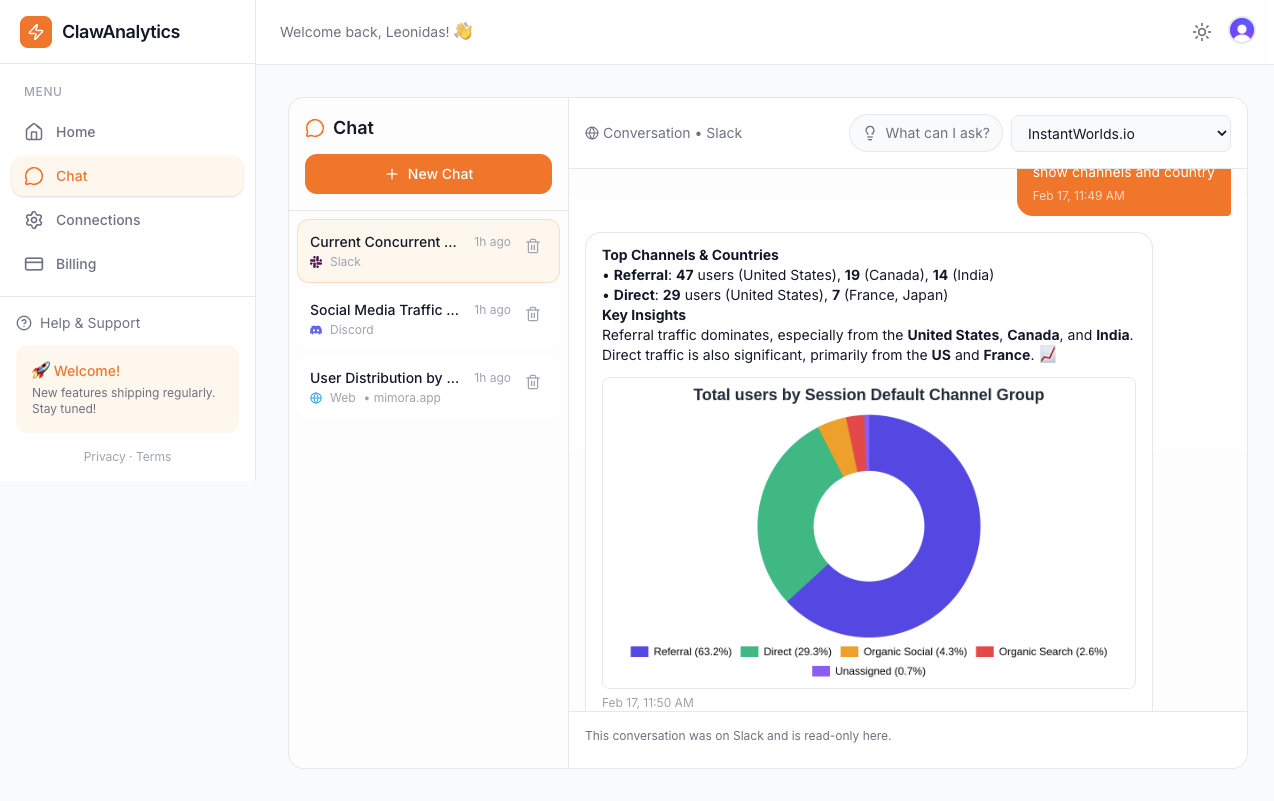
ClawAnalytics takes the work out of geographic analysis for architects. It reveals:
- Which neighborhoods generate interest in residential projects versus commercial work
- How traffic patterns shift between project types and seasons
- Where your best leads actually come from, helping you focus business development
For instance, you might discover that visitors from upscale suburbs primarily view your residential portfolio, while downtown visitors explore your commercial work. That split guides everything from content creation to ad targeting.
You can also ask questions like “Which areas show interest in sustainable design?” or “Where are our renovation project leads coming from?” and receive instant insights.
Quick Wins
Put geographic data to work immediately:
- Build a City dimension report and focus on areas within your project radius. Exclude regions you do not serve.
- Create location-specific landing pages for key neighborhoods or districts you want to target.
- Tag your campaigns by region. Use UTM parameters to track which areas respond to which messages.
- Use ClawAnalytics dashboards. Set up a geographic view that tracks leads by neighborhood, updated in real time.
- Align your business development. If a specific area consistently generates traffic, attend local events or partner with contractors there.
Geographic traffic is not just numbers. It is a map of where your next clients live. Use it to focus your efforts on the places that actually bring projects.