Ecommerce

How to Track Geographic Traffic for Ecommerce

Learn how geographic traffic tracking helps ecommerce businesses identify where customers shop, optimize ad spend, and tailor marketing by region.

How to Track Geographic Traffic for Ecommerce

You run an online store selling handmade jewelry. For months, you advertise nationally but notice certain states order more than others. You check your analytics and discover that California and New York drive 40% of your sales while you spend equal ad money everywhere. This geographic insight could immediately improve your return on ad spend.

Why Geographic Traffic Matters for Ecommerce

Understanding where your customers are located is essential for growing your online store:

  • Ad targeting precision. Location data tells you exactly which regions convert best, letting you focus budget on profitable areas rather than wasting money on low-converting regions.
  • Shipping and fulfillment planning. Knowing your customer concentration helps you decide where to locate inventory or which shipping carriers to prioritize for faster delivery.
  • Product regional preferences. Maybe customers in Florida buy summery designs while those in Minnesota prefer winter styles. Geography reveals these patterns.
  • Market expansion decisions. When you see strong interest from a new region, it signals an opportunity to open a warehouse or target those customers with local campaigns.

How to Check Geographic Traffic in GA4

Google Analytics 4 provides location data in several reports:

  1. Log into GA4 and click on Reports
  2. Select Users from the sidebar
  3. Click Geography to see a map view of your visitors
  4. View data by Country, Region, or City using the dropdown
  5. Add a comparison to see how different regions perform on key metrics
  6. Check the default channel report filtered by geography to see which regions drive traffic from specific sources

You can also create audiences based on location to retarget visitors from specific regions with tailored promotions.

The Easier Way

Parsing geographic data in GA4 takes time and expertise. ClawAnalytics makes it simple:

  • “Which states buy the most from my jewelry store?”
  • “Should I run separate promotions for customers in warm vs cold climates?”
  • “Where should I open my next warehouse based on customer location?”

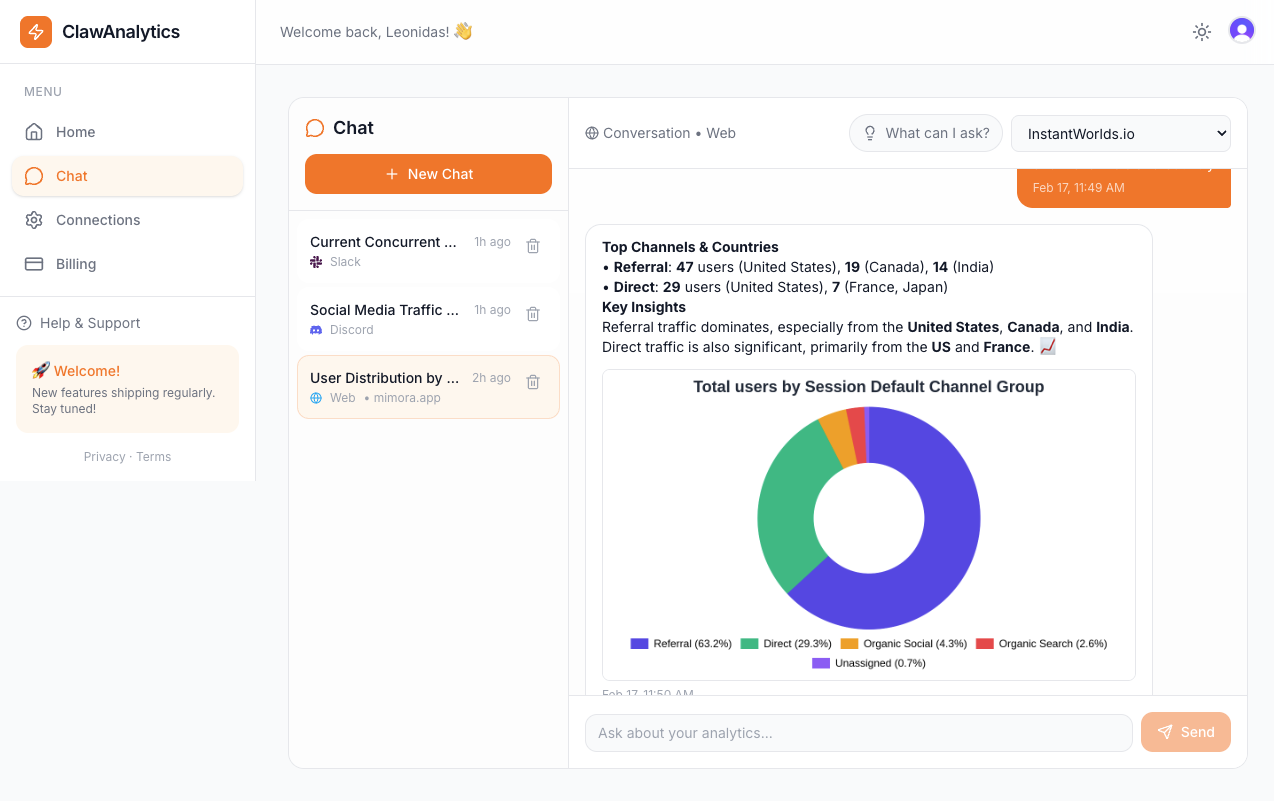
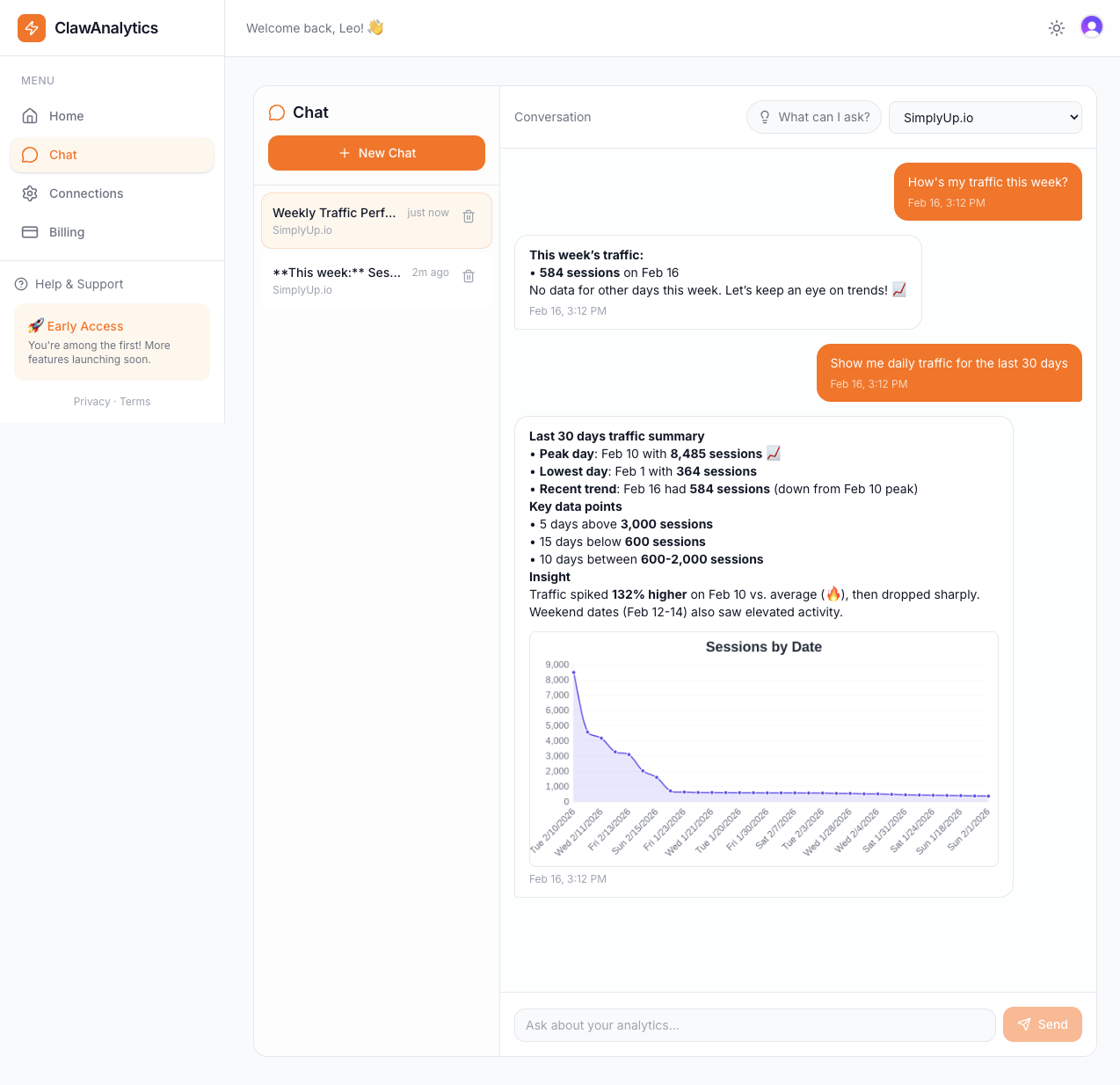
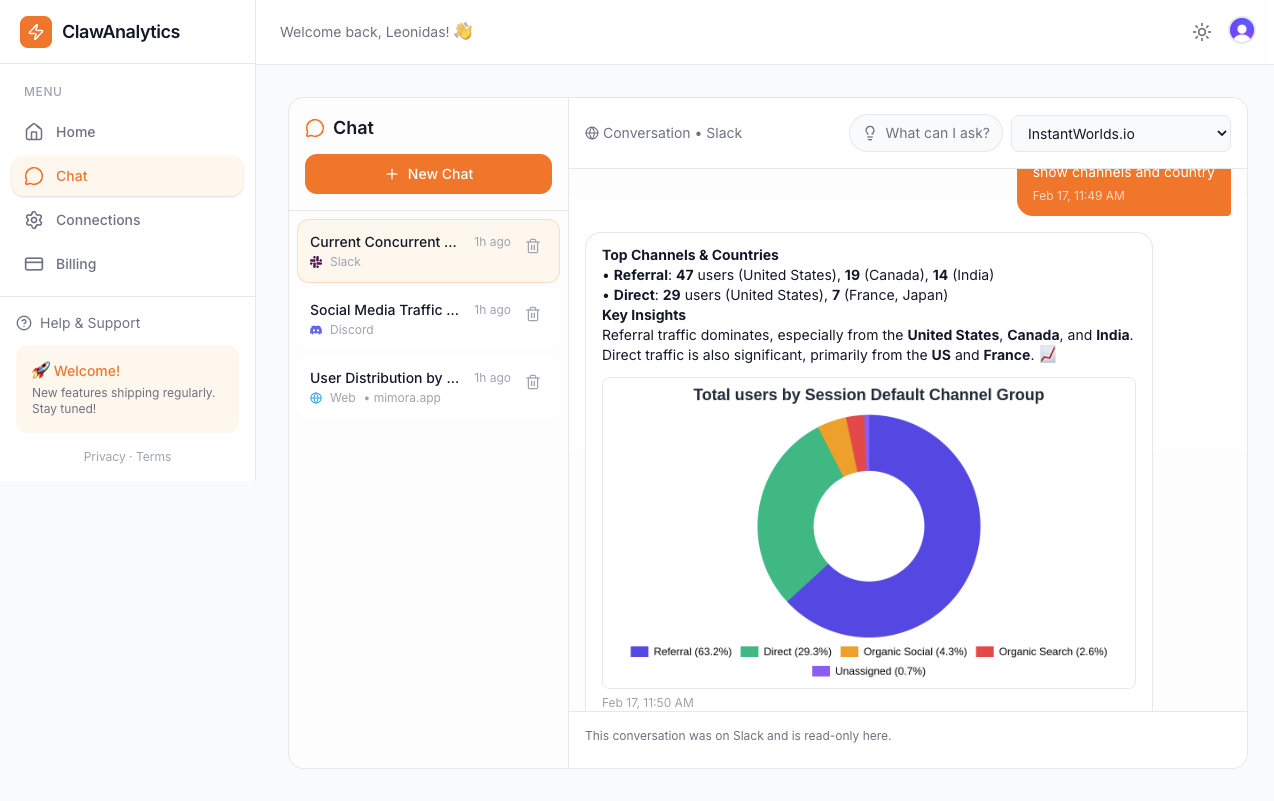
ClawAnalytics automatically identifies your top-performing regions and highlights opportunities you might be missing. Instead of manually comparing dozens of rows in GA4, you get clear answers about where your ecommerce business should focus its growth efforts.

Quick Wins

  • Create region-specific promotions. Offer free shipping to your top three states to boost loyalty and orders.
  • Adjust ad budgets by region. Increase bids in high-converting areas and reduce spend in regions with low sales.
  • Localize your messaging. If visitors from Texas love your products, reference Texas-specific themes in your marketing.
  • Plan inventory strategically. Stock more of your popular items in warehouses near your highest-converting regions.
Check your analytics from anywhere

On your morning commute. At a coffee shop. In a meeting. Pull up your analytics on any device and get instant answers.

  • Web dashboard on desktop & mobile
  • Discord bot for team channels
  • Slack integration for your workspace
  • MCP server for AI agents (Claude, Cursor)
See your traffic in 60 seconds →
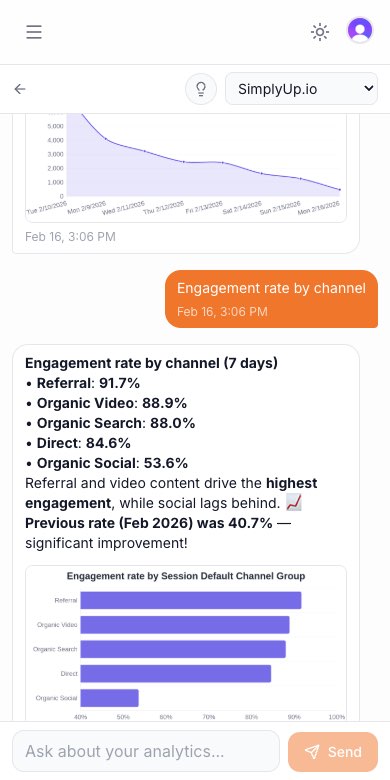
ClawAnalytics mobile chat showing engagement rate breakdown with charts

How ClawAnalytics helps

Skip the dashboards. Get answers in seconds.

🔗
1

Connect GA4

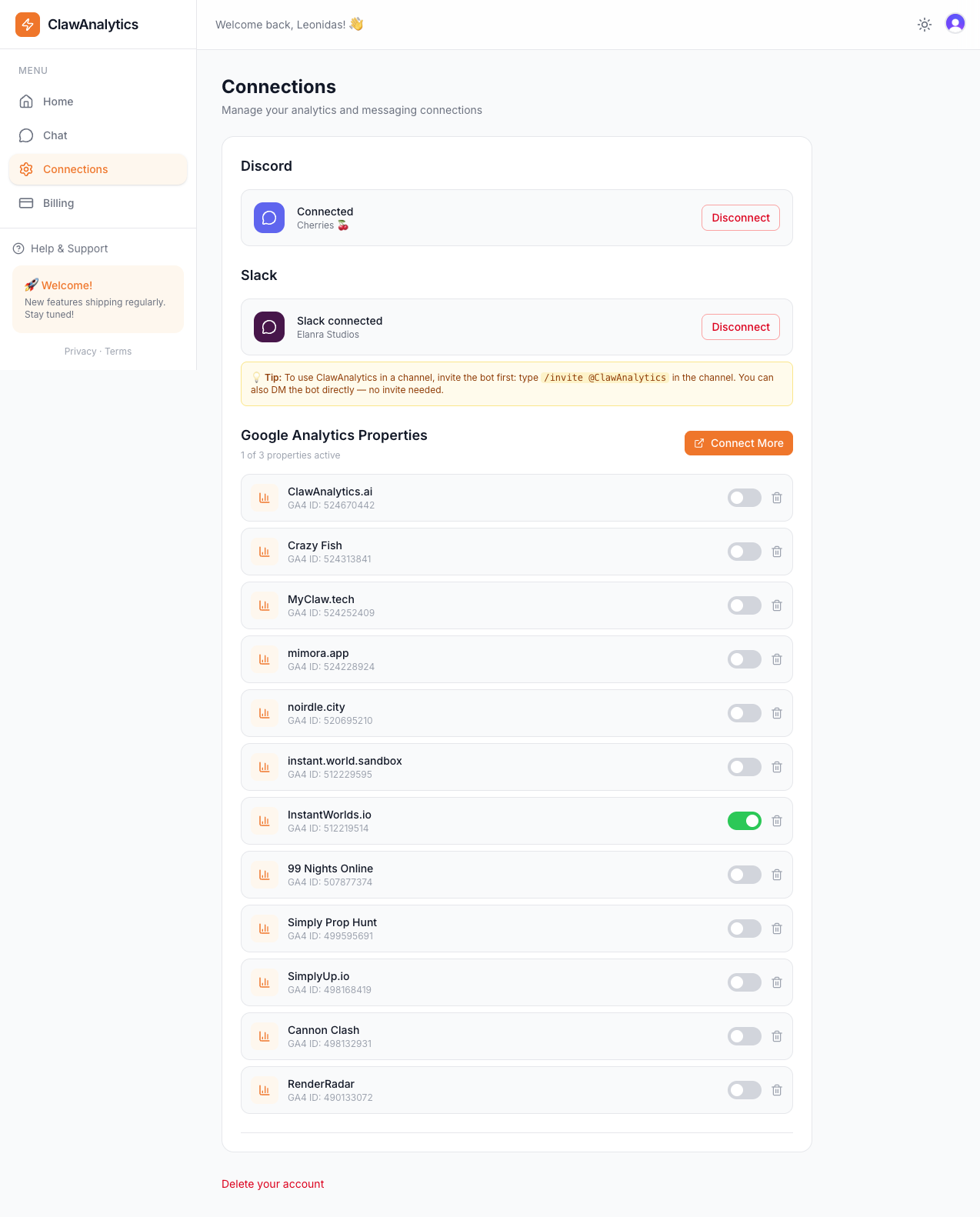
One-click OAuth. Read-only access. Takes 30 seconds to link your Google Analytics property.

ClawAnalytics connections page showing Google Analytics properties linked
💬
2

Ask questions

Type in plain English. No query language, no filters, no date pickers. Just ask what you want to know.

ClawAnalytics chat interface with natural language query
📊
3

Get answers with charts

Instant responses with visualizations. Share charts with your team or export the data.

ClawAnalytics showing chart response to analytics query

See it in action

Ask a question. Get a chart. That simple.

ClawAnalytics Chat
ClawAnalytics chat interface showing a natural language analytics query with chart response

Works on web, Discord, and Slack. Also available as an MCP server for AI agents.

Leonidas Maliokas
"I used to open Google Analytics 5 times a day and still miss things. Now I get a summary every morning and ask follow-ups when something looks off. Takes 10 seconds instead of 10 minutes."

Leonidas Maliokas

Founder, Elanra Studios

🎮 5 games monitored 💼 3 businesses

Simple, honest pricing

Start free. Upgrade when you're ready.

Free

Try it out

$0 /month
  • 5 websites
  • 30 questions/month
  • Web dashboard
  • No credit card
Start Free

Website

For small businesses

$9 /month
  • 5 websites connected
  • 100 questions/month
  • Daily morning summary
  • Web dashboard + Discord
Get Started

Business

For agencies and portfolios

$79 /month
  • Unlimited websites
  • 2,000 questions/month
  • Everything in Pro
  • ✅ API access
  • ✅ MCP integration
  • ⭐ Priority support
Get Started

Stop opening dashboards.
Start asking.

Connect Google Analytics in 30 seconds. Get answers from the dashboard or Discord. Start free — no credit card needed.

Try it free — ask your first question
30-second setup Free plan available Cancel anytime

Got questions?

Why should ecommerce businesses track geographic traffic?
Knowing where your visitors come from helps you target ads effectively, plan shipping logistics, and identify emerging markets for expansion.
How do I see which countries or cities visit my ecommerce site?
In GA4, go to Users > Geography to view sessions by country, region, and city. You can also see conversion rates by location.
How can ClawAnalytics help with geographic insights for my online store?
ClawAnalytics shows you which regions generate the most revenue, helping you decide where to focus marketing and which products to promote locally.

Related guides

More resources to help you get the most from your analytics.