A personal injury lawyer in Chicago doesn’t benefit from traffic from Los Angeles. Geographic tracking reveals which regions actually produce clients, letting law firms focus marketing spend where it generates cases.
Why Geographic Traffic Matters for Legal
Legal marketing dollars flow easily toward broad targeting. Geographic traffic data cuts through the waste. It shows which jurisdictions generate the most interest. It reveals whether your SEO efforts are reaching your actual service area. It identifies opportunities in underserved neighborhoods. It helps measure the real ROI of local versus national advertising.
Understanding where clients discover you guides decisions about office locations, attorney hiring, and community involvement.
How to Check in GA4
Build a geographic exploration in GA4 using State and City dimensions. Set your primary metric to consultation requests or form submissions. Compare time periods to see if geographic reach is expanding or contracting.
Use secondary dimensions to break down geographic data by practice area. This shows whether different locations prefer different types of legal services.
The Easier Way
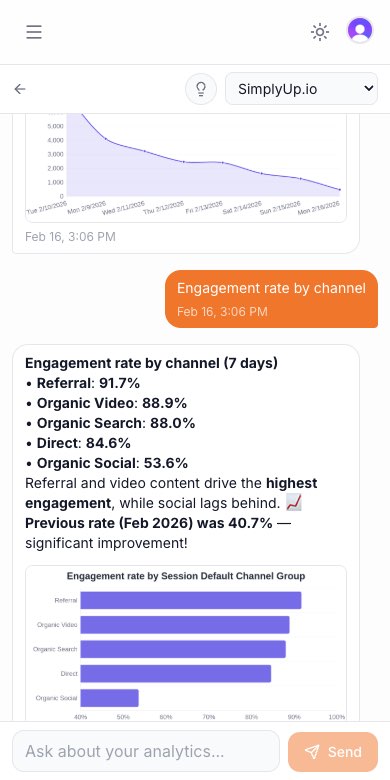
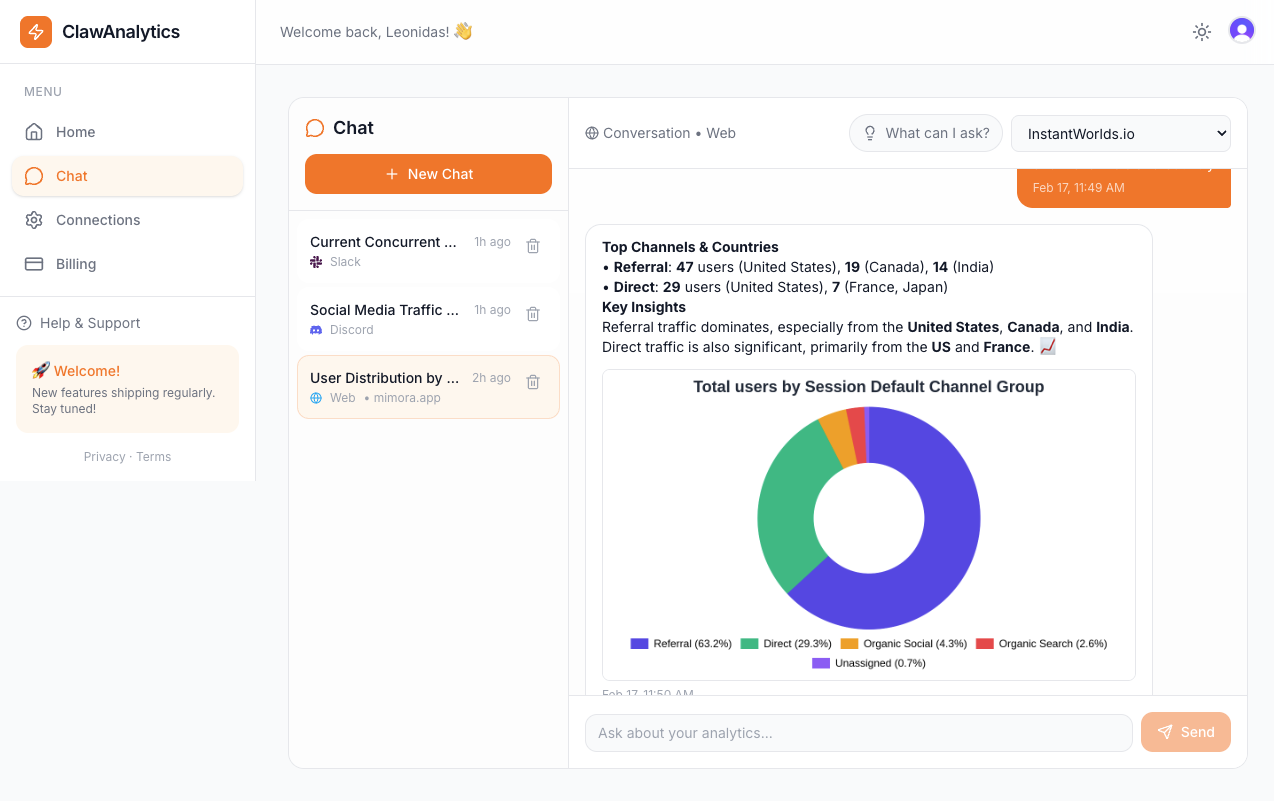
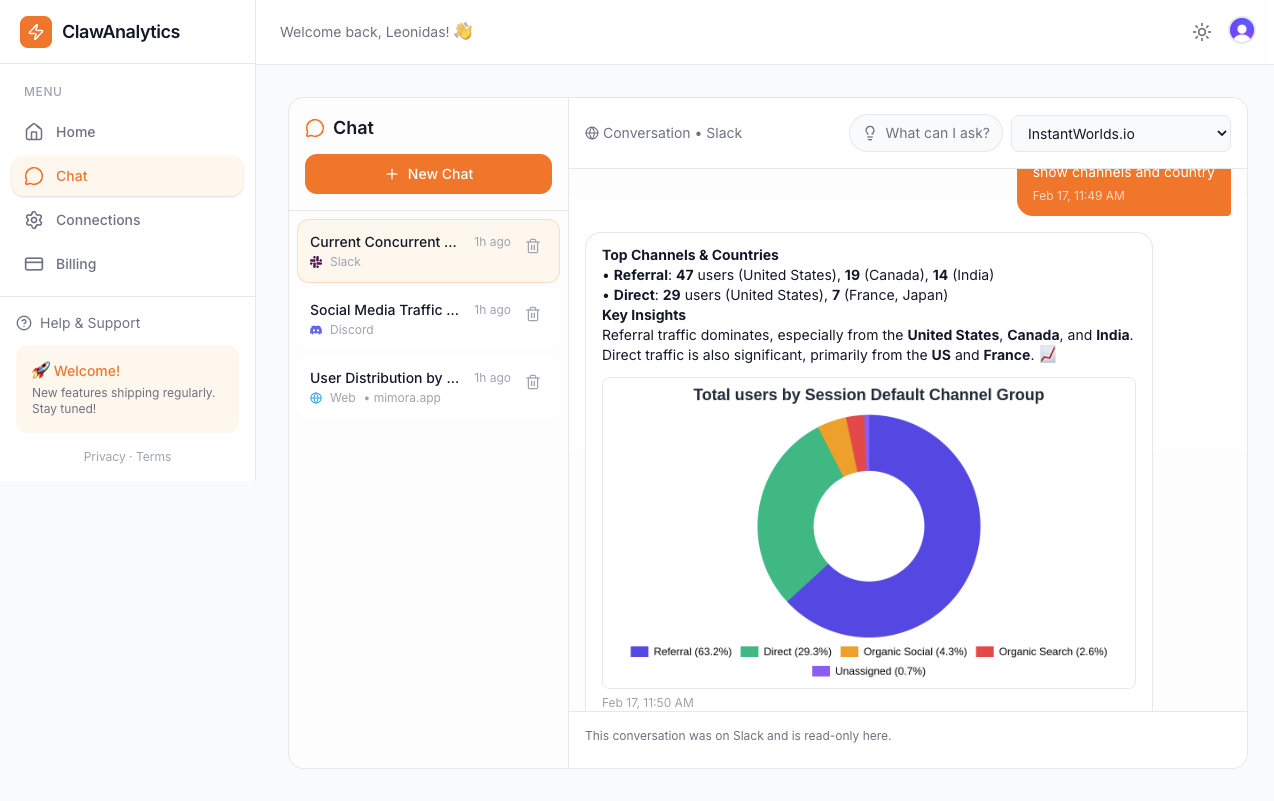
ClawAnalytics makes geographic analysis straightforward for legal professionals. Ask questions like: Which counties generate the most personal injury leads? Are we getting family law inquiries from our target zip codes? Where do our highest-value clients typically live?
The platform surfaces insights that help prioritize local SEO efforts and ad targeting for maximum case generation.
Quick Wins
Apply these geographic strategies to improve legal lead generation. First, focus local SEO on cities and counties where you are admitted to practice. Second, adjust Google Ads to target only your service areas. Third, create location-specific landing pages for high-performing regions. Fourth, use geographic data to guide office expansion decisions.