Music Schools

How to Track Geographic Traffic for Music Schools

Learn how music school owners can use geographic traffic data to understand where their students come from and optimize enrollment marketing.

Your music school fills the air with learning and creativity. Behind the scenes, you need to know where your students actually come from to grow intelligently.

Geographic traffic tracking shows which neighborhoods supply your enrollments and where new opportunities wait.

Why Geographic Traffic Matters for Music Schools

  • Lesson attendance reliability. Students who live nearby are far more likely to attend every scheduled lesson. Those who travel across town often miss sessions when traffic, weather, or busy schedules interfere.

  • Parent convenience. Most music students are children. Parents choose schools based on proximity to home, their workplace, or their child’s school. Geographic insights help you understand which convenience factor drives your enrollment.

  • Instrument-specific marketing. Certain neighborhoods might show strong interest in piano lessons while others lean toward guitar. Geographic data helps you tailor program promotion by area.

  • Recital planning. Knowing where your student families live helps you choose convenient recital venues and plan attendance accurately.

How to Check in GA4

In GA4, open the Geography report under User attributes. You will see a breakdown by city and country.

Sort sessions by new versus returning users. New users from nearby areas represent trial families. Returning users from the same areas represent your reliable base.

Compare geography with time of day. Evening lesson visitors might come from different neighborhoods than weekend morning students.

The Easier Way

ClawAnalytics makes geographic analysis practical for busy music school owners. You see at a glance which neighborhoods bring the most enrollments.

Instead of guessing whether to open a second location or where to run local ads, you get clear data.

Questions like: Should we focus advertising on families in the neighborhoods where we already have the most graduates? Or: Are we missing an opportunity in the apartment complexes on the east side? ClawAnalytics answers both instantly.

You might also wonder: Do our weekday afternoon students come from different areas than our Saturday morning students? The answer shapes your scheduling strategy.

Quick Wins

  • Target walkable neighborhoods. If data shows most students come from within two miles, emphasize walkability and convenience in your marketing materials.

  • Create neighborhood referral bonuses. Offer increased referral rewards for families in zip codes that already produce consistent enrollment.

  • Plan demonstration events. Host free trial lessons at schools or community centers in neighborhoods with strong interest but low conversion.

  • Adjust for seasonal patterns. Summer might bring students from vacation-area neighborhoods while the school year pulls from residential areas near schools.
Check your analytics from anywhere

On your morning commute. At a coffee shop. In a meeting. Pull up your analytics on any device and get instant answers.

  • Web dashboard on desktop & mobile
  • Discord bot for team channels
  • Slack integration for your workspace
  • MCP server for AI agents (Claude, Cursor)
See your traffic in 60 seconds →
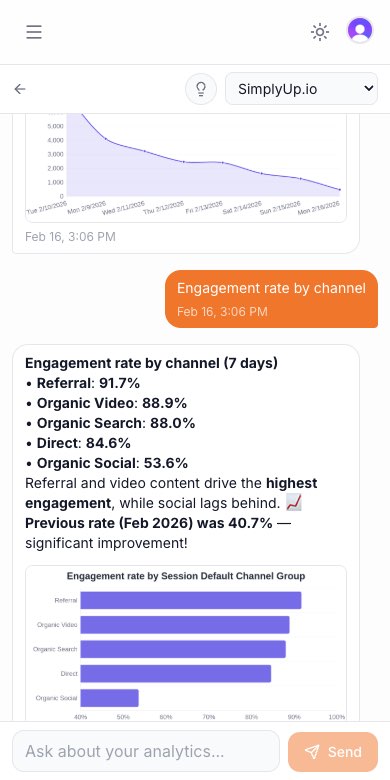
ClawAnalytics mobile chat showing engagement rate breakdown with charts

How ClawAnalytics helps

Skip the dashboards. Get answers in seconds.

🔗
1

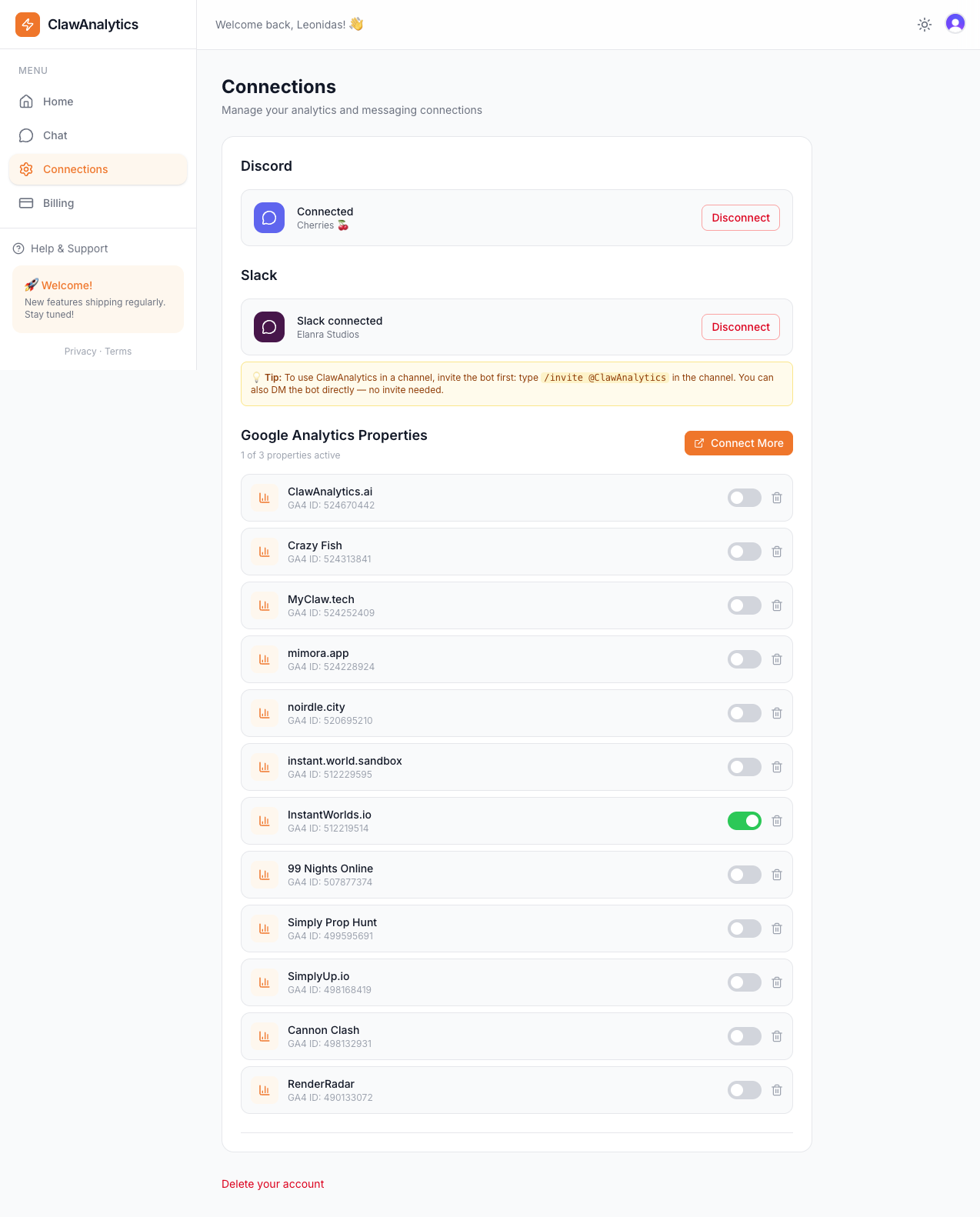
Connect GA4

One-click OAuth. Read-only access. Takes 30 seconds to link your Google Analytics property.

ClawAnalytics connections page showing Google Analytics properties linked
💬
2

Ask questions

Type in plain English. No query language, no filters, no date pickers. Just ask what you want to know.

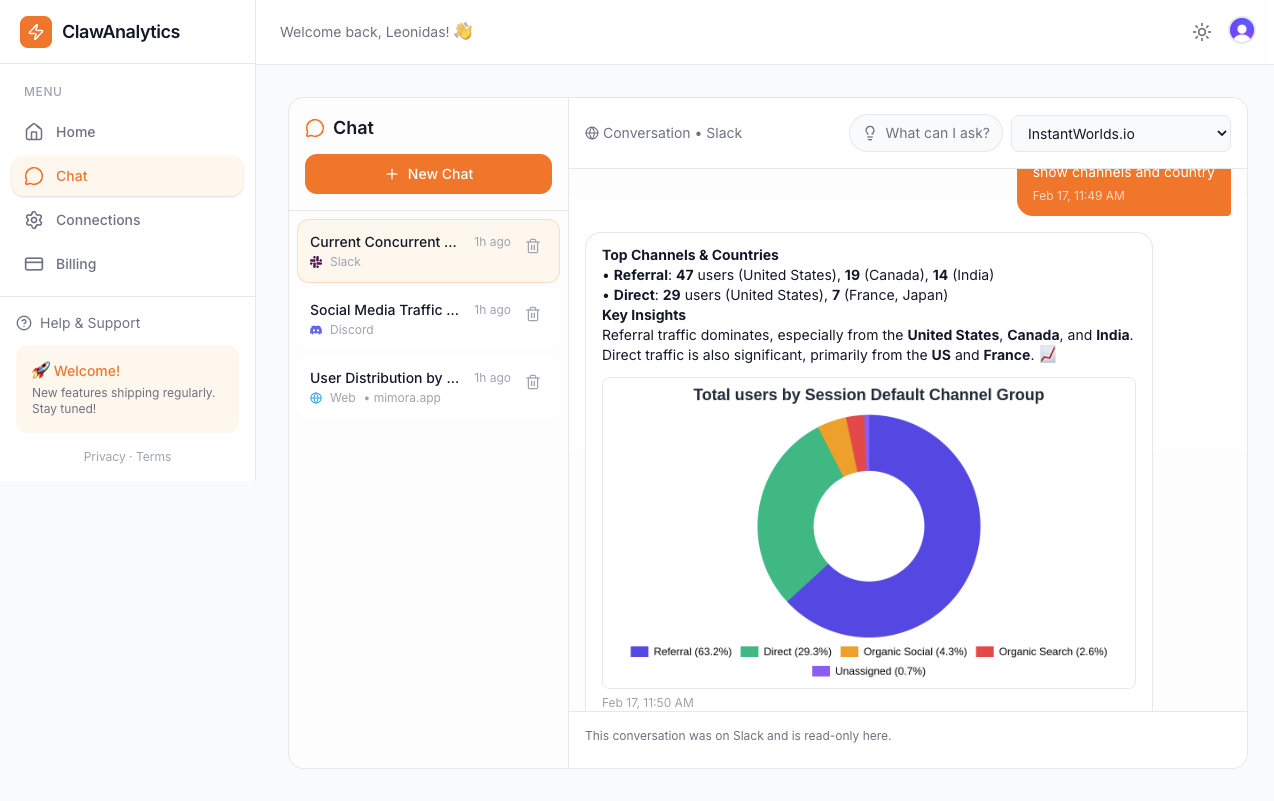
ClawAnalytics chat interface with natural language query
📊
3

Get answers with charts

Instant responses with visualizations. Share charts with your team or export the data.

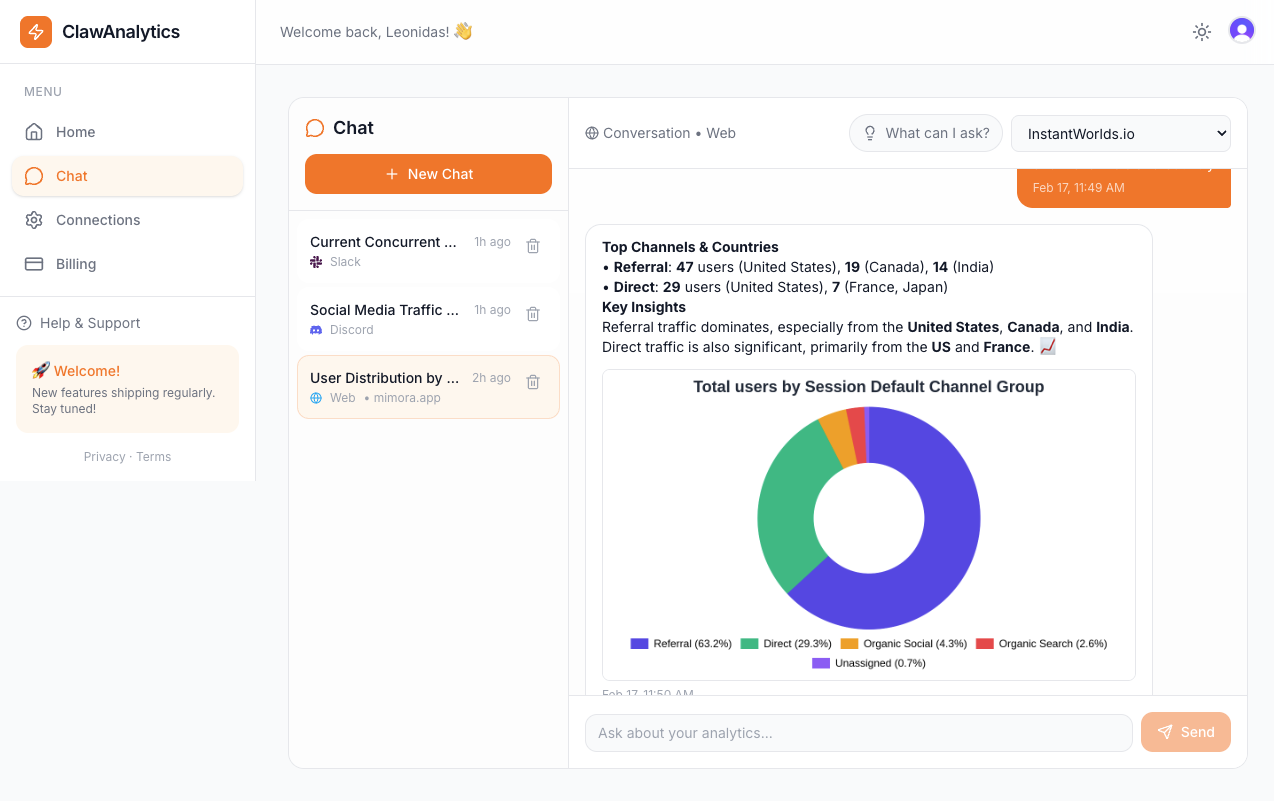
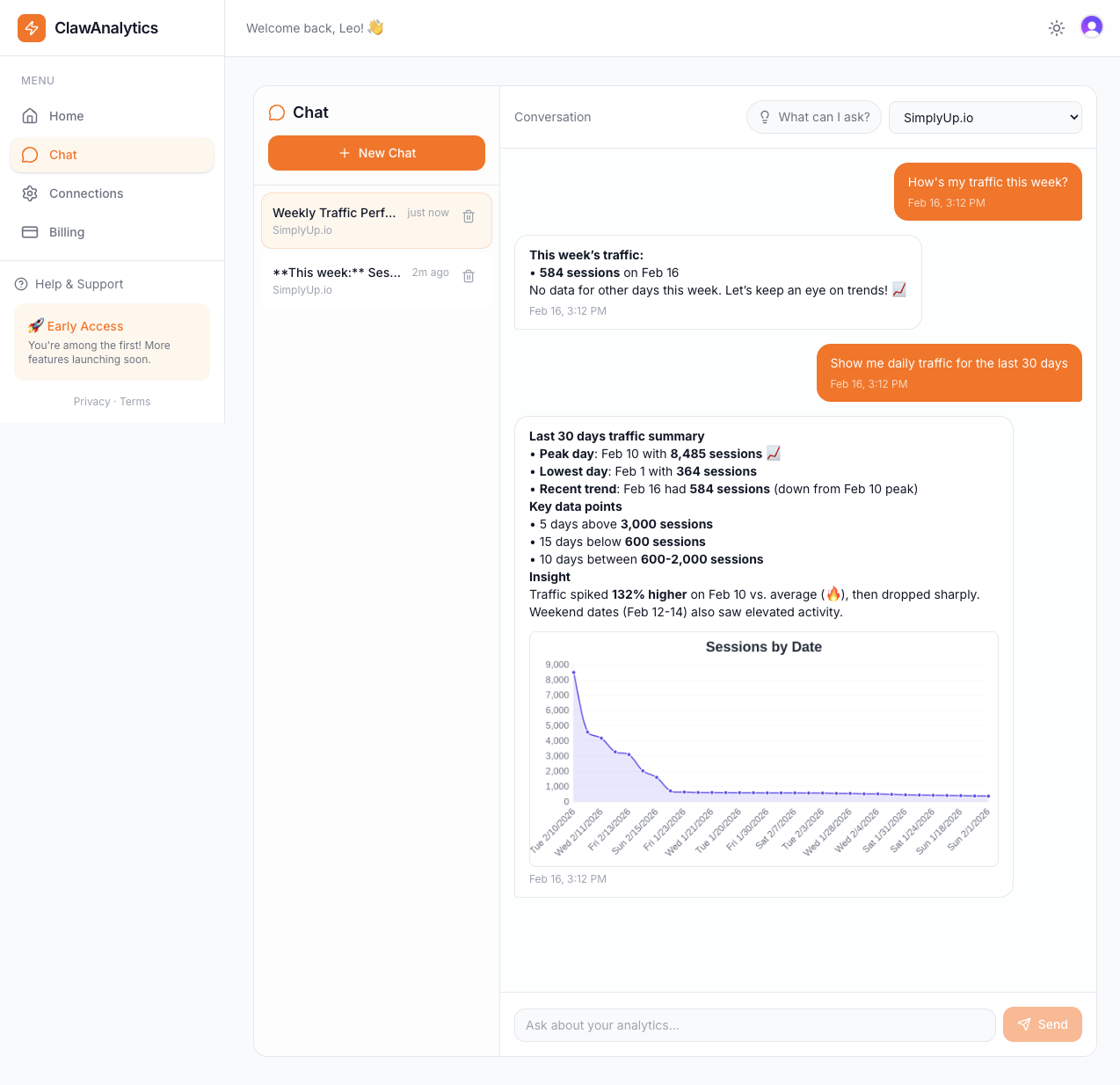
ClawAnalytics showing chart response to analytics query

See it in action

Ask a question. Get a chart. That simple.

ClawAnalytics Chat
ClawAnalytics chat interface showing a natural language analytics query with chart response

Works on web, Discord, and Slack. Also available as an MCP server for AI agents.

Leonidas Maliokas
"I used to open Google Analytics 5 times a day and still miss things. Now I get a summary every morning and ask follow-ups when something looks off. Takes 10 seconds instead of 10 minutes."

Leonidas Maliokas

Founder, Elanra Studios

🎮 5 games monitored 💼 3 businesses

Simple, honest pricing

Start free. Upgrade when you're ready.

Free

Try it out

$0 /month
  • 5 websites
  • 30 questions/month
  • Web dashboard
  • No credit card
Start Free

Website

For small businesses

$9 /month
  • 5 websites connected
  • 100 questions/month
  • Daily morning summary
  • Web dashboard + Discord
Get Started

Business

For agencies and portfolios

$79 /month
  • Unlimited websites
  • 2,000 questions/month
  • Everything in Pro
  • ✅ API access
  • ✅ MCP integration
  • ⭐ Priority support
Get Started

Stop opening dashboards.
Start asking.

Connect Google Analytics in 30 seconds. Get answers from the dashboard or Discord. Start free — no credit card needed.

Try it free — ask your first question
30-second setup Free plan available Cancel anytime

Got questions?

Why should music school owners track geographic traffic?
Consistent music lessons require regular attendance. Geographic data reveals whether students can realistically make their lessons each week and which neighborhoods generate the most committed learners.
How do I see where my music students come from in GA4?
In GA4, navigate to Reports > User > User attributes > Geography. Review cities and regions to understand how far students travel and which areas generate the most lesson bookings.
Which areas should we target for new music student enrollments?
ClawAnalytics shows you exactly which neighborhoods bring engaged visitors who enroll in lessons, so you can focus marketing on areas with proven music education interest.

Related guides

More resources to help you get the most from your analytics.