What Is a Good Ad Revenue for Agencies?
You run a digital marketing agency with 12 active clients. One client spends $10,000 monthly on ads but only generates $25,000 in revenue. Another spends $5,000 and generates $30,000. How do you explain this to clients? What benchmarks should you set?
Understanding ad revenue helps agencies deliver better results and retain clients longer.
Why Ad Revenue Matters for Agencies
Client Retention: Showing clear ad revenue numbers keeps clients confident in your work. Vague reports lead to lost contracts.
Campaign Optimization: When ad revenue is low relative to spend, you know campaigns need tweaking. Data drives your optimization efforts.
ROAS Reporting: Return on ad spend is the language clients understand. Ad revenue divided by ad spend gives you this critical metric.
New Business Proof: Strong ad revenue results from existing clients become case studies that win new business.
How to Check in GA4
Open GA4 and navigate to Monetization, then select Revenue. This shows total revenue from advertising across all properties.
Use UTM parameters to filter by campaign. This lets you see exactly which ads generated which revenue.
Create custom dimensions for each client. This separates revenue data so you can report accurately to each stakeholder.
Look at assisted conversions. Some campaigns don’t generate direct revenue but support other channels that do.
The Easier Way
You’re managing multiple clients, creating campaigns, and handling reporting. You don’t have time to build custom GA4 reports from scratch.
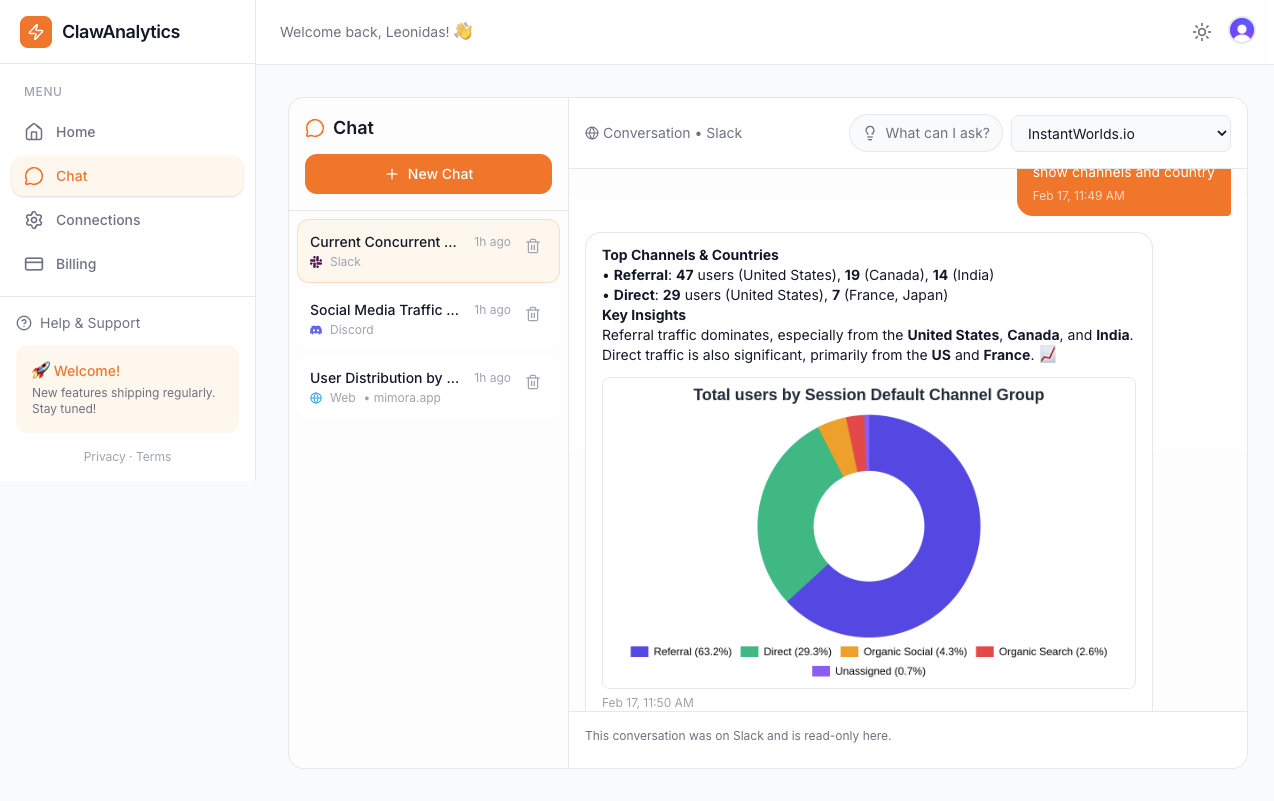
ClawAnalytics aggregates your agency ad revenue data and sends simple weekly summaries via Discord. It shows which clients are performing well and which need attention.
Questions ClawAnalytics can answer for agencies:
- Which client campaign has the best return on ad spend this month?
- Is revenue increasing for my retail client versus my SaaS client?
- Are my client’s seasonal campaigns outperforming their baseline?
Let ClawAnalytics handle the data gathering so you can focus on strategy.
Quick Wins
Set Clear ROAS Targets: Establish expected return on ad spend with each client upfront. Use ad revenue data to show whether you’re meeting those targets.
Segment by Channel: Different ad platforms perform differently. Break down ad revenue by Google, Meta, LinkedIn, or others for clearer reporting.
Track Lifetime Value: Some clients generate more revenue over time. Use ad revenue data to identify high-value accounts worth extra attention.
Create Client Dashboards: Give clients access to their own dashboards so they can see ad revenue in real-time.
Document Everything: Save ad revenue reports monthly. This creates a paper trail for performance reviews and contract renewals.