What Is a Good Cost Per Acquisition for Travel?
Your boutique hotel spends $8,000 on Instagram. You get 1,000 clicks. 150 view availability. 45 book. Average booking value: $800. Total revenue: $36,000. Your cost per acquisition is $177 per booking. But here’s the catch: 20 of those bookings are from people who visited your site 3 times over 6 months. They saw your Instagram, researched on Google, and booked directly. Which channel gets the credit? If you say Instagram, you’re right. If you say Google, also right. Without cross-channel attribution, you’re guessing with your budget.
Why Cost Per Acquisition Matters for Travel
Travel has some of the most complex acquisition dynamics of any industry:
-
Long planning cycles. Someone might dream about a trip for a year, research for 3 months, and book 6 weeks out. Traditional last-click attribution assigns all the value to the final touch.
-
Seasonality creates noise. Summer booking spikes make every channel look good. Winter crashes make them all look bad. You need year-over-year comparison to see real trends.
-
Direct bookings vs. OTA dominance. Expedia and Booking.com take 15-30% commission. Driving direct bookings reduces CPA in the long run but costs more upfront. The math is tricky.
-
Inspiration vs. transaction. Travel marketing has two jobs: make people dream, then make them book. Both matter, but they require different metrics.
How to Check in GA4
GA4 can track travel conversions with the right setup:
- Set up conversion events for “View Package,” “Start Checkout,” “Complete Booking”
- Create a custom funnel from inspiration to purchase
- Use cross-domain tracking to follow users from OTA sites to direct
- Segment by booking window (how far in advance they booked)
- Look at assisted conversion value to credit upper-funnel channels
The key: understand the difference between channels that close and channels that inspire.
The Easier Way
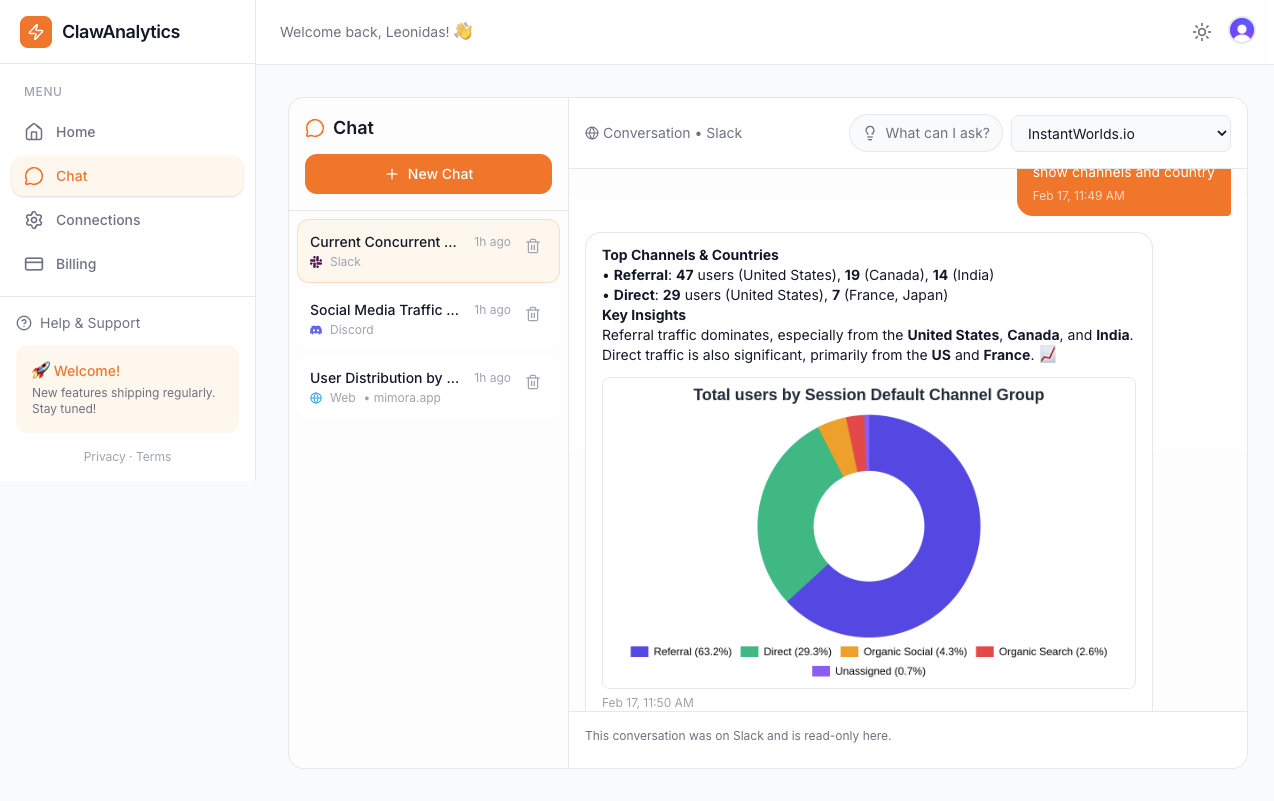
Travel marketers juggle more platforms than almost any industry. ClawAnalytics brings it together:
You connect your booking engine, ad platforms, and analytics. Then ask questions like:
- “Which channels bring the highest-value bookings?”
- “What’s my true cost per direct booking vs. OTA?”
- “Which content drives travelers from inspiration to booking?”
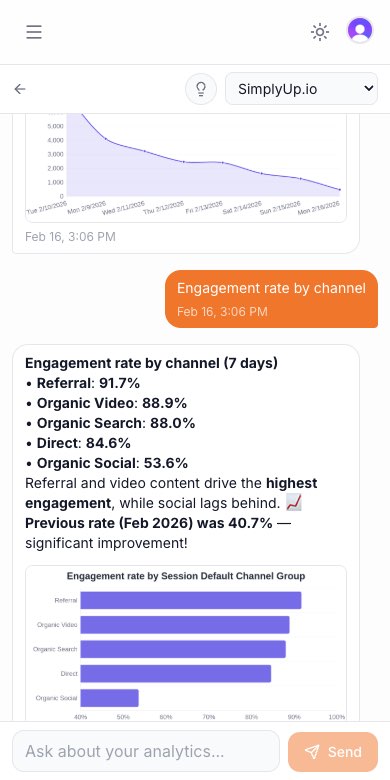
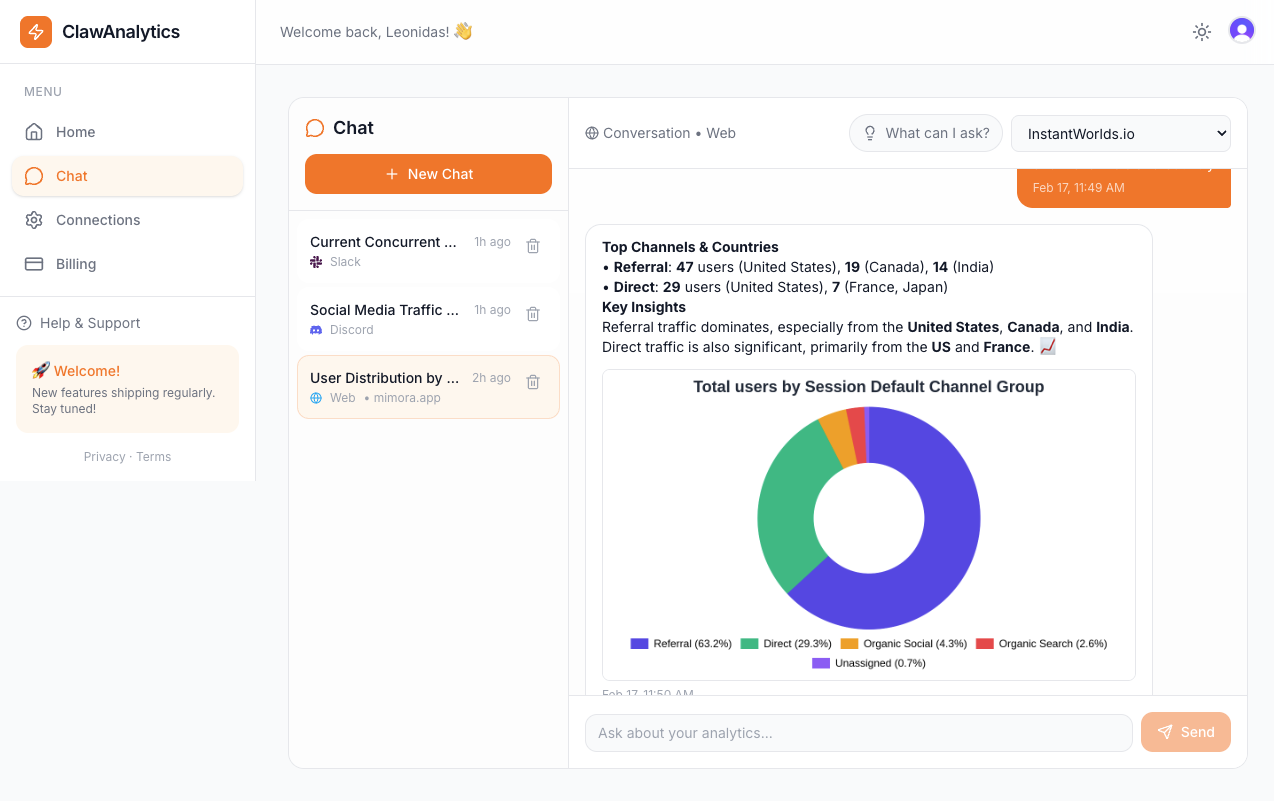
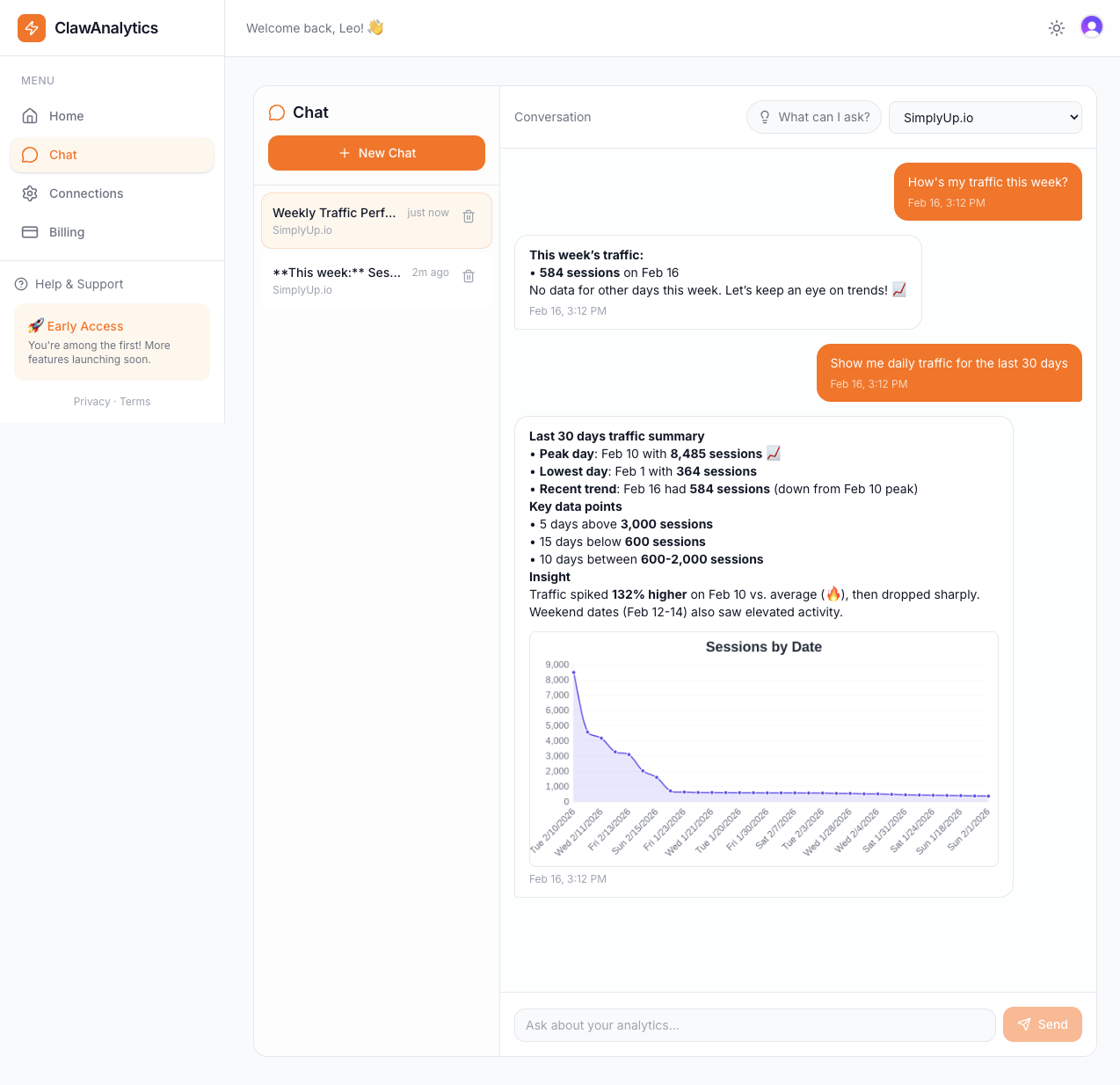
ClawAnalytics answers in seconds what would take hours to build in standard dashboards.
Quick Wins
- Track booking value, not just conversion count. A $200 booking and a $5,000 booking shouldn’t have the same CPA target.
- Invest in direct booking incentives. Loyalty points, free upgrades, best-rate guarantees—anything that narrows the gap between OTA and direct economics.
- Use email aggressively. Travel is a “set and forget” purchase. Reminding people about their dream trip recovers abandoned bookings at near-zero cost.
- Leverage user content. Instagram photos from real guests convert better than stock photography. Build systems to collect and display them.
Travel marketing is about dreams. Your CPA tracking should capture the full journey from the first spark of wanderlust to the confirmed booking.