What Is a Good Customer Lifetime Value for SaaS?
A customer pays $50 per month. They stay for eight months. That’s $400 in revenue. Is that good?
It depends on what you spent to get them. That’s where CLV comes in.
Why Customer Lifetime Value Matters for SaaS
Subscription revenue compounds. Unlike one-time purchases, recurring revenue builds over time. Higher CLV means predictable growth.
Churn kills SaaS. A 5% monthly churn means half your customers leave within a year. Even good CLV can crumble with high churn.
Expansion revenue matters. Upsells to existing customers cost less than new acquisition. CLV should include expansion.
Invest in the right customers. Not all customers are equal. Some cost more to serve. CLV shows who stays longest.
How to Check in GA4
In GA4, use Monetization → Subscription. This shows revenue by user over time.
Create a custom report for “LTV by plan type”. Enterprise plans often have higher CLV but longer sales cycles.
Check Retention → User retention to see how long different cohorts stay. Compare monthly vs annual plans.
The Easier Way
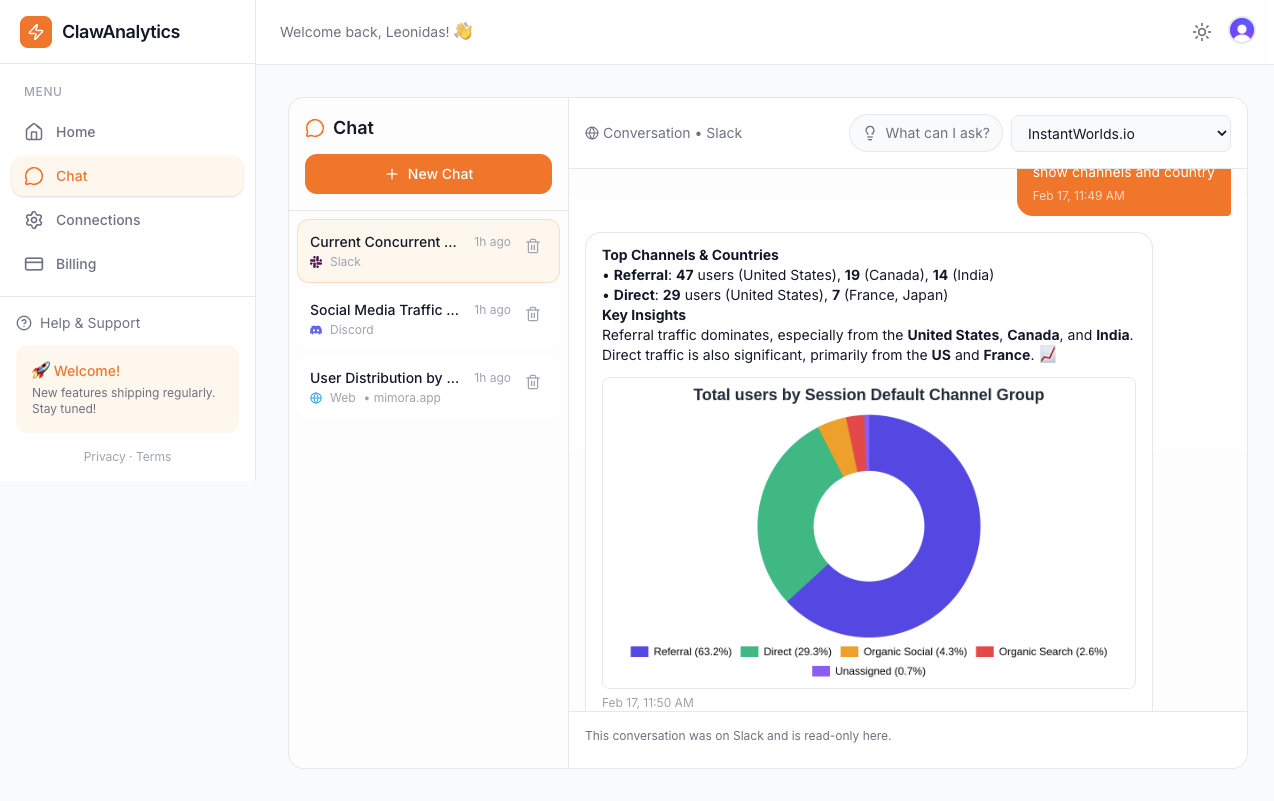
ClawAnalytics speaks SaaS.
Ask questions like:
- “What’s my average customer lifespan?”
- “Which plan has the highest retention?”
- “How does CLV compare between my pricing tiers?”
This helps you understand not just numbers, but what drives them.
Quick Wins
Reduce churn by 1%. Even small improvements compound. Going from 5% to 4% monthly churn doubles customer lifespan.
Invest in onboarding. Customers who reach “aha” moments faster stay longer. Map your onboarding flow.
Create upgrade paths. Make it easy to move from basic to pro. Existing customers are your best upsell opportunity.
Build community. Users with peers to learn from churn less. Consider forums or user groups.
Monitor health scores. Track login frequency, feature usage, and support tickets. These predict churn before it happens.
Track CLV by acquisition channel. If paid ads bring low-LTV customers, optimize your targeting.