Someone wakes up with a stiff neck that won’t loosen. They spend the morning struggling through work, and by lunch, they start searching “chiropractor near me” on their phone. They find your practice, click the link, but the appointment booking button is buried under elements that don’t load properly on mobile. They choose a competitor instead.
Why Device Breakdown Matters for Chiropractors
Chiropractic care has distinct patient acquisition patterns tied to device usage:
Acute pain drives mobile searches. Patients experiencing immediate discomfort search on their phones, often during or right after the onset of pain. Mobile is the first touchpoint for many new patients.
Wellness patients use desktop. Those exploring chiropractic for wellness, posture improvement, or preventive care tend to conduct longer research sessions on desktop, reading about techniques and comparing practitioners.
Referral patients research differently. Patients referred by friends or other healthcare providers might visit your site on either device, but often arrive with more intent to convert quickly.
Mobile appointments for acute care. Patients in pain want to book immediately. If mobile booking is complicated, they’ll call your competitor or visit an urgent care instead.
How to Check in GA4
Understanding device patterns helps capture more patients in GA4:
- Go to Reports > Acquisition > Traffic acquisition
- Add Device category to see acquisition breakdown
- Track appointment_bookings and phone_call_conversions
- Compare device-specific conversion rates
- Analyze landing page performance by device type
Chiropractic benchmarks typically show 55-65% mobile, 30-40% desktop, and 5-8% tablet traffic, with practices emphasizing acute care often seeing higher mobile percentages.
The Easier Way
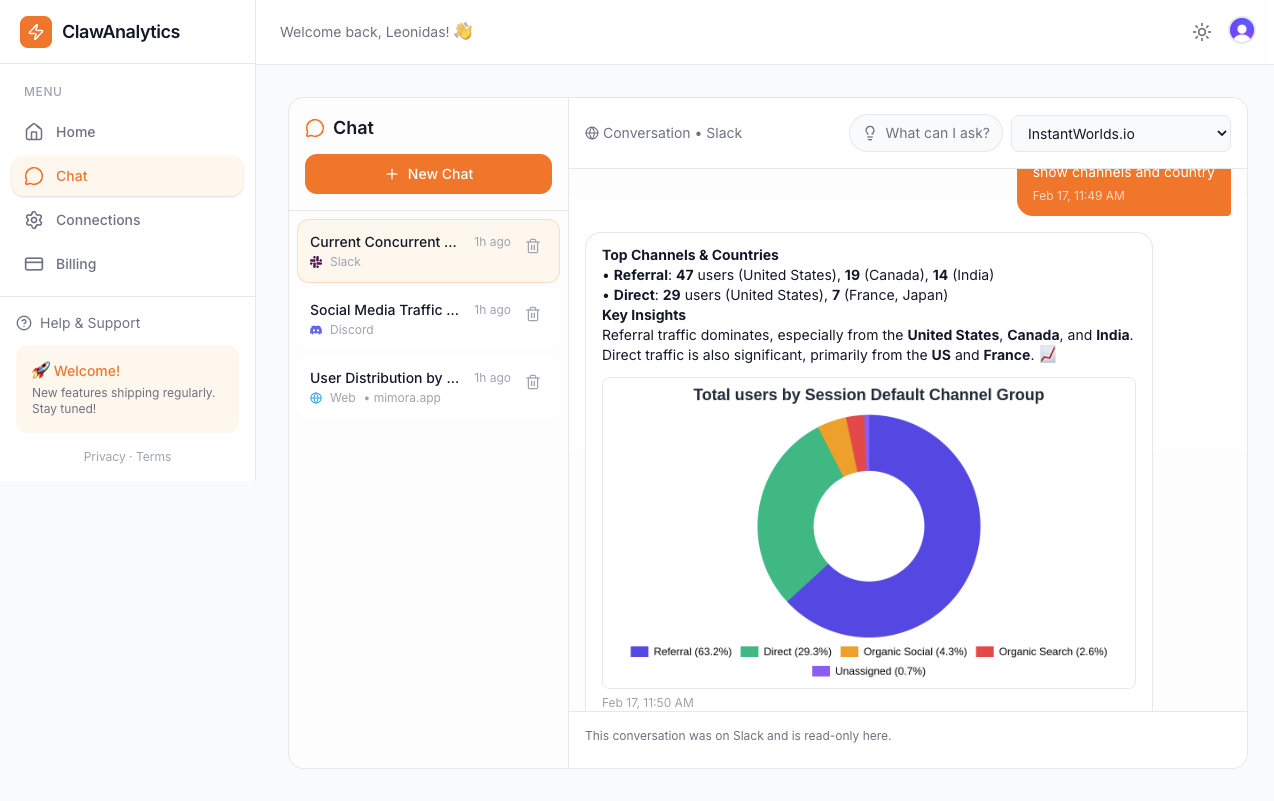
ClawAnalytics provides chiropractic-specific insights that help you understand how patients find and choose your practice. Instead of generic analytics, you get insights relevant to healthcare marketing.
You might discover that patients searching for “back pain relief” arrive on mobile while those exploring “wellness chiropractic” come on desktop. This helps you optimize each page for its audience.
Common questions answered include “What’s our mobile booking conversion rate?” and “Which conditions drive the most mobile traffic?”
Quick Wins
Prioritize mobile experience. Patients in pain need instant access to booking and contact information. Design mobile-first.
Prominent call-to-action. Make booking buttons large and easy to tap on mobile. Reduce clicks needed to schedule an appointment.
Condition-specific pages. Create landing pages for common conditions like neck pain, back pain, and headaches. Optimize each for mobile users searching for that specific issue.
Load speed matters. Patients in pain are impatient by nature. Fast-loading pages capture attention before frustration builds.
Track mobile call conversions. Many patients will call after visiting your mobile site. Set up call tracking to understand this pathway.