You publish helpful content. Traffic flows to your blog. But visitors read one post and leave. They do not explore other articles. They do not subscribe. They simply read and exit. This behavior is measured by your exit rate, and it reveals whether your content keeps readers wanting more.
Why Exit Rate Matters for Bloggers
Exit rate shows the percentage of visitors who leave your blog from a specific page. For bloggers, this metric matters because lower exit rates mean more pageviews, better ad revenue, and more email subscribers.
A high exit rate often signals a content problem. Either the article does not deliver on its headline promise, or readers finish the post without finding a clear next step. Both scenarios waste potential engagement.
Understanding exit rate helps you optimize content strategy. When you see that list posts have lower exit rates than how-to articles, you know what formats your audience prefers. When certain categories consistently outperform others, you know where to focus your writing energy.
Exit rate also affects monetization. More pageviews from each visitor means more ad impressions and higher earnings. Reducing exit rate by even 10% can significantly impact monthly revenue.
Finally, tracking exit rate over time reveals seasonal patterns and helps you plan content calendars around what your audience actually reads.
How to Check in GA4
Google Analytics 4 makes tracking blog exit rates straightforward. Navigate to Reports, select Engagement, and choose Pages. You will see a list of all your URLs with exit rate percentages.
To focus on blog posts specifically, create a filter or search for your blog URL pattern. For example, filter for URLs containing /blog/ or /post/. This isolates your content from other pages like your homepage or about page.
Sort by exit rate to find your best and worst performers. Then dig deeper by comparing exit rates across categories. You might find that posts about certain topics have higher exit rates, suggesting opportunities for improvement.
Use the comparison feature to contrast high-performing posts with low-performing ones. Look for patterns in word count, headline style, content format, and internal linking.
You can also set up a custom report to track exit rate by author. This helps you understand which writers create the most engaging content.
The Easier Way
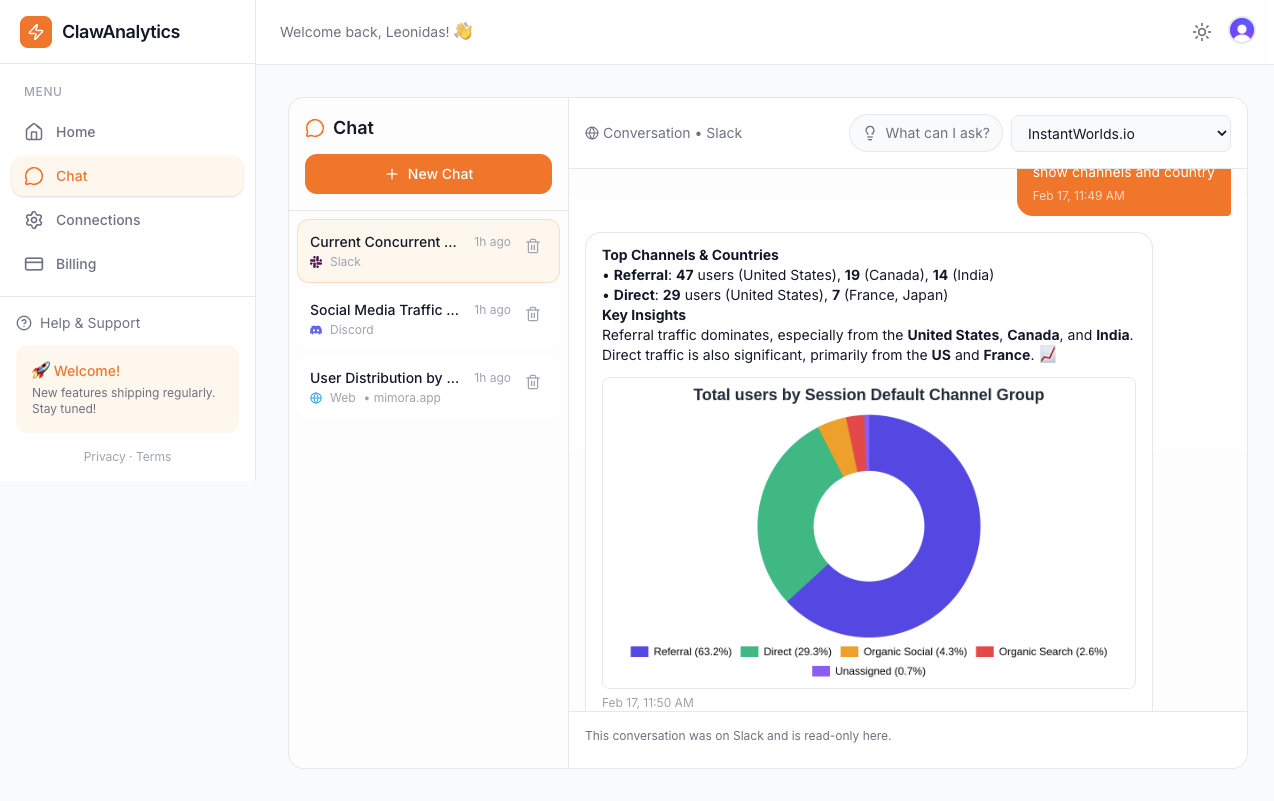
ClawAnalytics removes the complexity of building custom GA4 reports while giving you deeper insights. It automatically categorizes your blog content and shows which topics keep readers engaged longest.
You can ask questions like: Which of my blog categories has the lowest exit rate? Do longer posts keep readers longer or lose them faster? Does adding a call-to-action at the end reduce exit rate? These answers help you optimize every piece of content.
ClawAnalytics also tracks internal link performance. It shows you which links readers actually click, helping you build a more interconnected blog that keeps visitors exploring.
Quick Wins
Lower your blog exit rate with these proven tactics. First, add internal links to related posts at the end of every article. Give readers a clear next step instead of a dead end. Second, write compelling conclusions that summarize key takeaways. Readers who feel they gained something are more likely to explore further. Third, include subscription CTAs throughout your posts, not just at the end. Some readers will never reach the bottom but might still subscribe. Fourth, optimize for readability with short paragraphs, clear headings, and bullet points. Readers who struggle to read will leave. Fifth, match headline promises with content delivery. Nothing frustrates readers more than clickbait that fails to deliver.