What Is a Good Geographic Traffic for Education?
You run a coding bootcamp in Seattle. Your website attracts 4,000 visitors monthly. Sounds solid. But 2,400 come from Portland, San Francisco, and Austin. These people won’t enroll in Seattle-based classes. They’re too far to commute or relocate. Your marketing dollars are going to waste. This is exactly why geographic traffic analysis matters for education.
Why Geographic Traffic Matters for Education
Education comes in many forms, and location affects enrollment differently. Here’s why you need to track this:
- Enrollment conversion: Local students are more likely to complete applications, attend orientation, and show up on day one.
- Campus visits: For physical institutions, local prospects can visit easily. This dramatically increases enrollment odds.
- Program relevance: If you offer local job placement services, your content only makes sense for nearby students.
- Regional accreditation: Some programs only serve specific regions. Geographic data confirms you’re reaching eligible areas.
Most education websites should aim for 55-75% local or regional traffic. Universities with national programs may see lower percentages, but local trade schools and bootcamps need tighter geographic focus.
How to Check in GA4
Here’s your step-by-step process:
- Open GA4 and go to the Reports tab
- Click on User
- Select Geo
- Choose City or Country
- Review the Active users and key events
Look at your top 15 cities. Ask yourself: Can these visitors realistically attend our programs? If major cities outside your region dominate, your marketing is too broad.
The Easier Way
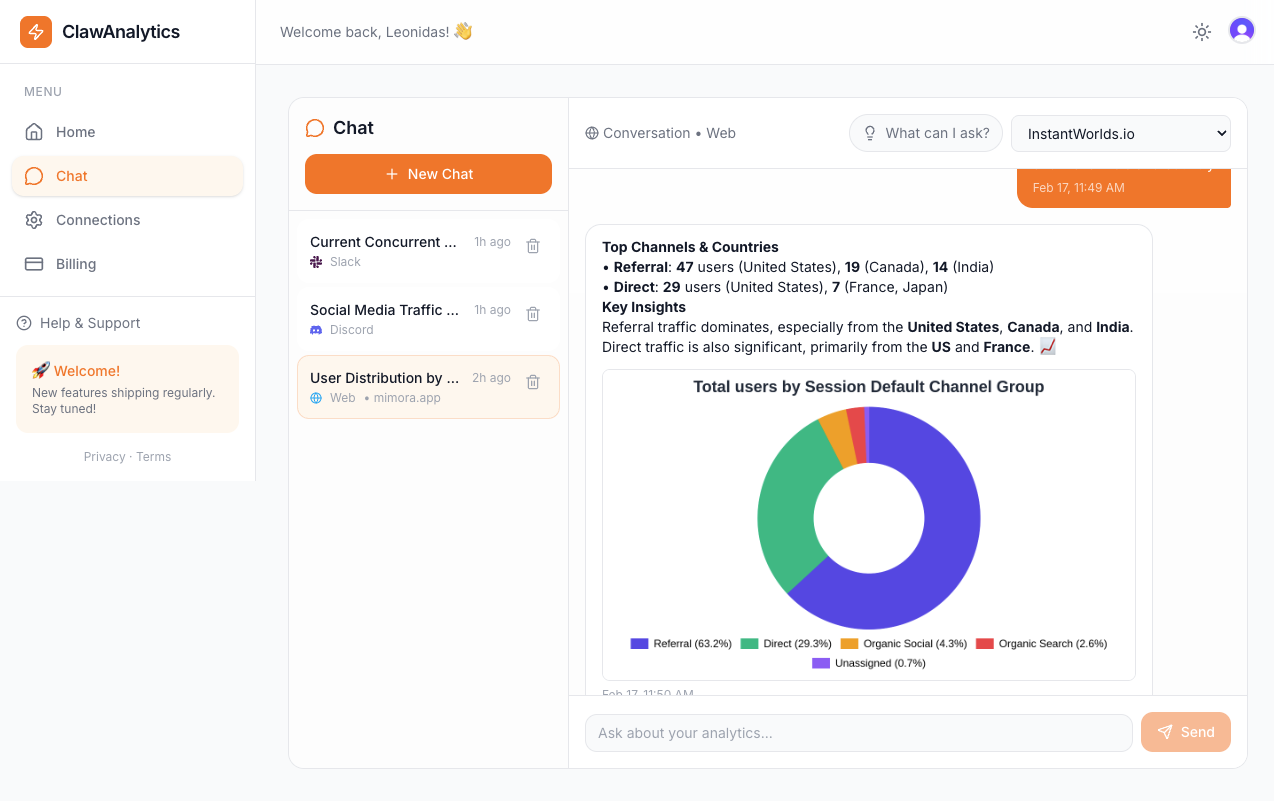
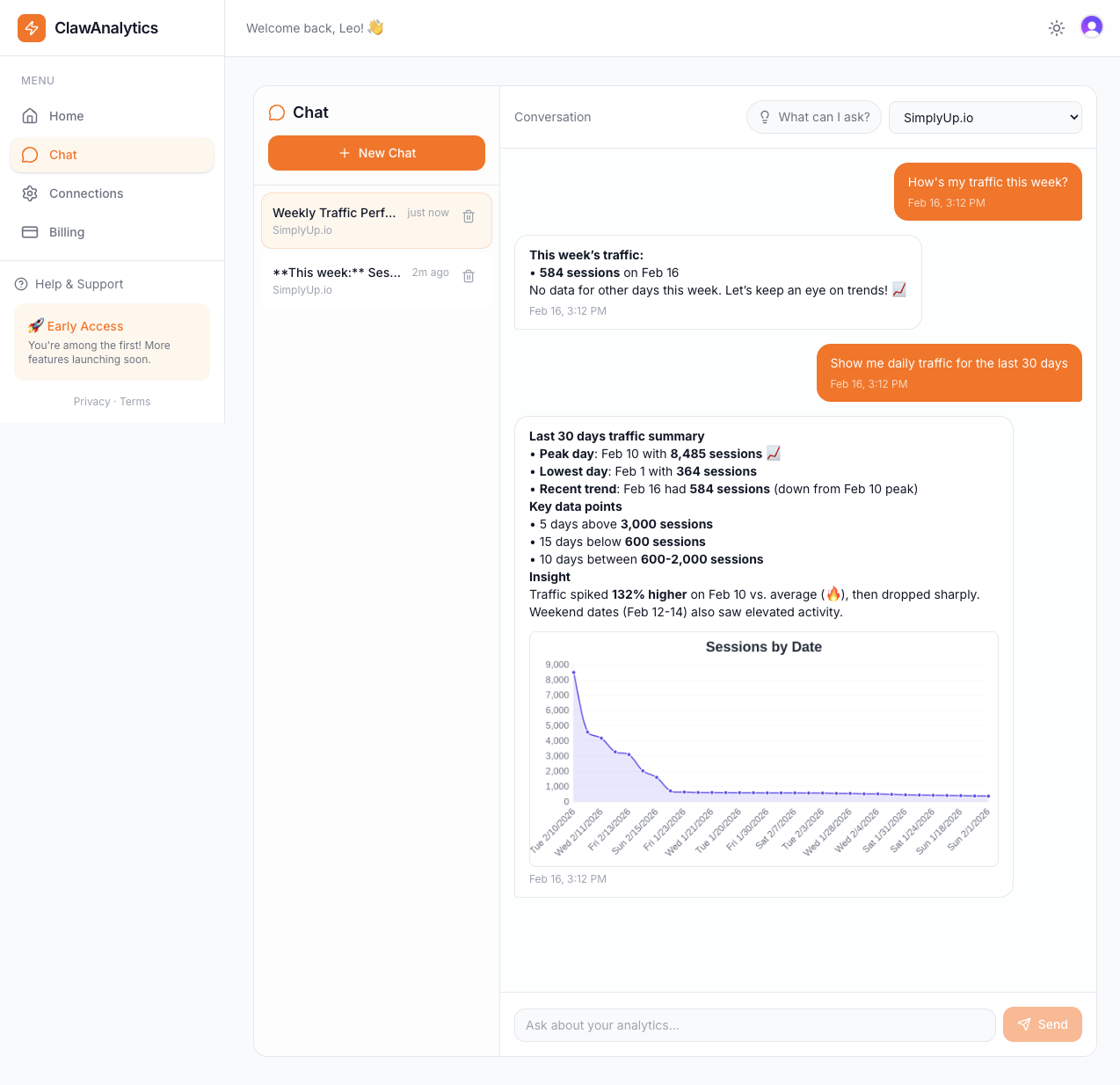
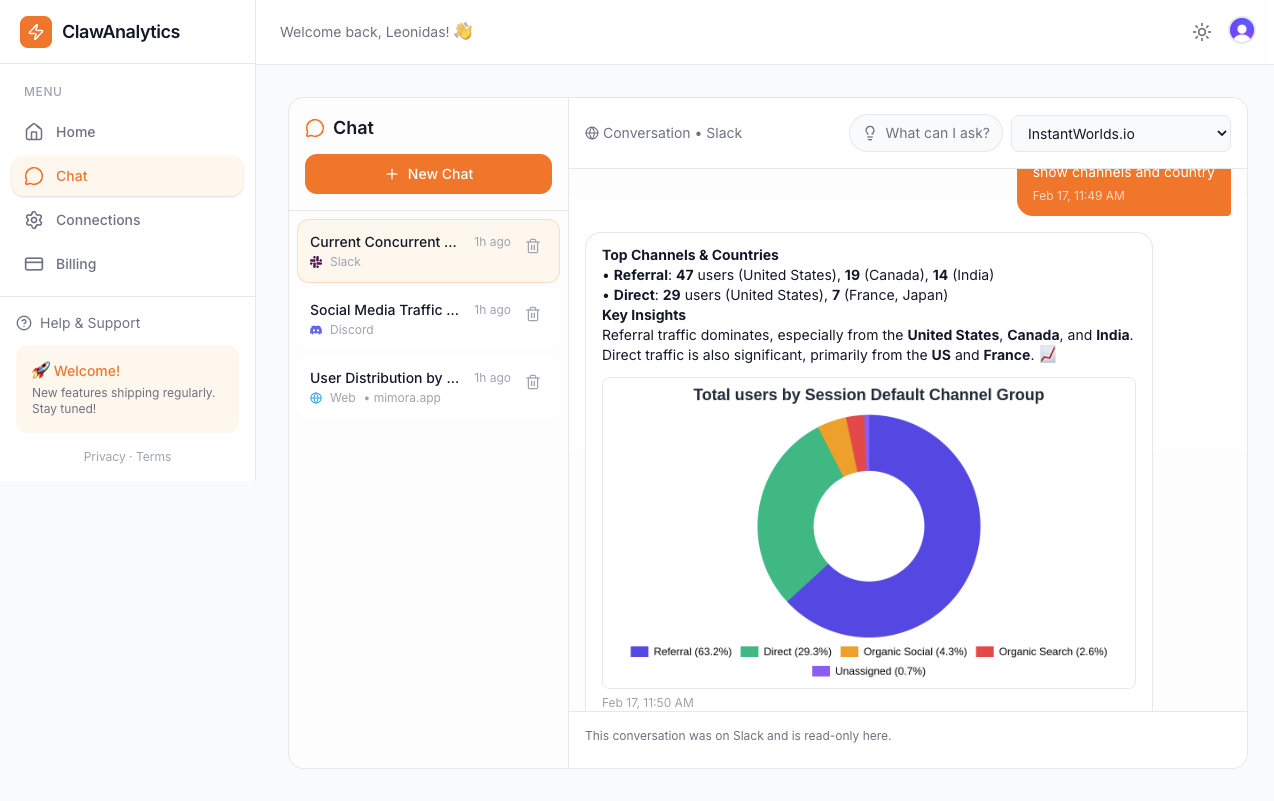
ClawAnalytics simplifies geographic analysis into a clear dashboard. You instantly see which cities drive the most interest and which ones actually submit applications. This helps you allocate recruitment budget more effectively.
You might find that your blog attracts national readers, but your program pages pull in locals. ClawAnalytics separates these so you can optimize each channel appropriately.
Common questions become obvious: Should we open a satellite campus? Which regions show the most interest but lowest conversion? Are we wasting budget on out-of-area prospects?
Quick Wins
- Create regional landing pages: If you see interest from specific cities, build pages tailored to those areas.
- Target local keywords: “Coding bootcamp in Seattle” outperforms generic “coding bootcamp” for local enrollment.
- Use geo-targeted ads: Restrict your recruitment ads to relevant metropolitan areas.
- Track inquiry forms by location: Set up GA4 goals to see which cities generate the most applications.