What Is a Good Geographic Traffic for Legal?
You operate a personal injury law firm in Chicago. Your website gets 8,000 visitors monthly. That’s impressive traffic. But only 2,400 are from Chicago itself. The rest come from Milwaukee, Indianapolis, and far suburbs you’ll never serve. Worse, Illinois and Indiana have different laws. Visitors from Indiana can’t hire you for their Chicago accident case. This geographic mismatch wastes your entire marketing strategy.
Why Geographic Traffic Matters for Legal
Legal practice is deeply geographic. Here’s why this metric is critical:
- Jurisdictional rules: Attorneys are licensed in specific states. Traffic from outside your jurisdiction has zero value.
- Court convenience: Clients need lawyers near where their case will be heard. Local attorneys win convenience arguments.
- Local relationships: Judges, opposing counsel, and court staff are local. Local traffic suggests your reputation is spreading in the right circles.
- Local keyword advantage: When someone searches for a lawyer in their city, you want to appear.
The best law firm websites see 70-85% of traffic from their metropolitan area and surrounding counties where they practice.
How to Check in GA4
Follow these steps to see your geographic data:
- Log into GA4
- Navigate to Reports
- Click User
- Select Geo
- Choose City or Country
Focus on your top 20 cities. Ask: Do we practice law in these locations? If not, that traffic is wasted.
The Easier Way
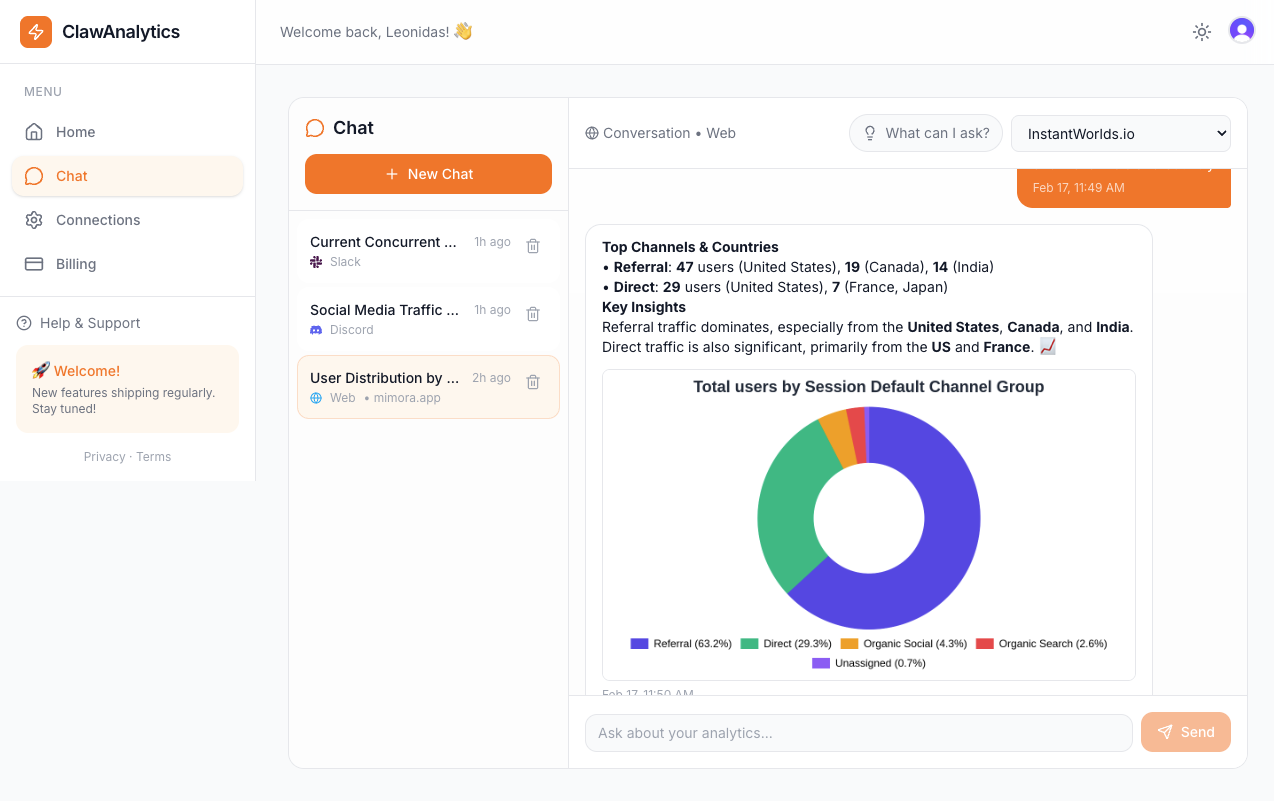
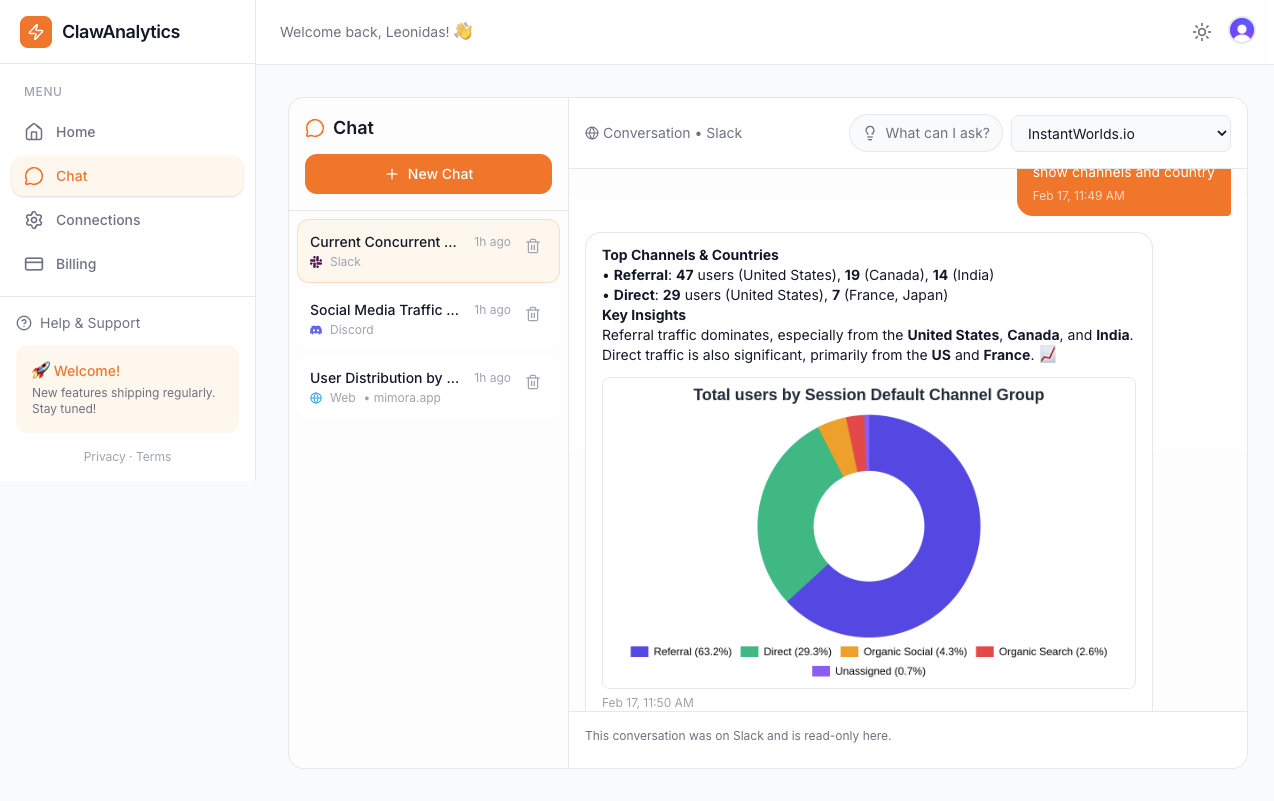
ClawAnalytics makes geographic analysis painless. You see a visual map of where your visitors actually come from. This instantly reveals whether your marketing reaches people who can hire you.
You might find that your paid ads attract a regional audience, but your local SEO pulls in the clients who actually convert. ClawAnalytics separates these so you can invest in what works.
Common questions become simple: Which neighborhoods generate the most leads? Should we expand to a new city? Are we overspending on out-of-state clicks?
Quick Wins
- Set geo-targeting in ads: Restrict Google Ads and Facebook Ads to counties or metro areas where you practice.
- Create location pages: If you serve multiple counties, create pages for each with local court information and relevant content.
- Optimize for local searches: “Personal injury lawyer in Chicago” should drive your SEO, not just “personal injury lawyer.”
- Track form submissions by city: Use GA4 goals to see which locations generate actual client inquiries.