What Is a Good Geographic Traffic for Local Business?
Picture this: you run a plumbing company in Chicago. You spend money on ads, optimize your website for local searches, and check your analytics daily. But when you look closer, you realize 60% of your website traffic comes from India and Nigeria. Your ads are reaching people who will never book your services. This is why geographic traffic matters for local businesses.
Why Geographic Traffic Matters for Local Business
Understanding where your visitors come from is crucial for several reasons:
Your marketing budget depends on it. If you’re paying for ads targeting Chicago residents but your traffic comes from elsewhere, you’re wasting money. Geographic data shows you whether your targeting actually works.
Conversion rates vary by location. A visitor from your city is far more likely to call than someone browsing from another continent. Tracking this helps you prioritize your efforts.
Local SEO performance is visible here. If your Google Business Profile is working, you should see your city dominate your geographic report. If not, something needs fixing.
Competitor analysis becomes possible. When you know where your audience is, you can check what local competitors appear in those searches.
The ideal scenario for a local business is having 70-85% of your traffic from your metropolitan area, with most of the rest from nearby regions. Anything significantly lower means your local marketing needs attention.
How to Check in GA4
Checking geographic traffic in Google Analytics 4 takes just a few steps:
- Open GA4 and go to the Traffic acquisition report
- Click on Add comparison above the data table
- Select City or Country from the dimension dropdown
- Set the condition to matches regex and enter your target city name
- Compare this against your total traffic to see the percentage
You can also use the Geo map visualization in the Users overview section. It shows a heat map of where your visitors are located. Red areas indicate high traffic, while blue shows lower numbers.
For deeper analysis, create a custom report that breaks down conversions by city. This shows not just who visits, but who actually becomes customers.
The Easier Way
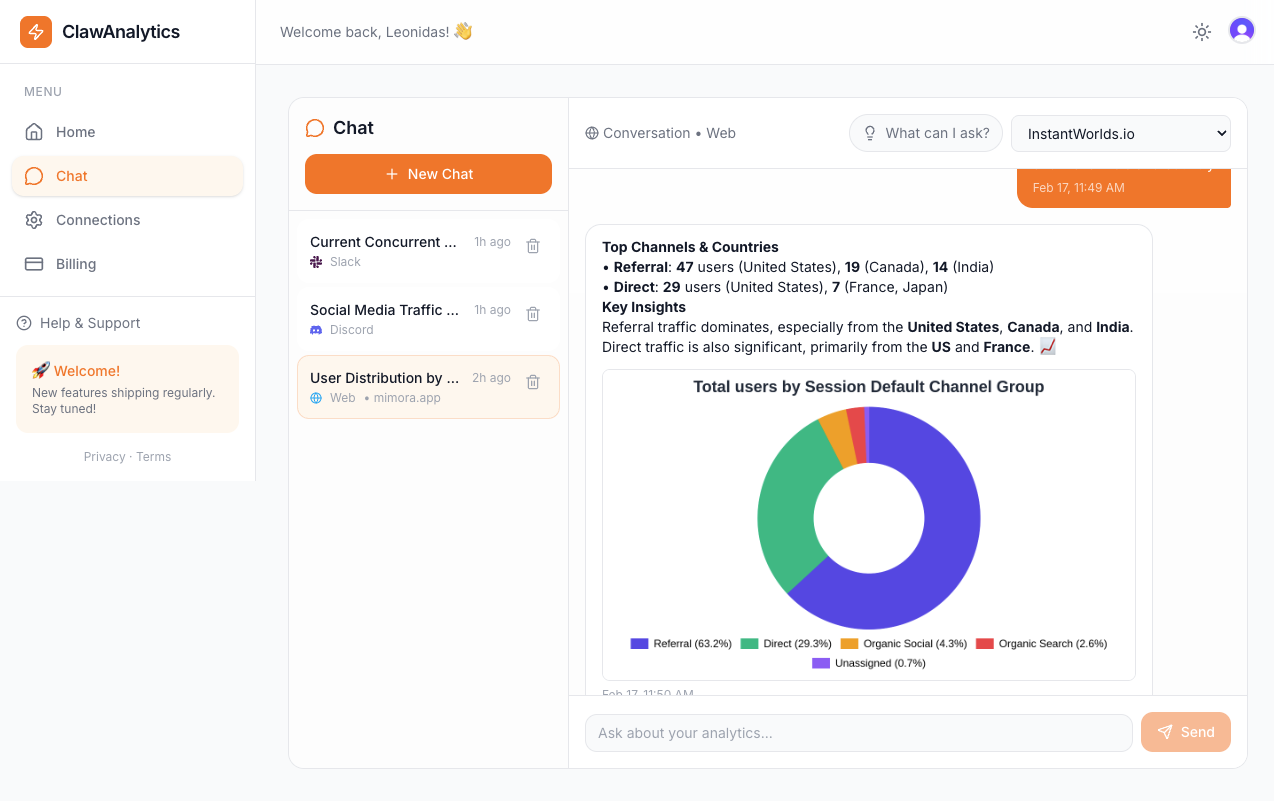
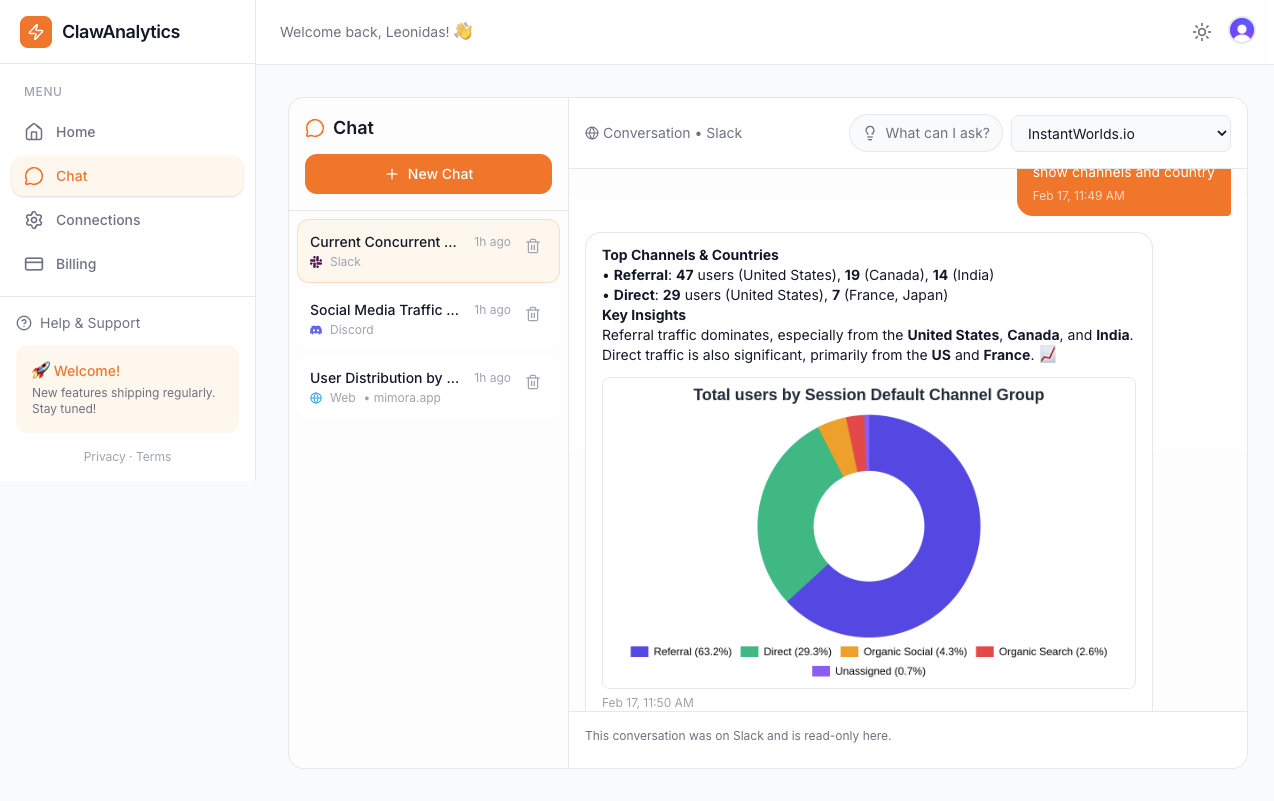
Let’s be honest: GA4’s geographic reports are powerful but overwhelming. You get endless tables of cities and countries with no context. ClawAnalytics makes this practical for daily use.
ClawAnalytics can answer questions like:
- Which cities generate the most leads for my business?
- Are we getting traction in surrounding suburbs?
- Why did our Phoenix traffic spike last week?
The tool alerts you to geographic anomalies. If you suddenly get a traffic surge from a city you don’t market to, you’ll know immediately. This helps catch bot traffic, viral mentions, or successful campaigns you didn’t expect.
For a local bakery, ClawAnalytics might reveal that weekend traffic from nearby neighborhoods converts at triple the rate of weekday visitors from downtown. That insight changes how you schedule promotions.
Quick Wins
Verify your Google Business Profile is connected to GA4. This ensures local searches are properly tracked.
Add city-specific landing pages if you serve multiple areas. Each neighborhood or suburb gets its own page with local keywords.
Use location-based ad targeting. Restrict your display and search ads to a radius around your business.
Monitor your direct traffic by city. If foot traffic is growing, your website visits from your area should follow.
Check geographic data weekly. A quick check takes two minutes and catches problems before they waste your budget.
Start checking your geographic traffic today. If your local business is getting traffic from across the globe, it’s time to optimize.